42AI Emerges With $62.5M to Deploy Behavioral Prediction Models in Finance
An Israeli startup has unveiled a machine learning system designed to forecast individual decision-making patterns, launching from stealth with substantial funding and early deployments at major brokerages.
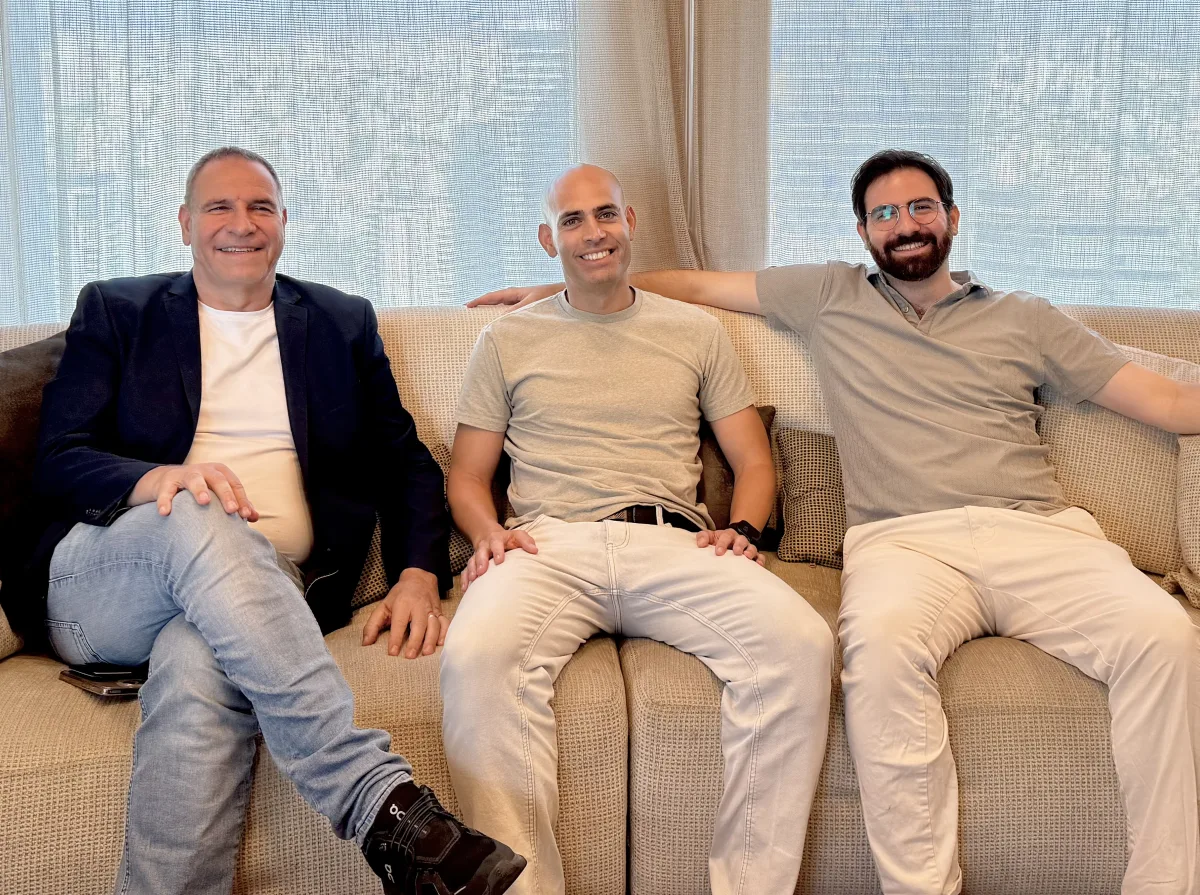
What if artificial intelligence could forecast your actions before you consciously make them, even when facing unfamiliar circumstances? That's the premise behind 42AI, an Israeli company that has just announced its emergence from stealth mode with $62.5 million in seed funding. The startup is building what it calls a "behavioral world model" and has already begun deploying it across several financial institutions, where it claims the technology can anticipate how individual traders will behave during market turbulence.
The company's foundational argument rests on a psychological premise. "Behavior is not deterministic; it's constantly probabilistic," according to CEO and co-founder Amit Gal-Or. He contends that underlying psychological patterns shape decision-making even as circumstances shift. Co-founder and CTO Ehud Ezra elaborated: "A week from now, you might be a different person, but your tendencies will always play out in certain areas to a probability or distribution." The startup's approach focuses on identifying these internal motivations rather than simply extrapolating from historical behavior patterns.
To build its model, 42AI examines how individuals respond to seemingly disparate events. For traders and investors, this encompasses activities such as identity verification procedures, account setup, customer support interactions, fund transfers, and trading activity itself. Ezra described the data collection process: "When the person is talking to support or sales in the initial process […] we're looking at the sentiment, we're looking at the voice, we're looking at a lot of interactions that they're doing, how many times do they call, and so forth. And all of those data points are going into the model. Later on, you have the interactions: how you buy and sell, and when, and we're looking at the market at that stage." He added, "So we're trying to look at how they're looking at the world. In a world model, every individual is the world."
The system converts behavioral observations into mathematical trait representations, which feed into a transformer-based architecture that generates probability distributions across potential decisions under varying scenarios. A separate language model generates explanations for the predictions. During training, the system is optimized to preserve each person's core behavioral characteristics through simulations—if someone typically exhibits risk aversion but the model suddenly predicts risk-taking behavior, the training signal indicates misalignment.
The company invested three years developing this framework, drawing on psychological research, neuroscience, genetics, and consultation with psychology and PTSD specialists, as well as Dan Shechtman, recipient of the 2011 Nobel Prize in Chemistry. Development began with psychological assessments and behavioral scenarios involving thousands of participants, followed by integration of government and biobank datasets encompassing more than 2 million individuals. Customer datasets have since expanded to cover nearly 30 million people, according to Gal-Or.
In operational deployments, the system analyzes existing customer records including transaction histories and support interactions. Gal-Or noted that the system operates without personally identifiable information, stating "the model never knows who the person is," though the company does construct individual behavioral profiles from linked customer activity.
Performance metrics show 98% accuracy in predicting market trades, though Gal-Or clarified this measures whether trading activity falls within predicted ranges rather than predicting individual trades precisely. The model consistently achieves an F1 score between 0.8 and 0.85 for predicting trading direction and volume. Limitations exist, however: Gal-Or acknowledged "a natural ceiling because you really don't have access to everything that a person experiences." Ezra noted that accuracy declines when important situational context is unavailable, such as when someone alters trading decisions based on external advice.
42AI is currently working with 10 major brokerages that deploy the system for liquidity management, margin requirement optimization, and hedging exposure decisions. The company is expanding its customer base and generating more than "seven figures" in annual revenue, though specific figures remain undisclosed. Pricing follows either a flat fee or a percentage-of-value model. Gal-Or cited one brokerage that generated approximately $30 million in additional value through dynamic hedging powered by the platform.
The $62.5 million seed round was assembled over three years from the founders and Infinity Group, with not all capital coming from external sources. Infinity Group was established by Amit Gal-Or's father, Amir Gal-Or, who serves as 42AI's chairman and co-founder. The company intends to pursue additional funding rounds.
Beyond financial services, 42AI is investigating applications in gaming, fraud detection, cybersecurity, and eventually enabling robots and AI agents to better comprehend human behavior. However, Ezra acknowledged that the model requires training on domain-specific rules and context for each new application area.
The technology raises ethical concerns. If a brokerage can anticipate customer actions, what prevents it from exploiting that knowledge for competitive advantage? When asked about this risk, Ezra acknowledged it as "a valid concern." The founders pointed to regulatory frameworks, monitoring systems, and an internal ethics committee as safeguards, though they did not detail what mechanisms would prevent customers from using the technology to gain advantages over the individuals being profiled. Gal-Or countered with confidence: "We are very proud that actually we are part of the solution; we are the solution to this problem."
Read more

Why enterprises are choosing deterministic automation over pure agentic AI
Most AI pilots deliver no measurable returns, and agentic workflows carry hidden costs in tokens, latency and errors. Enterprise architects need a framework to decide when agents add real value.

LinearB Launches Agentic Studio to Untangle AI-Driven Code Review Bottlenecks
The development intelligence platform is addressing a critical pain point: AI coding tools have flooded engineering teams with code, but the review and deployment pipeline remains stuck in the past.

How Heineken's CIO Built an AI Strategy Around Operationalized Data
Frank Iannella, U.S. CIO at Heineken, has spent two years developing a framework that turns data signals into automated business actions using AI—moving beyond clean data to what he calls decision-ready data.