LinearB Launches Agentic Studio to Untangle AI-Driven Code Review Bottlenecks
The development intelligence platform is addressing a critical pain point: AI coding tools have flooded engineering teams with code, but the review and deployment pipeline remains stuck in the past.
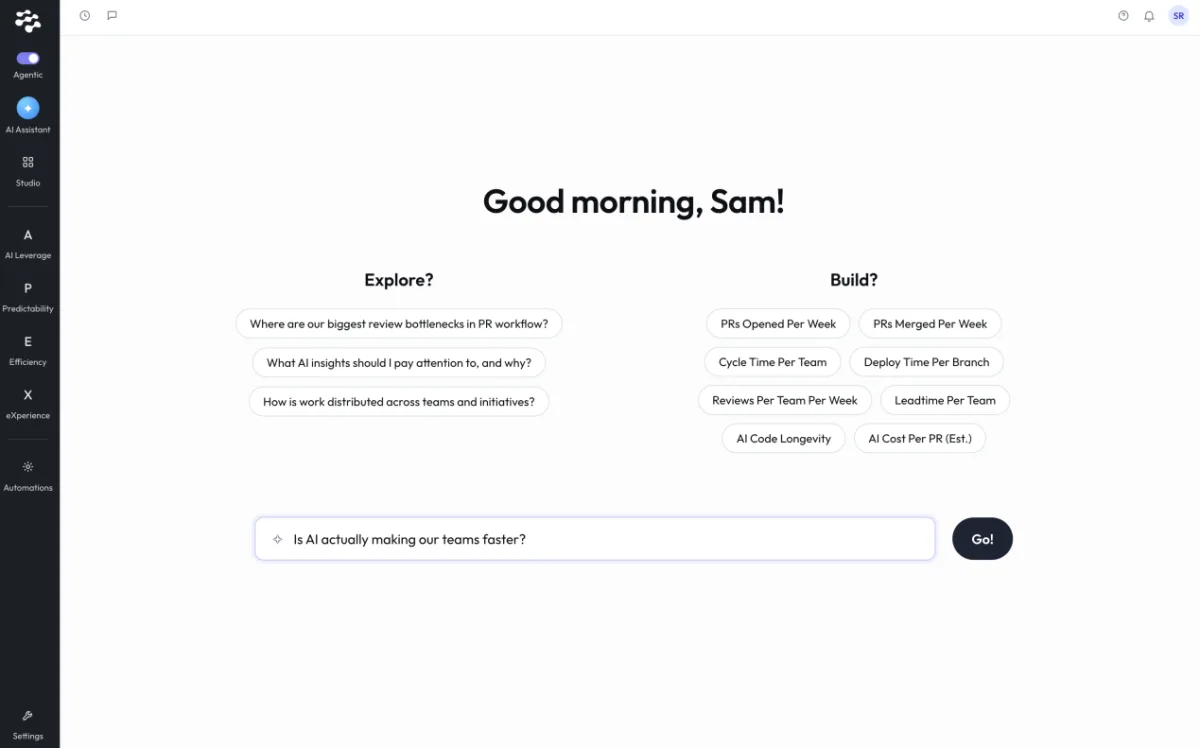
LinearB Inc., an application development intelligence company, unveiled Agentic Studio today to tackle a mounting problem in software delivery: the explosion of code volume from generative AI tools has overwhelmed traditional review and deployment processes.
The new platform delivers contextual intelligence to both human engineers and autonomous coding agents, moving beyond simple metrics to provide actionable insights into why software delivery pipelines are stalling.
The AI Code Glut
Tools like Claude Code and Codex have made writing code nearly frictionless, but shipping that code remains a bottleneck. LinearB's recent Software Engineering Benchmarks report examined 2.7 million pull requests across 250 organizations and found that teams using AI coding tools have nearly doubled their merged code changes year-over-year.
The catch: AI-assisted pull requests are nearly 2.6 times larger than human-written ones, forcing reviewers to wait more than five times longer for feedback. Additionally, AI agent code changes are merged just 79% of the time at elite organizations, compared with 92% for human-authored code.
Context Over Metrics
Traditional engineering dashboards display metrics but lack the contextual depth needed to diagnose problems. Agentic Studio normalizes data from Git repositories and project tracking systems into a unified context layer, allowing engineers to ask natural language questions and receive recommendations rather than hunting through charts.
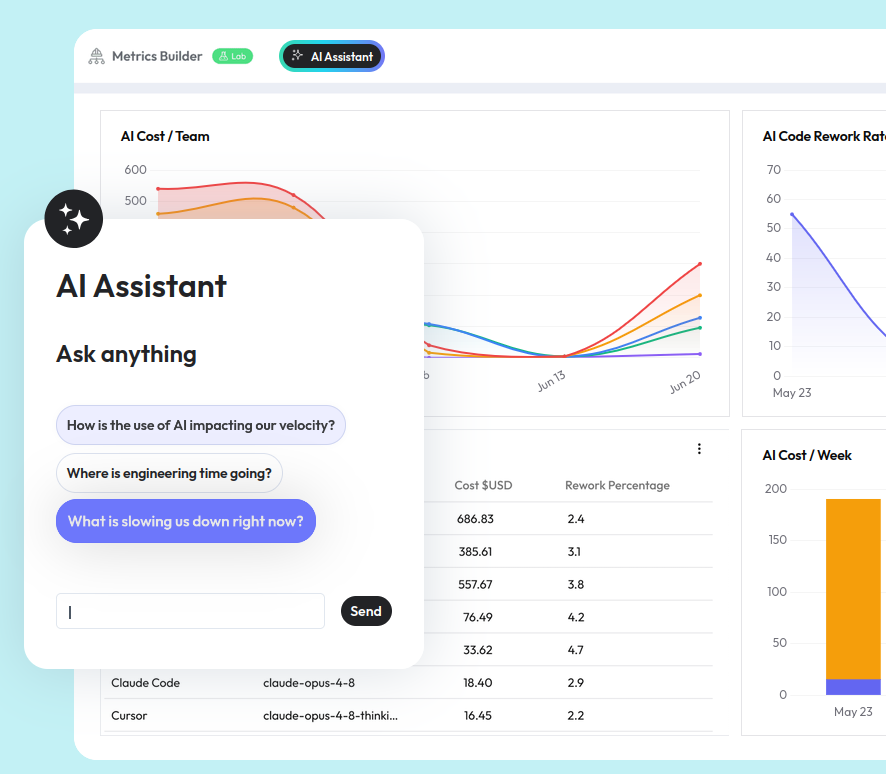
Co-founder and Chief Executive Ori Keren explained the strategic shift: "We realized we hold a knowledge graph that nobody else has of everything that is happening across the software delivery lifecycle. That's exactly what agents and teams need to deliver high quality software faster, so we rebuilt LinearB around it."
Agents and Humans Working Together
Agentic Studio distinguishes itself by serving both human engineers and autonomous coding agents equally. Through integrations using the Model Context Protocol, the platform feeds historical data—including rework rates, past production incidents and code ownership—to AI agents, preventing them from making uninformed changes to pull requests.
Cryptocurrency exchange Kraken, an early adopter, used LinearB's MCP integration to diagnose why code reviews were lagging. The analysis revealed timezone misalignments as the primary issue rather than pull request size, leading Kraken to restructure workflows and cut review times by more than half within four months.
Chief Operating Officer Dan Lines noted the shift from reporting to action: "For years, engineering leaders told us the same thing: metrics are useful, but they don't tell you what to do. A dashboard says your cycle time is two days, but so what? Now [with Agentic Studio] a leader can ask what to improve in their engineering organization and get a clear answer. When that same context goes to coding agents, the platform is not just reporting, it's acting."
Agent Skills and Future Expansion
LinearB is building specialized capabilities called agent skills to help AI systems operationalize the contextual intelligence. The first skill, an "effort skill" now in early access, evaluates pull request complexity, proposed code changes, rework history and risk to dynamically calibrate how much computational effort an agent should invest.
Low-risk, straightforward changes execute quickly with minimal token consumption, while sensitive, high-priority modifications receive deeper reasoning and exhaustive testing. The company plans to expand its agent skills library in coming months with capabilities for automated code review, merge governance and token cost optimization.
Read more

42AI Emerges With $62.5M to Deploy Behavioral Prediction Models in Finance
An Israeli startup has unveiled a machine learning system designed to forecast individual decision-making patterns, launching from stealth with substantial funding and early deployments at major brokerages.

How Heineken's CIO Built an AI Strategy Around Operationalized Data
Frank Iannella, U.S. CIO at Heineken, has spent two years developing a framework that turns data signals into automated business actions using AI—moving beyond clean data to what he calls decision-ready data.

AI agents are multiplying faster than IT can track them. Here's what to budget for in 2027.
As organizations prepare budgets for next year, most have allocated funds for AI agents but few have planned for the oversight infrastructure needed to govern them. The gap is already creating risk.