Trajectory lands $45M to democratize AI model training for domain experts
The Stanford-founded startup has built a platform that lets lawyers, doctors, and other specialists continuously improve AI models without requiring machine learning expertise or expensive consultants.
Across the industry—whether from OpenAI, Anthropic, or open source projects—AI models face the same fundamental challenge: they cannot improve from their own errors unless they undergo additional training cycles.
Organizations deploying these systems in specialized domains like law and finance typically address this gap through fine-tuning of base models. Yet this path usually demands either building internal machine learning teams or contracting with expensive specialists, often called forward-deployed engineers.
Trajectory, established roughly one year ago by three Stanford graduates with backgrounds at Google DeepMind and Apple, is working to change this dynamic. The startup has developed a platform designed to enable models to absorb feedback and steadily enhance their performance on domain-specific work.
The 18-person team announced a $45 million Series A funding round at a $300 million valuation. Sequoia led the investment, joined by Nvidia, Bessemer Venture Partners, and Bain Capital Ventures.
Trajectory co-founder Ronak Malde offered an analogy for the problem the company tackles. He said that foundational models resemble "a very smart PhD student who's always starting a new job. But what the economy values is someone who worked on the job for 30 years."
Continual learning for specialists
Trajectory's solution centers on a technique called continual learning. Organizations can select an open source model, integrate Trajectory's platform with their systems, and let it gather performance feedback. The platform then retrains the model using this data, progressively sharpening its abilities in specialized areas.
According to Malde, this approach enables lawyers, physicians, and domain specialists to enhance models with minimal friction. The result could accelerate deployment of specialized AI while reducing costs.
Harvey and Rogo are among the early adopters using Trajectory to refine open source models, making them behave more like seasoned legal professionals or financial experts by learning from past work—such as analyzing specific contract types or applying particular valuation methods. Decagon, Mercor, and Nvidia also count as customers. Trajectory has now opened its post-training platform to the broader market.
Malde explained that customers "decide what good looks like for their organization and can turn that into improvements for their model."
Safety through human oversight
Trajectory's continual learning strategy resembles recursive self-improvement (RSI), in which AI systems upgrade their own capabilities. However, co-founder Michael Elabd contends that keeping humans in the loop during training provides a safety advantage, as fully autonomous self-improvement could produce unintended or harmful results.
Competitive landscape
Trajectory faces competition from several other startups pursuing post-training automation. The company identifies Thinking Machines Lab—founded by former OpenAI CTO Mira Murati and operator of the Tinker fine-tuning platform—as a direct rival. Applied Compute, valued at $3.25 billion last month, and Prime Intellect, which assists companies in building and training custom AI agents, also operate in this space.
Malde points to the team as Trajectory's primary competitive edge. He was part of a small group of researchers that Google DeepMind acqui-hired from Windsurf. Elabd spent time at DeepMind as well, while Trajectory's third co-founder, Arjun Karanam, previously led work on generative foundation models at Apple. The startup has also brought on researchers and product designers from OpenAI, Stripe, and Netflix.
Design as a differentiator
Why does interface design matter for an AI training platform? Karanam notes that Trajectory has engineered a user experience that makes post-training accessible to customers without machine learning backgrounds.
Read more

42AI Raises $62.5M to Forecast Trader Behavior During Market Swings
An Israeli AI startup has launched with funding to build predictive models of how individual traders will act when volatility strikes, targeting brokerages as its initial customer base.

Venture Capital's Paradox: Record Spending Masks Shrinking Deal Flow
Despite nearly $680 billion in venture funding through Q3 2026, investors are writing far fewer checks to early-stage companies, concentrating capital in mega-rounds while seed and Series B deals plummet.
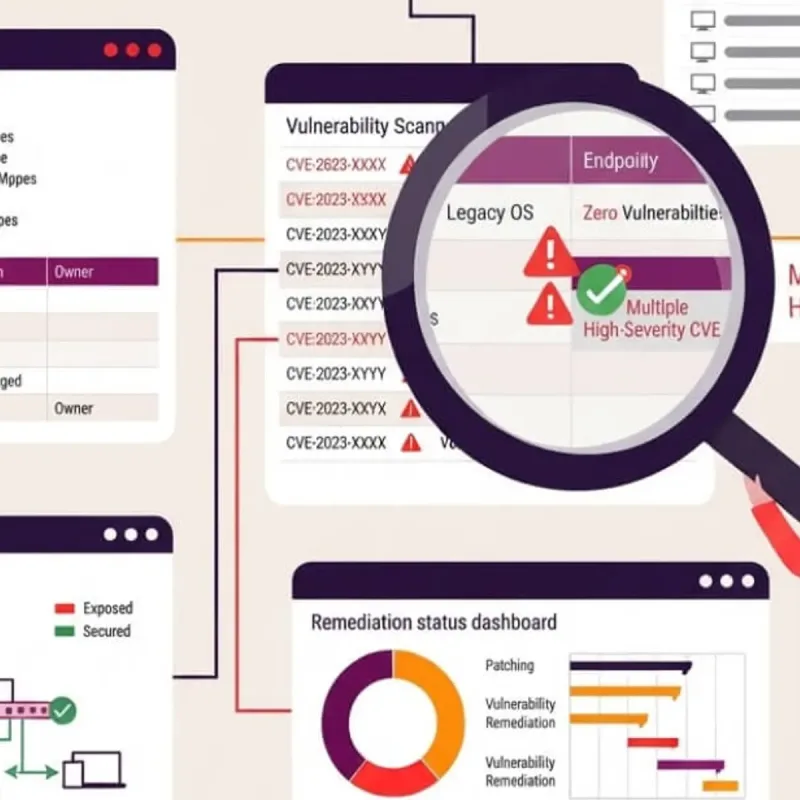
Data Authority: The Hidden Lever CIOs Need to Reduce Cyber Risk
As exploit windows shrink to hours, organizations face a new bottleneck: decision latency. CIOs who establish trusted data authority can move from managing uncertainty to managing measurable risk reduction.