Data Authority: The Hidden Lever CIOs Need to Reduce Cyber Risk
As exploit windows shrink to hours, organizations face a new bottleneck: decision latency. CIOs who establish trusted data authority can move from managing uncertainty to managing measurable risk reduction.
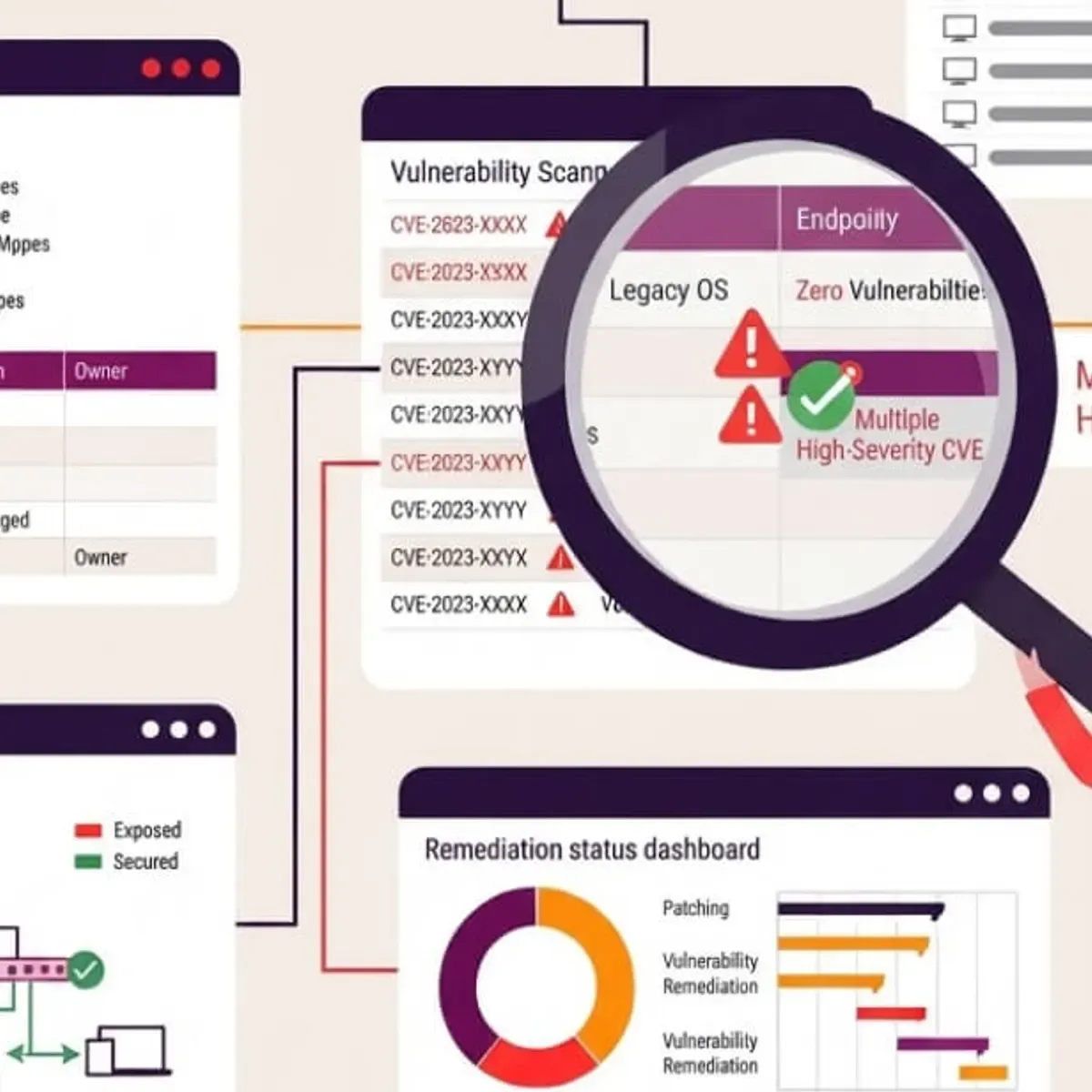
Vulnerability disclosures now spawn weaponized exploits within hours. Yet the industry's focus on faster patching misses a deeper problem: most enterprises cannot answer the foundational questions that drive every security decision. What assets exist in the environment? Which systems face exposure? What remediation efforts should take priority? Did corrective actions succeed? Without answers rooted in reliable data, CIOs manage uncertainty rather than outcomes, creating operational drag, amplifying cyber exposure, complicating regulatory compliance, and obscuring whether risk actually declined.
These questions often remain unanswered because the underlying information lives scattered across discovery platforms, configuration management databases, endpoint tools, vulnerability scanners and compliance systems that were never designed to interoperate. Research from Ivanti revealed that 87% of cybersecurity professionals cannot access the critical information required to make sound security choices. The recent surge in vulnerabilities did not cause this fragmentation; it simply exposed the weakness.
Why fragmented data is a CIO-level risk
The CIO's mandate has expanded beyond operational continuity. Today's CIO must demonstrate IT's business contribution, synchronize with the CISO on shared risk objectives, and construct organizational resilience. Undergirding these duties is data authority—the operational baseline that establishes what exists, what is vulnerable, what matters most, and what action should follow.
The absence of a single authoritative system compounds problems. A trusted system of record grants IT and security personnel one consistent picture of the infrastructure, ensuring all stakeholders operate from identical information and make decisions on the same foundation. Without it, prioritization devolves into speculation, compliance reviews yield inconsistent findings, and security and IT teams operate from separate datasets, each questioning the other's numbers. Leadership spends more cycles debating data accuracy than discussing risk.
Ivanti's findings show that 41% of IT professionals cannot obtain sufficient data to spot vulnerabilities, while 38% lack adequate visibility into devices connecting to their networks. The gap between presumed coverage and confirmed exposure breeds doubt precisely when leaders require certainty to make choices.
The cost of poor data authority
The impact materializes where CIOs bear responsibility. Budgets hemorrhage on overlapping tools because visibility into deployed solutions remains incomplete, and staff consume hours reconciling contradictory metrics instead of advancing risk reduction. Verizon's 2026 DBIR Report documents that vulnerability exploitation drives 31% of breaches, making it the leading breach vector. Given that the average breach costs $4.99 million, data fragmentation transcends operational friction—it becomes a financial threat.
Deploying additional tools or accelerating patch cycles cannot compensate for weak data authority. Velocity without precision means executing wrong decisions at higher speed. The real constraint is confidence in the underlying information.
Why trusted data comes before automation and AI
The risks of unvalidated data extend beyond security boundaries. Data authority determines whether CIOs can expand automation, substantiate compliance posture, and harness AI without amplifying operational risk.
Automating remediation and enforcing compliance require knowing which assets exist and their present condition. When automation draws from fragmented data, it scales inefficiencies and mistakes rather than strengthening operations. Governance suffers identically; regulators demand evidence of assets, exposure, and remediation outcomes—and unreliable data transforms compliance into improvisation.
AI amplifies the stakes because its output reflects the quality of its input. With 87% of security professionals unable to access critical information, many AI deployments work from incomplete datasets. Scattered information does not lower risk; it multiplies doubt while projecting false certainty. Unreliable data once slowed organizations. Today, it can drive flawed choices at machine velocity.
From data authority to risk reduction
The path to measurable risk reduction begins with validated data that furnishes a unified picture of assets, exposure, and risk across the organization. This data authority anchors a closed-loop model: identify what exists, assess and rank what requires attention, execute with assurance, and confirm that risk has declined.
Organizations that prioritize data authority from the start invest less time untangling conflicting reports and more time acting on confirmed risk. Operating from one authoritative source, CIOs synchronize IT and security on common objectives, quicken decision cycles, boost operational performance, and communicate security standing with greater credibility. As threats multiply and AI accelerates vulnerability discovery and exploitation, winners will be those that establish a validated operational data base for insight, prioritization, response, and ongoing validation. This foundation renders automation scalable, AI reliable, and risk decisions justifiable. The ultimate aim transcends vulnerability patching. It is sustained risk reduction, reinforced resilience, and assurance to the business that IT and security can evolve and respond to emerging challenges.
Read more

Marble Cognition Lands $3.75M to Teach AI Agents How Employees Actually Work
The Munich startup has developed technology that observes and records worker behavior to create process maps that AI agents can learn from and automate, addressing a critical gap in enterprise AI deployment.

Satlyt Demonstrates Distributed Computing Across Orbiting Satellites
The startup has successfully tested software that orchestrates computing tasks across multiple spacecraft in orbit, moving closer to its vision of turning satellites into networked data processing hubs.

Travel Tech Funding Slumps to Multiyear Lows as AI Fails to Reignite Investor Interest
Despite strong consumer travel demand and an influx of AI-powered startups, venture funding for travel technology companies has cooled dramatically, tracking toward the lowest annual totals since 2018.