Mega Series A Rounds Mask a Tightening Squeeze for Seed-Stage Founders
Giant Series A funding rounds are skewing the market, with over 70% flowing to AI companies. Meanwhile, the path from seed to Series A has become steeper and longer for everyone else.

Through late September, at least 114 Series A rounds valued at $100 million or above had been completed globally this year, with more than 70% directed toward AI startups, according to Crunchbase data. The trend signals trouble ahead for most founders operating outside the artificial intelligence sector.
The U.S. market saw 272 Series A closings during the third quarter, representing a 28% decline from 377 in the same period a year prior, per Crunchbase figures. Seed-stage activity proved more resilient, with 984 rounds versus 1,059 the previous year. These megadeals obscure the underlying contraction in traditional A-round activity.
Seed investments themselves continue to expand in size. The typical U.S. seed round reached approximately $3 million last year, triple the 2018 median, according to Crunchbase. However, progression rates tell a different story: only 24% of companies securing seed rounds of $1 million or more in 2023 have advanced beyond the seed stage, and just 16% of those from 2024 have done so. This compares sharply with rates of 55% or higher throughout the 2020s.
Size your seed against the Series A
Series A investors are now targeting companies with $2 million to $3 million in annual recurring revenue, sometimes pushing toward $4 million, according to Andy McLoughlin of Uncork Capital. The timeline from seed funding to Series A has extended beyond two years. McLoughlin advised that "if a seed won't carry you to that bar with six months to spare, a smaller round is the better deal."
Raising a larger seed is not necessarily the solution. Atomic, a supply chain planning software company based in New York and founded in 2023, demonstrates this principle. The company raised a $3 million seed round in April 2025, matching the median size, with backing from Madrona and DVx Ventures. Approximately 17 months later, it secured a $12.5 million Series A led by Madrona and Klass Capital.
Map your Series A leads now
Series A leadership typically comes from funds managing between $100 million and $500 million in assets. Founders should identify which investors lead at their stage and track when those funds close. Establishing regular contact with relevant partners a full year before seeking capital improves positioning.
Sell your way to the bar
The Series A bar has shifted to become fundamentally a revenue threshold, transforming it into a go-to-market challenge above all else. Most seed-stage companies encountered have developed stronger product capabilities than sales execution.
At MGV, the engagement process begins with an initial workshop called Sales Jumpstart, during which founders and their teams are interviewed. The company is then evaluated using an internal framework that assesses current position, target position, and the steps required to build a repeatable go-to-market operation.
Subsequent workshops cover outbound prospecting, lead qualification, buyer profiling, sales funnel mechanics, handling objections, sales hiring and assessment, compensation structures, fundraising strategy, pitch deck development, narrative construction, and investor introductions. Mentorship runs parallel to this curriculum.
A company generating $2 million in annual recurring revenue with a sales process that a new hire can execute presents a stronger Series A candidate than one at $3 million whose revenue depends on founder-driven relationships that cannot be replicated. The founders who succeed are already thinking ahead to the round that follows.
Read more
Crux Labs Lands $6M to Bridge AI Agents and Human Expertise
The startup's platform helps enterprises align autonomous agents with expert judgment at scale, drawing backing from Benchstrength and Misneach.
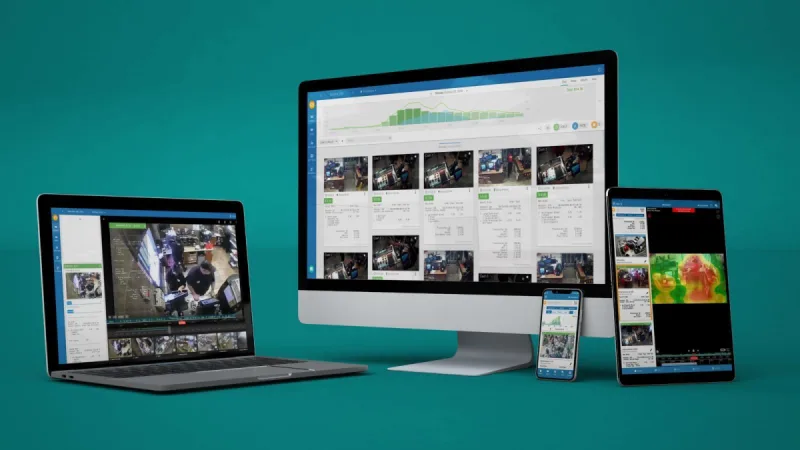
Solink Lands $100M+ to Expand AI-Powered Camera Analytics Platform
The Ottawa-founded video intelligence company is using fresh capital to build out its AI vision capabilities across retail, restaurant and warehouse operations worldwide.
Series B Capital Floods to AI Winners While Mid-Tier Startups Struggle
U.S. Series B funding has hit its highest level in years at $48 billion, but the money is concentrating among a shrinking number of AI companies while smaller rounds nearly disappear.