Zest Moves Restaurant Discovery Into Text Messages With AI Booking Agent
The restaurant discovery startup has launched an AI concierge that operates via SMS, letting users get personalized recommendations and book tables without leaving their text thread.
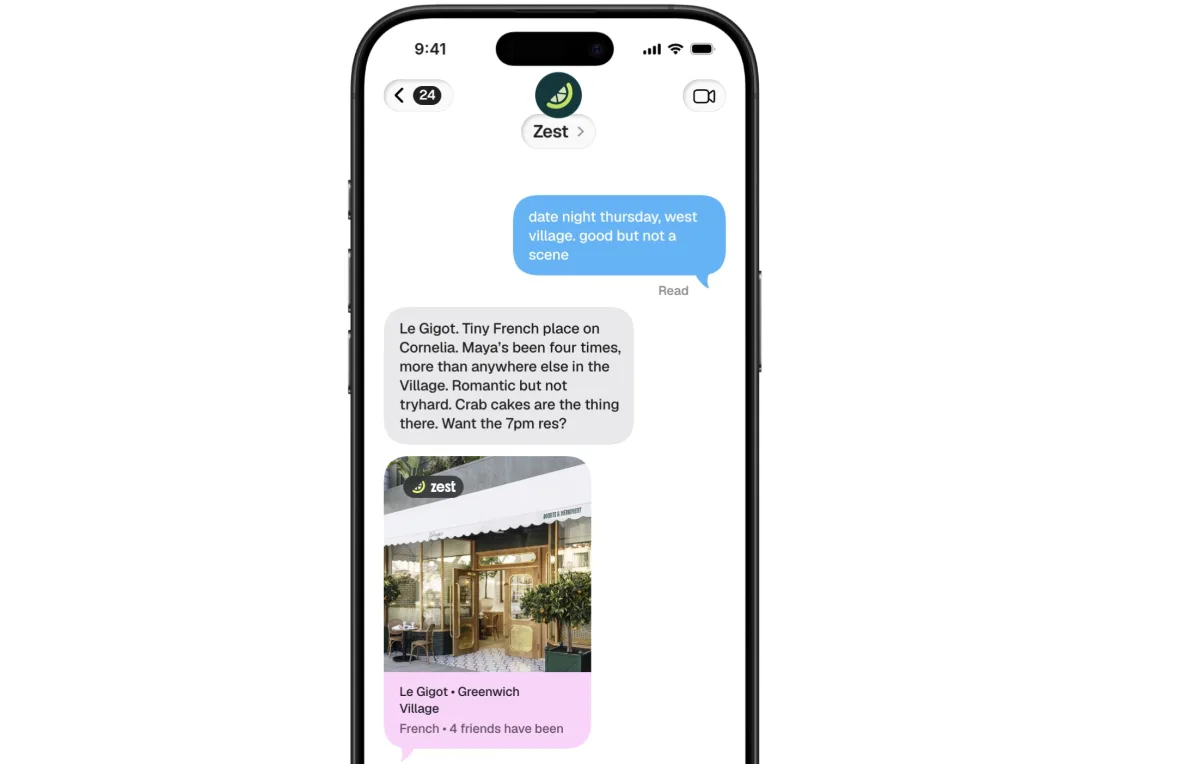
Zest, a restaurant discovery platform that debuted this year, is shifting its focus away from mobile apps toward conversational interfaces. The company unveiled a new capability on Thursday: an AI-driven restaurant concierge accessible through text messaging, positioning itself alongside similar agents like Instinct and Poke.
This move reflects a broader industry trend where conversational AI agents are replacing dedicated mobile applications for specific tasks. For Zest, the strategy means embedding restaurant suggestions directly into text conversations while enabling immediate table bookings through the same channel.
According to founder and CEO Mario Gomez-Hall, "The agent is the product now. You text it, and it answers from your own history and your friends'. It doesn't need weeks of conversation to learn you because it starts from where you've actually been."
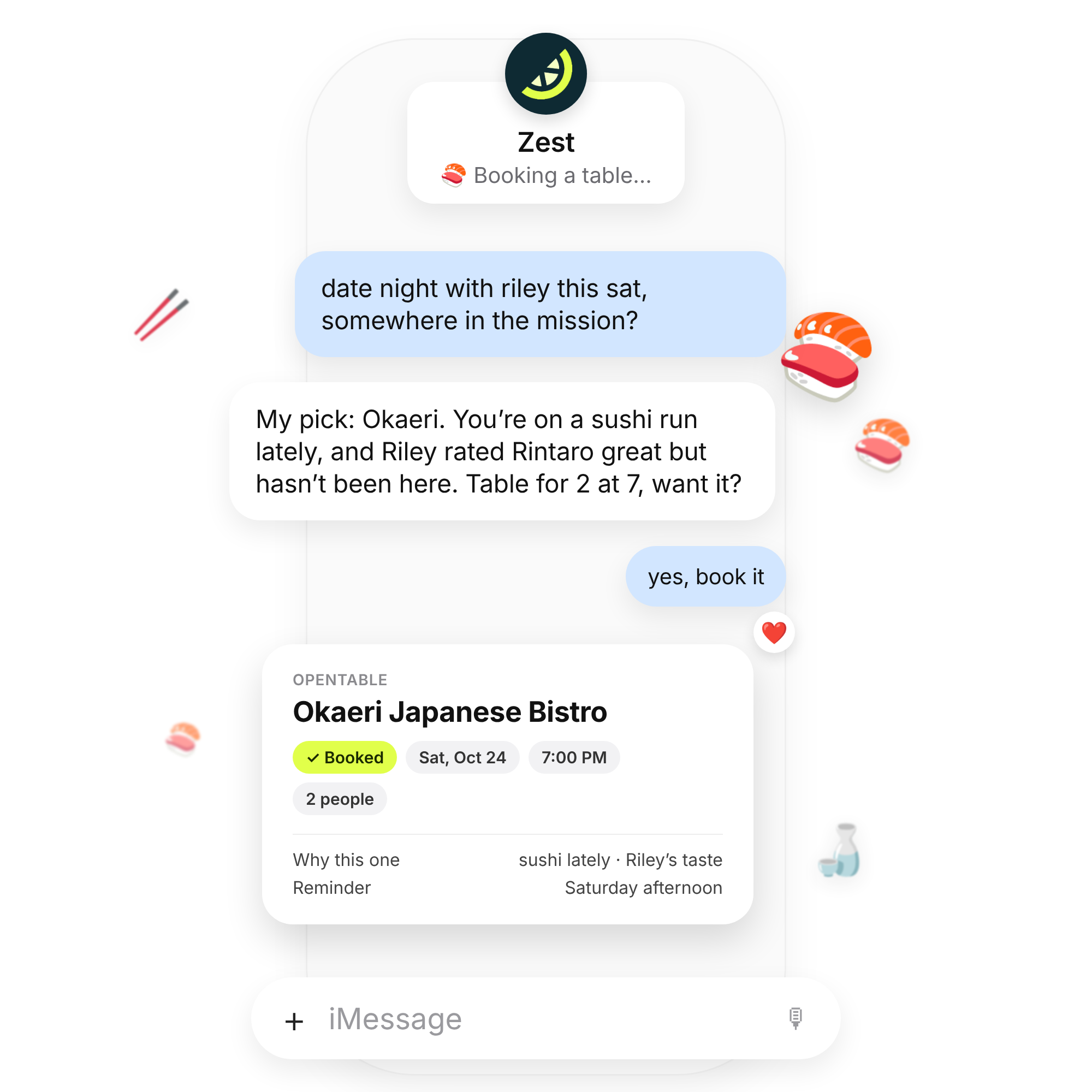
Zest was established in November 2024 with $1.8 million in pre-seed funding led by Alexis Ohanian's 776 and Steve Jang's Kindred Ventures. The platform's core differentiator involves connecting to users' credit card accounts to identify their dining patterns and preferences. This financial data flows through Plaid, the financial services infrastructure company used by banks and fintech applications, with Zest filtering exclusively for food and beverage transactions.
The texting interface tackles the same fundamental question—where should I eat?—through a different medium. Users can message the Zest concierge at (212) 470-6067 to receive suggestions, check availability, and complete reservations via integrated platforms including OpenTable, Resy, and SevenRooms.
The system gains additional utility in group settings. When added to a group chat, Zest can synthesize the preferences of multiple people, identify restaurants that appeal to everyone, facilitate voting to resolve disagreements, and finalize group reservations without requiring participants to exit the conversation.
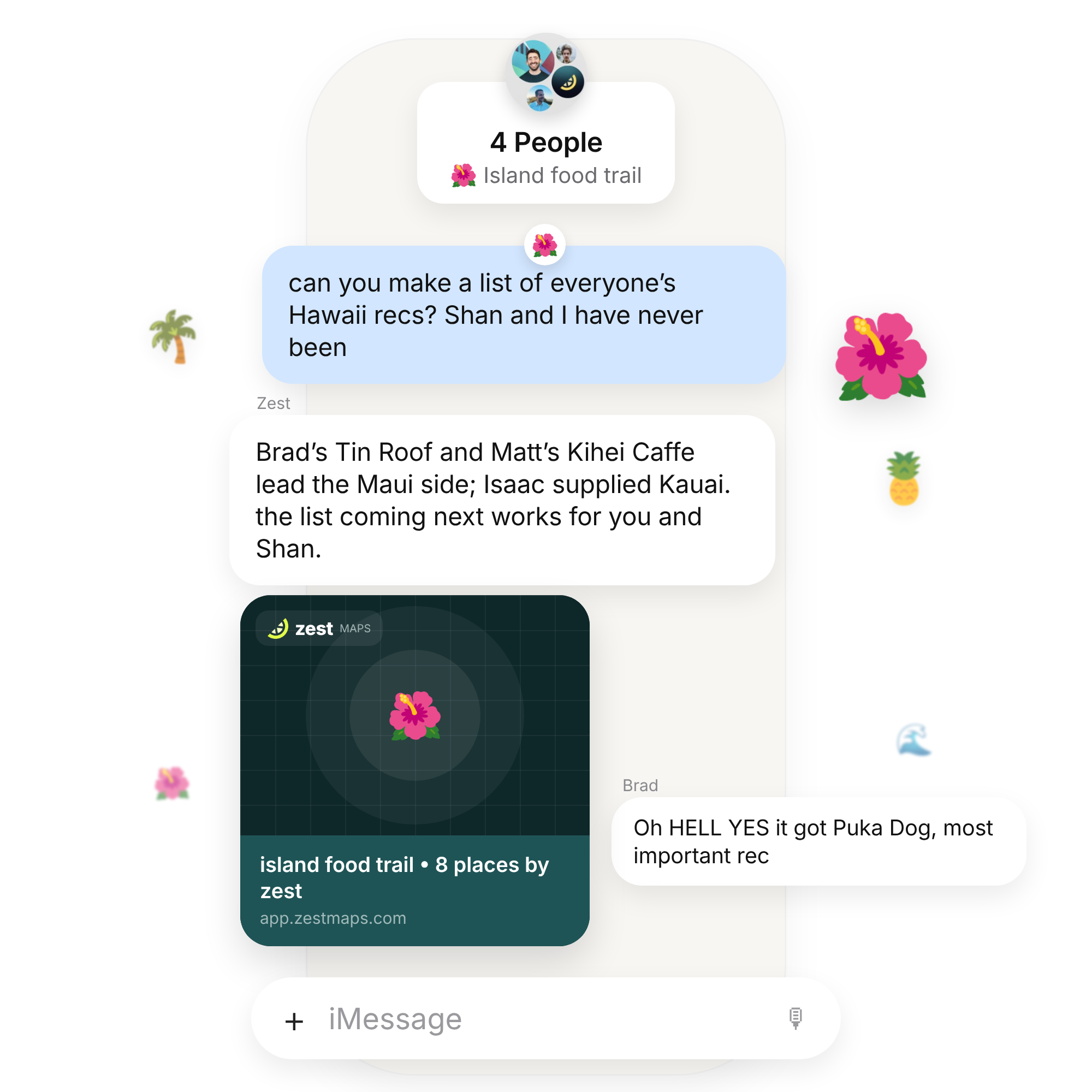
Users can filter recommendations by cuisine type, craving, occasion, dietary needs, or location. The agent also responds to queries about restaurant characteristics—noise levels, WiFi availability, menu options—and can share menus to support decision-making.
Testing by TechCrunch demonstrated solid performance, with the AI generating relevant suggestions aligned with user preferences and specified parameters such as timing, party size, and geography. While table-finding functionality exists in other applications, the text-based workflow streamlines the discovery and booking process by consolidating multiple steps into a single conversation thread.
Zest began testing the concierge last month but delayed the public launch until booking functionality was operational. The company is exploring expansion beyond restaurants to encompass recommendations for retail, shopping, and other business categories.
The shift to text-based interaction represents a scaling strategy for the startup, which currently operates with a limited user base. Revenue generation will center on transactions tied to bookings and ordering.
Gomez-Hall explained the business model: "Booking and ordering are the first revenue lines. Zest books your table through OpenTable or Resy today, with food ordering coming, and there are transactions there to participate in. The reason that gets interesting is that Zest learns your taste faster than a general assistant does, because it starts from where you've actually been instead of asking you questions. That's worth something well beyond dinner."
Read more
Adobe MAX 2026 in Miami Beach: dates, keynote times and how to watch
Adobe MAX 2026 runs November 10–12 in Miami Beach, and the online edition is free with an Adobe account. Keynote and Sneaks times are listed in ET, PT and UTC, along with registration steps and pass prices.

How the Motion Picture Association Uses Sales Software to Fight Piracy
Legal teams at the MPA are running investigations and coordinating anti-piracy cases through a CRM platform designed for sales, with AI agents now handling the initial triage of security alerts.

Pinterest launches programmatic buying to compete for enterprise ad budgets
The platform rolled out Programmatic Deals across select regions, connecting its inventory to major demand-side platforms and positioning itself as a programmatic alternative for media buyers.