Therabody Deploys AWS-Powered Shopping Assistant After Monitoring AI Market Signals
The wellness technology company built Jason, an AI shopping assistant, in under 90 days using AWS infrastructure after observing a surge in ChatGPT-driven traffic during the previous holiday season.
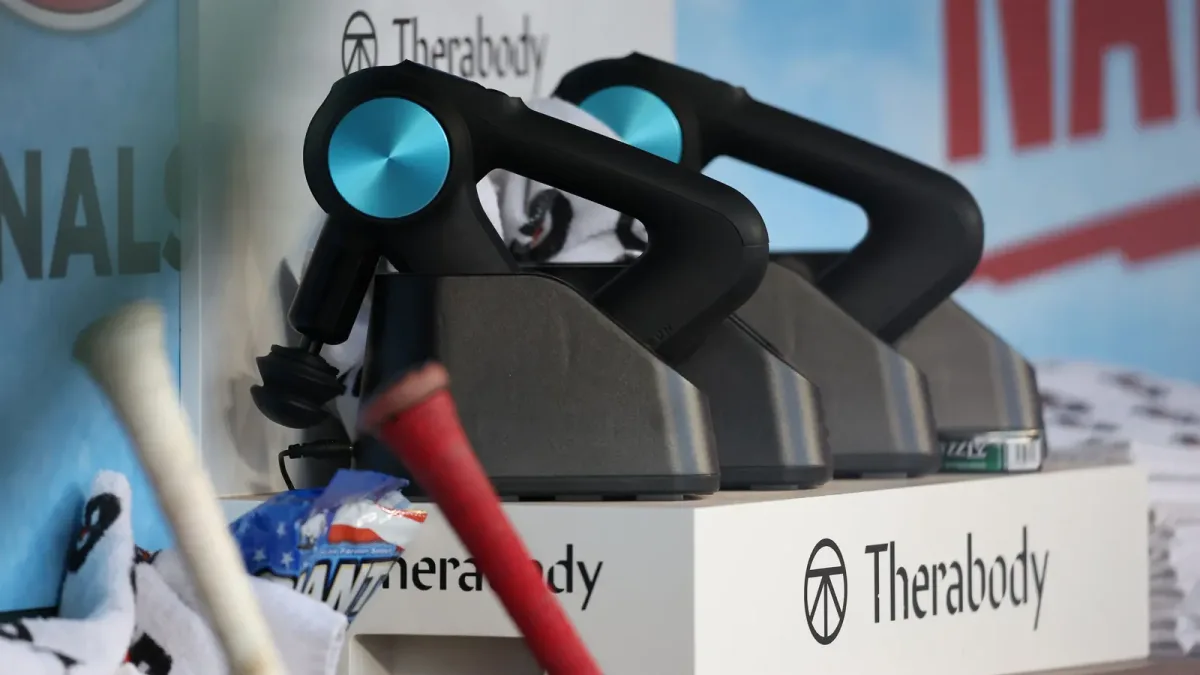
Therabody has adopted a measured stance toward artificial intelligence, monitoring how customers engage with emerging technologies before committing resources to new capabilities. The company responds to shifts in customer behavior by developing infrastructure and tools on its own managed cloud systems, a strategy evident in its latest initiative: an AI-powered shopping assistant called Jason, which launched in October and runs on AWS's Agentic Shopping Assistant platform.
Founded in 2016, Therabody has tracked AI adoption patterns through data analysis of site traffic and product interactions, according to Caitlin Berzok, SVP of digital at Therabody. During the previous holiday season, the company observed a dramatic increase in traffic originating from OpenAI's ChatGPT, prompting a reconsideration of how to incorporate conversational AI into its customer experience.
"All the signals in the marketplace were that this wasn't an edge case anymore," Berzok told CIO Dive, explaining that the company determined the moment had arrived to introduce its own conversational AI assistant. Major retailers including Walmart and Target have similarly begun rolling out shopping assistants to enhance customer interactions.
Therabody's mobile applications for Android and iOS operate on AWS infrastructure, which the company had previously leveraged to build and launch an AI recommendation engine. The team utilized Amazon Bedrock, a generative AI application development platform, to evaluate and switch between different models in pursuit of optimal performance. When AWS introduced Agentic Shopping Assistant in May, Therabody seized the opportunity to launch Jason, Berzok said.
Building Jason
The decision to proceed with Jason reflected Therabody's history of deliberate evaluation and patience in identifying appropriate AI opportunities, Berzok explained. The organization has traditionally maintained a careful approach to deploying AI across both customer-facing and internal systems.
"One of the things I always tell my team is, 'We don't AI for AI's sake,'" she said. "We didn't jump on the early AI wave, but we were really looking at: How is it evolving, how are consumers reacting to it, identifying what are the use cases that make sense for our business and then implementing that thoughtfully. That's been our methodology."
Before selecting the AWS service, Berzok's team conducted a build-versus-buy evaluation and reviewed competing SaaS offerings and ready-made solutions. Key factors that directed Therabody toward AWS included the capacity to establish tailored safeguards and make rapid adjustments, Berzok noted.
AWS collaborated with Therabody to manage the tool's output and product suggestions, preventing unsupported assertions or inaccurate information. "AI is AI, it restates things however it wants to and can hallucinate," she said. "There are certain things we couldn't allow it to because when you're giving someone a recommendation on pain, you have to be right. We were able to work with [AWS] within our constraints and create custom parts of the implementation that could allow us to do that and keep our friends in legal and regulatory happy with it as well."
Deployment of Jason took Berzok's team fewer than 90 days following the selection of the AWS service. The assistant interprets customer inquiries and directs users toward appropriate products. It operates on Therabody's managed AWS infrastructure, providing the company with complete control over the system as well as design and interface customization options.
"Being able to bring that to life in a digestible, conversational way that consumers can not only get to the right product for them, but have the trust that it's going to work for them, we've seen some good indicators that's how people are engaging with it," Berzok said.
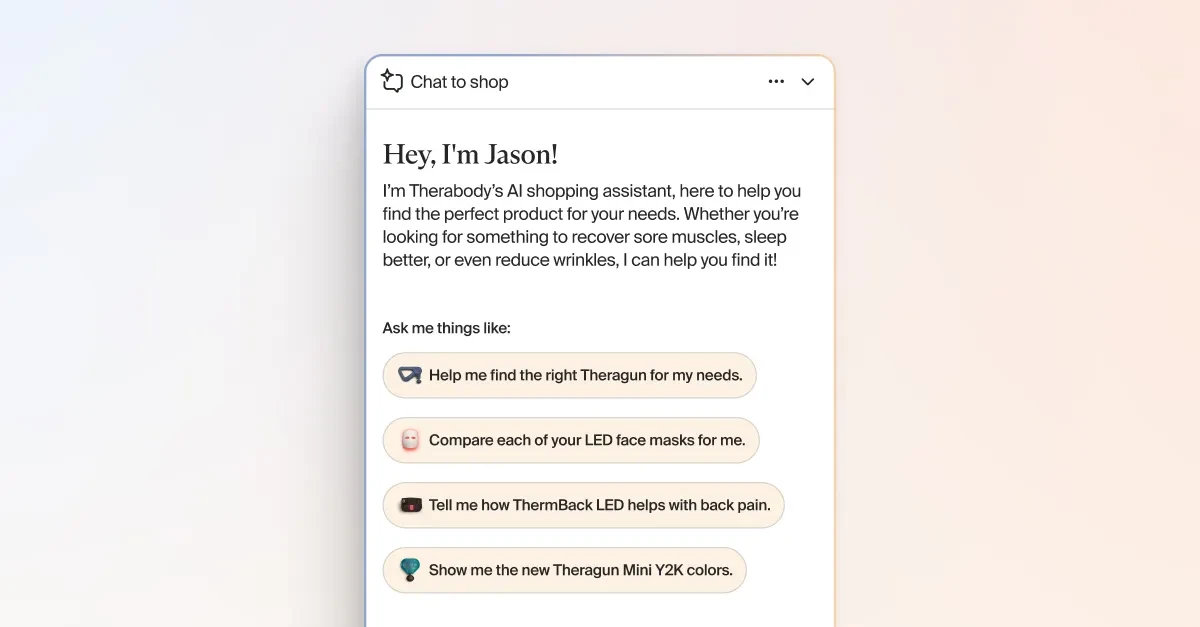
Jason facilitates customer progression toward purchase, enabling checkout initiation directly within the chat interface. The tool does not retain credit card details; instead, it transfers customers to Therabody's Shopify integration partner for transaction completion or to the company's customer support team, Berzok explained.
Therabody developed a proprietary control panel to refresh Jason's contextual information and review conversation logs, Berzok said. The panel retrieves data from Therabody's existing systems, drawing from resources including its Shopify product catalog pages.
"If something goes out of stock, it's not going to show up," she said. "We have those integrations and controls in place. Having everything singing from the same sheet of music has created a much more seamless and scalable experience for us."
Two months into Jason's operation, Therabody has observed encouraging signs of customer engagement and intends to expand the assistant's contextual knowledge and explore additional applications, according to Berzok.
Throughout the upcoming holiday season, Berzok said Therabody will measure whether customer navigation improved and monitor purchase conversion rates to determine whether customers not only located the correct product but completed transactions.
Read more

Internal Rifts at Anthropic and OpenAI Over Safety of Unreleased AI Models
Researchers at two leading AI companies are clashing with leadership over whether to deploy advanced models that demonstrate reasoning capabilities far beyond current public systems, according to reporting based on conversations with more than two dozen insiders.

Epochal AI launches $100M platform for training predictive models on historical web data
A new startup founded by former xAI researchers is offering developers access to three decades of archived web pages to train AI systems that forecast future events.
Training Gap Widens Between Executives and Frontline Workers, Slowing AI Adoption
A new report from Marsh reveals that executives receive far more AI training than hourly and entry-level workers, creating a disparity that may be holding back broader organizational adoption of the technology.