How Today's AI Funding Deals Shape Tomorrow's Exit
AI startups are commanding valuations 2.5 times higher than traditional tech companies, but the speed of growth is creating hidden costs in contracts that will matter when acquisition offers arrive.
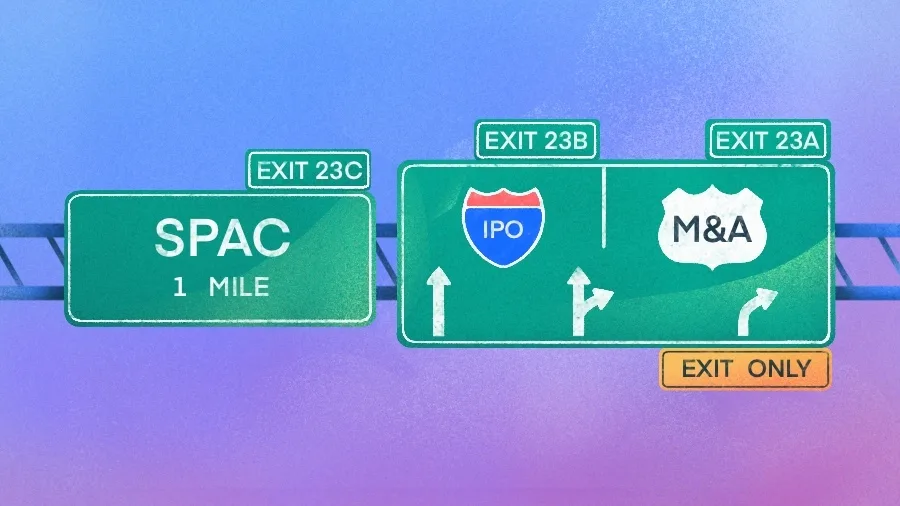
The valuation gap between artificial intelligence startups and their non-AI peers has widened dramatically. Through 2026, AI companies have closed financings at median pre-money valuations reaching 2.5 times those of non-AI startups across seed through Series C rounds. Crunchbase's Current Valuation Model suggests that more than 1,900 unicorn-track startups now carry collective valuations approximately $2 trillion higher than their most recent funding round prices.
This rapid expansion creates a problem: when deals move quickly, the terms embedded in financing agreements, compute contracts and data licensing arrangements get locked in without sufficient consideration of downstream consequences. Many of those provisions will later complicate a sale, increase transaction costs or reduce the final valuation. The critical step is pausing long enough to evaluate how each agreement affects your eventual exit before signing.
Investor approval rights have shifted in license-and-hire transactions
License-and-hire deals—where an acquirer licenses technology and brings on the team rather than purchasing the entire company—have grown more prevalent in the AI sector. The National Venture Capital Association updated its model charter to address this trend. The 2025 version introduced an optional investor approval right over such transactions, requiring only board sign-off from investor directors. The November 2026 update elevated the threshold, now mandating a vote of preferred stockholders instead.
While investors typically hesitate to invoke approval rights to kill deals, the new structure gives them a seat at the negotiation table when an offer materializes. This presence shapes how proceeds split between employee retention packages and the broader cap table.
The dynamics intensify when an investor doubles as a strategic partner. Nvidia's NVentures arm has backed more than 260 startups since the start of 2024, with 121 investments in 2026 alone, according to Crunchbase data. Strategic capital frequently arrives bundled with compute, cloud or distribution agreements that include exclusivity clauses, change-of-control provisions and rights of first negotiation. A right of first negotiation can require you to pause discussions with competing bidders while you negotiate with your strategic investor first.
Realistic assessment of your negotiating position matters. Terms from the most competitive AI funding rounds get cited as market standard, but your actual leverage depends on investor appetite for your specific deal. Concentrate negotiating effort on the handful of provisions that will genuinely affect a sale rather than optimizing marginal details.
Acquirers will scrutinize data, code and compute commitments
An AI company's most valuable assets often present the greatest diligence challenges for buyers.
Data presents the first hurdle. Acquirers will investigate the origin of your training data and whether your contractual rights permit both your current use and the buyer's intended use. Data available to the public does not automatically carry a license. Authorization to use a customer's data for serving that customer does not necessarily extend to training models for broader deployment. If you performed fine-tuning on customer data under agreements restricting use to that customer's benefit, a buyer may be unable to integrate your models into its own product suite. The acquirer might demand special indemnification, a larger escrow reserve or a reduced purchase price.
Code receives comparable examination. In recent transactions, both investors and acquirers now ask what percentage of the codebase originated from AI tools and whether those tools incorporated copyleft or commercially licensed components. Clients should conduct regular code audits and resolve issues as they surface. This preparation simplifies the diligence conversation considerably.
Compute and model-provider agreements create a separate challenge: an acquirer may inherit obligations it does not need. Minimum-spend commitments, reserved capacity and exclusivity terms typically transfer to the buyer in an acquisition. An acquirer with its own GPU infrastructure may have no value for three additional years of reserved capacity and will discount the offer accordingly to account for those remaining payments.
Addressing these issues at the negotiation stage proves far simpler than managing them during a buyer's diligence process.
Five things to do now
- Map who decides on a sale. Know which board and investor approvals it would trigger, including any approval right over a license-and-hire deal.
- Track your data and code rights. Record data sources and use restrictions and audit AI-generated code periodically.
- Stress-test your infrastructure commitments. Run cloud, GPU and model-provider obligations against slower growth and a sale.
- Keep strategic rights narrow. Limit the scope, duration and triggers of any right of first offer or negotiation you give a strategic investor.
- Read commercial contracts with an exit in mind. Check the change-of-control and termination rights before you sign.
Most founders are not contemplating an acquisition when they finalize a seed round or execute their first GPU contract. You need not forecast the exit. What matters is understanding what you surrender each time you sign, so the momentum that secured your funding does not constrain your options when the right acquisition opportunity surfaces.
Read more

The Business Case Against Bad Startup Names
Branding experts identify the naming patterns that undermine a startup's credibility and market appeal, from harsh phonetics to dated suffixes.

Verra Lands $5M to Turn Consulting Firms' Hidden Knowledge Into AI-Powered Assets
The institutional memory startup, founded by ex-OpenAI and Palantir researchers, has raised seed funding to help consulting firms surface decades of accumulated work through AI agents that operate inside their own cloud environments.

Sierra Technologies Raises $1.75B in Series F as AI Agent Platform Hits $400M ARR
The AI agent development platform closed its third major funding round in 14 months, with Greenoaks and Lightspeed leading the investment as the company's annualized revenue surpasses $400 million.