Verra Lands $5M to Turn Consulting Firms' Hidden Knowledge Into AI-Powered Assets
The institutional memory startup, founded by ex-OpenAI and Palantir researchers, has raised seed funding to help consulting firms surface decades of accumulated work through AI agents that operate inside their own cloud environments.

Verra, an artificial intelligence startup focused on building institutional memory systems for consulting firms, announced a $5 million seed funding round designed to help these organizations unlock and distribute the knowledge accumulated across decades of client work. The funding was led by Kearny Jackson, with backing from Andreessen Horowitz's a16z Speedrun, Petra and several strategic investors. The round closes just seven months after Verra, officially registered as Lighthouse Software Technologies Inc., went live with its platform.
Kashyap Nathan, the startup's chief executive and co-founder, previously held research positions at OpenAI Group PBC and Palantir Technologies Inc. His co-founder, Christopher Farrington, spent his career as a software engineer at Deloitte Touche Tohmatsu Ltd. The pair identified a persistent problem during their time at these organizations: highly compensated consultants repeatedly wasted significant hours digging through company records to locate knowledge their firms already possessed but could not easily access.
Consulting firms sit on decades of proposals, models and reports, and almost none of it is usable by the people who need it next. We built the layer that makes that knowledge usable, and we built it to run inside the firm's own cloud, because no consulting firm is going to send client work to a shared service.
Kashyap Nathan
How Verra Works
The platform operates as an artificial intelligence-native memory layer that catalogs past deliverables and extracts methodologies into reusable capabilities for autonomous agents. These agents then operate within familiar applications including Microsoft Word, PowerPoint and Excel, generating comprehensive drafts for new client projects in ten hours or less—a dramatic reduction from the typical 80-hour timeline at most consulting firms.
Nathan contrasted the traditional workflow with Verra's approach: "The traditional approach involves a SharePoint search box and a junior analyst with a week to spare. The AI-native version of that is a chat tool that answers a question from a few retrieved pages and leaves the consultant to rewrite the output. But both start from a blank page."
The platform's efficiency extends beyond speed. While conventional chatbots produce isolated text fragments, Verra constructs finished deliverables directly within Office applications, organized alongside client briefs. Nathan elaborated on this distinction: "Verra starts from the firm. It indexes everything the firm has produced, distills how each practice does its work, and then lets a consultant point at a new situation and get to most of a finished deliverable in Excel or PowerPoint, before the human analyst starts writing a line. Every claim links to the page or cell it came from. The firm's engineers and ours then build the specific workflows a team wants."
Architecture and Design Principles
Verra constructed its agents to operate within clients' own cloud infrastructure, a decision rooted in three fundamental realities of professional services. Consulting firms cannot permit client information to exit their controlled environments, they require verifiable answers they can trust, and they will not adopt tools that demand abandoning their existing technology stacks.
Early Adoption and Results
The platform has already gained traction with two major global consulting operations: Berkeley Research Group and The Keystone Group. At Berkeley Research Group, adoption has been particularly rapid, with more than 90% of consultants using Verra on a daily basis. Since August, the platform has generated more than 105,000 files and has replaced the Tableau platform with a natural-language Snowflake interface. Berkeley Research Group estimates that Verra has delivered approximately 215,000 analyst hours in annual savings.
Verra hands our teams finished, sourced first drafts on engagements that used to start from a blank page. It has changed how quickly we move for clients.
Raghav Vadlamani, Berkeley Research Group's global managing director of AI solutions
Future Direction
Looking ahead, Nathan intends to deepen Verra's integration with consulting firms, enabling the agents to comprehend how entire organizations function and enhance overall operational efficiency beyond individual engagements. The founder also sees expansion opportunities in adjacent sectors including investment research and accounting. Additionally, Nathan plans to provide customers' engineering teams with capabilities to build on top of Verra's infrastructure.
Sriram Krishnan, a partner at Kearny Jackson, brings firsthand experience from the consulting industry. He noted what impressed the firm about Verra's potential: "What stood out to us was how quickly Verra became critical to the firms using it. Their consultants adopt it, use it and demand more of it. It's becoming the memory and operating layer for how consulting firms work."
Read more

Sierra Technologies Raises $1.75B in Series F as AI Agent Platform Hits $400M ARR
The AI agent development platform closed its third major funding round in 14 months, with Greenoaks and Lightspeed leading the investment as the company's annualized revenue surpasses $400 million.

Figma Engineer Sues Over Sexual Harassment and Retaliation Claims
A Figma engineer is taking legal action against the design software company and CEO Dylan Field, alleging she endured sexual harassment, racial and gender discrimination, and retaliation after the company repeatedly told her to confront her harassers rather than investigate her complaints.
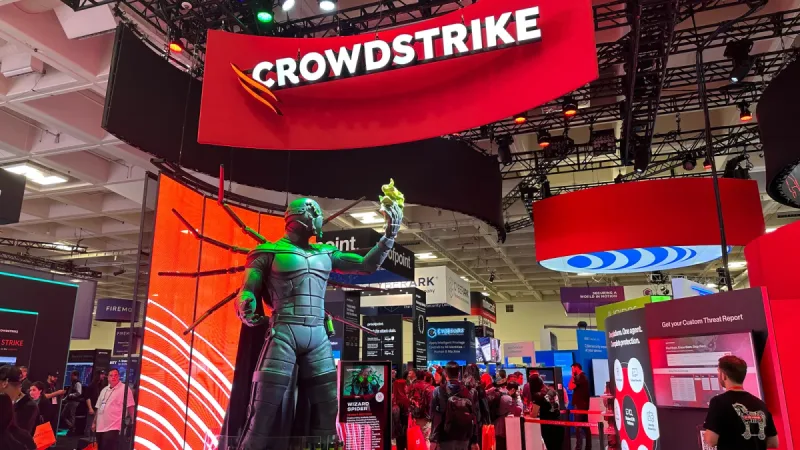
CrowdStrike to buy Zscaler for $43.9B, betting on unified AI-driven security
CrowdStrike is acquiring cybersecurity rival Zscaler in an all-stock deal that would create a $10 billion revenue powerhouse and expand the buyer's reach into network security.