Epochal AI launches $100M platform for training predictive models on historical web data
A new startup founded by former xAI researchers is offering developers access to three decades of archived web pages to train AI systems that forecast future events.

Epochal AI Inc., an artificial intelligence tooling company, unveiled its platform today backed by $100 million in funding. The investment came from the startup's Chief Executive Officer Guodong Zhang, a machine learning researcher and co-founder of xAI Corp. Zhang launched Epochal earlier this year alongside fellow xAI alumni Zihang Dai and Manuel Kroiss. The team also draws on talent from Anthropic PBC, OpenAI Group PBC and Google DeepMind.
The company's debut product is a cloud-based service called the Epochal Time Portal, designed to help developers build AI models capable of forecasting future outcomes. The platform grants models access to a vast repository of historical web content spanning the last 30 years.
Consider a financial institution seeking to develop an AI system that predicts quarterly earnings. Using the Epochal Time Portal, it could retrieve financial data from the first three quarters of 2025 and instruct the model to forecast fourth-quarter results. Once the model produces its predictions, developers can validate them against actual fourth-quarter figures to assess accuracy, refine the system as needed, and iterate the training process until performance improves.
The Epochal Time Portal launches with more than 1 trillion historical web pages, each tagged with a timestamp indicating its creation date. This metadata enables tracking of how individual pages evolved over time. A custom search engine allows AI models to request web pages from specific time periods, with one-minute granularity available for frequently updated content.
Like conventional search engines, the Epochal Time Portal ranks results by relevance to each query. However, it incorporates creation date into its relevance calculations. A search for "Meta" restricted to pages created before 2021—the year Facebook Inc. rebranded—will exclude content about the social media company.
Advanced AI models can detect when they're being trained on historical rather than current information by comparing a web page's creation date against the system clock. This temporal mismatch can degrade training effectiveness. Epochal addresses this by running models inside isolated environments synchronized to their training data. If a company trains a model on 2025 web pages, the platform executes it on a Linux system from that year, applying the same synchronization to software dependencies and programming language versions.
The Epochal Time Portal is launching with a single free tier offering limited usage. The company plans to follow the launch by publishing findings from multiple AI experiments conducted using the platform.
Read more

Internal Rifts at Anthropic and OpenAI Over Safety of Unreleased AI Models
Researchers at two leading AI companies are clashing with leadership over whether to deploy advanced models that demonstrate reasoning capabilities far beyond current public systems, according to reporting based on conversations with more than two dozen insiders.
Training Gap Widens Between Executives and Frontline Workers, Slowing AI Adoption
A new report from Marsh reveals that executives receive far more AI training than hourly and entry-level workers, creating a disparity that may be holding back broader organizational adoption of the technology.
Anthropic Shares Sink Below IPO Price, Signaling Trouble for AI Sector Valuations
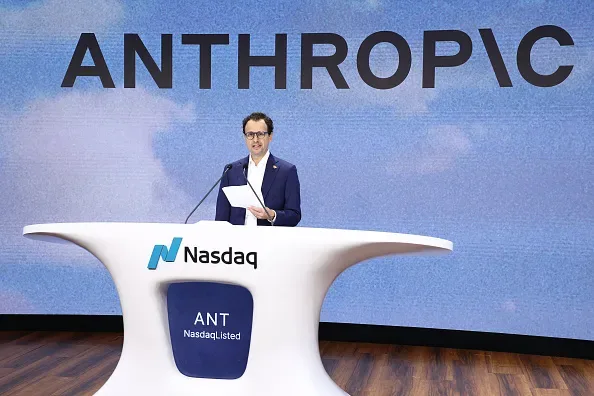
Anthropic's stock dropped to $76 per share by midday Tuesday, falling below its $83 IPO price and raising concerns about how public markets view AI startups.