Zach Lieberman on Breaking Code and Drawing with Computation
The MIT Media Lab instructor and School for Poetic Computation co-founder discusses how he learned to see computers as expressive tools, why he envies early digital pioneers, and why breaking things is central to his creative process.
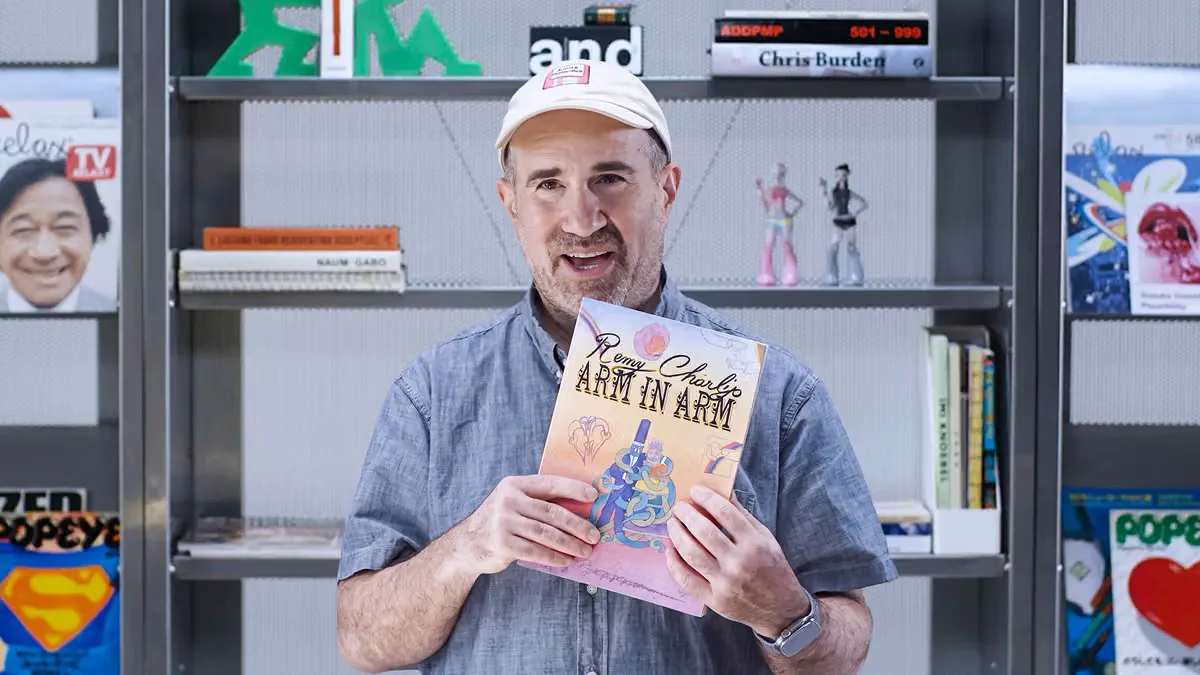
Zach Lieberman is a New York–based artist and educator who co-founded the School for Poetic Computation, helped develop openFrameworks, and teaches at MIT Media Lab. In a conversation about his creative influences and working methods, he reflected on the moment he realized computational art could sustain a career.
From Skepticism to Confidence
Lieberman studied fine art, drawing, and printmaking before turning to computers. Initially, the transition felt limiting. "I struggled when I started using a computer because it felt less expressive than the pencils and paint brushes I was used to," he explained. That changed when he created a simple coding experiment. "I made a simple coding experiment where you draw a line, and it uncurls itself. It was so alive and organic, and I felt confident after that point that I could spend my career asking weird questions like that."
Daily Practice and Iteration
Lieberman's working routine combines analog and digital approaches. "I often sketch on paper and map out some ideas I want to try. I also open up yesterday's project and run it a few times to think about how I can change something old to make it something new."
Formative Tools and Influences
The original Macintosh computers hold special significance for Lieberman. "The original Mac computers, like Mac SE—I still remember how the mouse felt coming from an MS-DOS machine with green type. The idea that you could click anywhere on the screen opened up worlds for me. I would sit at my neighbor's house and use the paint can tool in MacPaint and just click and click and click."
When asked whose work inspires envy, Lieberman pointed to artists who pioneered new mediums. "I'm jealous of a lot of people in my field, but mostly I'm jealous of artists who lived at different moments and got to explore a new medium for the first time. Lillian Schwartz at Bell Labs working with early computer animation, Myron Krueger doing the first body-based interaction, etc. It must have felt wild to be at the start of something."
Current Frustrations and Creative Philosophy
Lieberman expressed frustration with how AI is currently being deployed in visual culture. "I'm very tired of seeing AI use which stops at the output—I think AI can be a useful tool for conversation, but it's becoming maddening to see posters and images in delis that are clearly just outputs from AI."
His approach to creative work challenges conventional wisdom. When asked what rule he breaks most often, he said: "Don't repeat yourself! I find repeating yourself to be the most interesting thing you can do. You see old ideas with new eyes."
The Power of Breaking Things
A lesser-known aspect of Lieberman's process centers on deliberate destruction. "I really like to break things! I often think my job is to turn the volume knob up to 11 and break a piece of code in order to see what's possible."
Writing as Thinking
Lieberman acknowledged resistance to feedback that ultimately proved valuable. "Write more. I find writing hard, but every time I do, I understand myself better. Writing (like coding) is a form of thinking."
Recent Inspiration
A recent discovery reignited Lieberman's enthusiasm for experimentation. He found a book called "Learning by Heart" by Sister Corita Kent, known for experimental typographic posters. "It's got one of the worst covers, but the inside is all about the joy of making art. It's lowercase 'art,' art as a verb, not uppercase 'Art,' art as something you need to worry about or justify. I love the feeling I get reading that book, and it made me excited to experiment and play. I often share her rules with my students, but this was the first time I've gotten deeper into her writings."
When seeking to break creative blocks, Lieberman turns to music. "Anything by Hiroshi Yoshimura."
Read more

California Tightens Rules on Robotaxis as Incidents Mount
A new state law sets safety standards and accountability measures for autonomous vehicle operators, requiring local support staff and penalties for blocking emergency responders.

Wawa Elevates Long-Tenured Executive to CIO Role
The convenience store chain has named Bill O'Donnell, a 25-year company veteran, as its new chief information technology officer, putting him in charge of tech strategy, cybersecurity and digital operations.

ServiceNow Debuts Flow, a Conversational Service Desk Built for Speed Over Complexity
ServiceNow is rolling out Flow, a natural language service desk tool that automates employee requests through Slack and Microsoft Teams without requiring a full IT service management overhaul.