Why AI-Generated User Personas Fall Short of Real Research
Empathy maps built on artificial data may feel efficient, but they lack the specificity and evidence that comes from talking to actual users. AI can organize research findings, but it cannot replace them.
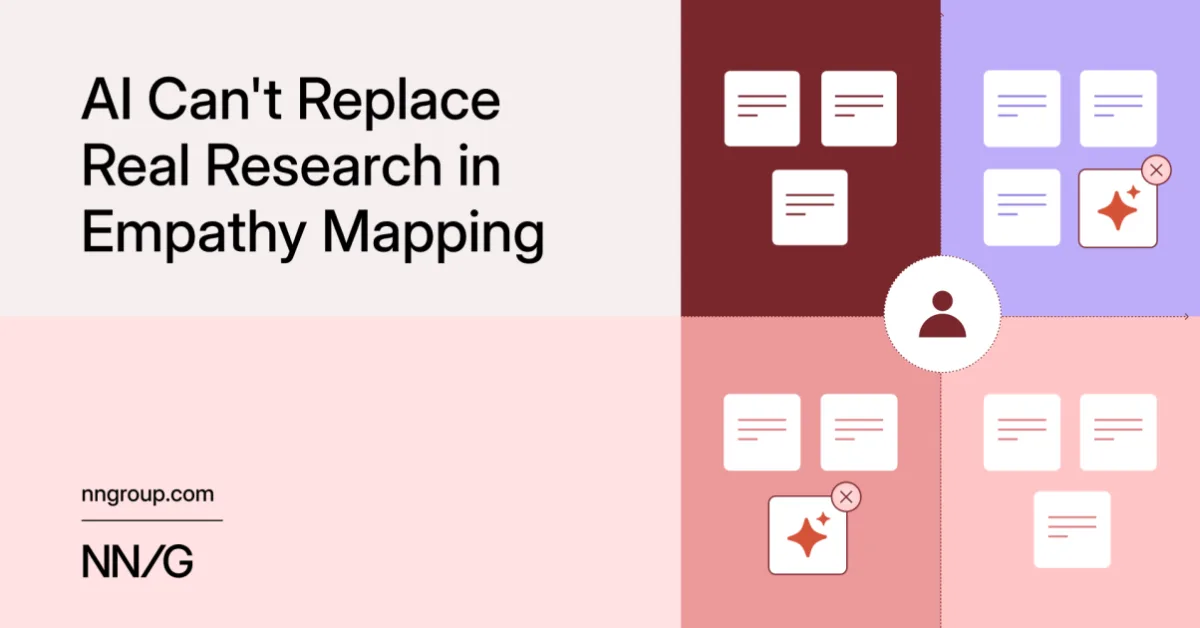
Building empathy maps quickly with AI tools seems practical when a workshop looms and user research remains incomplete. Prompt an AI system to imagine a frustrated customer, and moments later you have a canvas filled with sticky notes. Yet the source of those insights—whether grounded in real user behavior or algorithmically generated—matters far more than the speed of their creation.
What Is an Empathy Map?
An empathy map is a visualization that articulates what a team knows about a particular type of user, organized into four quadrants: Says, Thinks, Does, and Feels.
These maps divide user knowledge into four sections, creating a unified framework that teams reference throughout a project. Workshops typically build them collaboratively using sticky notes drawn from authentic research sources:
- Usability sessions: Observations of what someone struggled with during testing
- User interviews: Direct statements from participants in their own language
- Support tickets and call logs: Unprompted complaints and feedback from users
- Field studies or contextual inquiry: Environmental clues that users may not articulate directly
Empathy maps prove especially valuable for bringing cross-functional teams into alignment around a shared understanding of user experience.
Plausible AI-Generated User Content Isn't User Research
When an AI system takes on the role of a dissatisfied user, it draws patterns from vast text datasets and produces something that sounds credible. Credibility and truth are not identical. The output lacks the documented reality of an actual, identifiable person.
AI systems have no connection to your specific users, the particular ways your product fails them, or the circumstances surrounding those failures. The result could fit almost any product in a category, meaning it fits no particular user at all.
Comparing AI-generated statements to those from genuine research reveals the gap:
AI-generated: "I wish the app would ask me before swapping out my items."
Real user: "It swapped out my oat milk for a gallon of whole milk and charged me before I even saw the notification."
AI-generated: "It's frustrating when the calendar doesn't sync properly."
Real user: "I found out my 2 p.m. got double-booked because I was still looking at the version from before my coworker moved it and didn't know there was a newer one."
AI-generated: "I want to feel confident that my money is secure."
Real user: "I always transfer $1 first to make sure I typed the account number right, then I send the rest."
AI-generated: "Registration is stressful and the system is slow."
Real user: "Four of us get on a group call at 6:59 a.m. and refresh the page together so someone can grab the spot if it opens."
AI-generated statements remain safe and generic, applicable across many products in the same space. Real user statements carry specificity and detail. That specificity is what transforms an empathy map from a generic exercise into a useful tool.
One might suggest that better prompting could yield more specific AI outputs. Possibly. But the value of actual user statements extends beyond detail—they represent evidence of what these individuals genuinely said, did, or experienced. An invented observation, no matter how plausible, remains an assumption.
Where AI Can Help in Empathy Mapping
Although AI should not generate user content for empathy maps, it can assist in processing data already gathered from real users.
Appropriate uses
- Organizing and clustering sticky notes from completed research
- Cleaning up language once insights are anchored in evidence
- Summarizing patterns across a large collection of quotes
- Drafting initial groupings for team review and refinement
Inappropriate uses
- Generating quotes, behaviors, or emotions attributed to fictional users
- Filling gaps in incomplete research with plausible-sounding content
- Inventing a "typical user" to substitute for research not conducted
- Producing an entire quadrant of sticky notes when data doesn't exist
Before You Reach for AI
When considering AI for empathy-mapping work, examine these questions:
- Am I giving AI real data to organize, or asking it to generate data I don't have?
- Can I trace this sticky note back to actual research evidence?
- If I'd come up with this myself without AI, would I call it a finding or an assumption?
Uncomfortable answers to these questions signal something important: the map likely needs more research.
Conclusion
The power of empathy maps lies in the specific, unpolished reality of actual people. AI can help process what you learned from those people, but it cannot create them. AI-generated data carries no evidentiary weight, regardless of how detailed or convincing it appears. An empathy map's purpose is to capture evidence.
Using AI to manufacture empathy-map data appears to solve an immediate problem. In reality, it pushes the problem forward: teams end up designing for users who never existed, guided by a map that never required any human conversation.
Read more
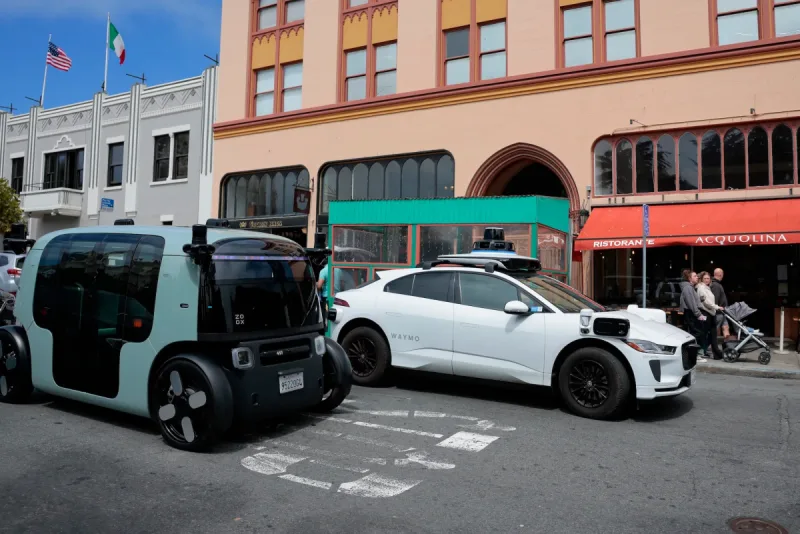
California Tightens Rules on Robotaxis as Incidents Mount
A new state law sets safety standards and accountability measures for autonomous vehicle operators, requiring local support staff and penalties for blocking emergency responders.

Wawa Elevates Long-Tenured Executive to CIO Role
The convenience store chain has named Bill O'Donnell, a 25-year company veteran, as its new chief information technology officer, putting him in charge of tech strategy, cybersecurity and digital operations.

ServiceNow Debuts Flow, a Conversational Service Desk Built for Speed Over Complexity
ServiceNow is rolling out Flow, a natural language service desk tool that automates employee requests through Slack and Microsoft Teams without requiring a full IT service management overhaul.