Ultrahuman Deploys Biological-Age Algorithm Across UAE in Government Partnership
The Bengaluru health-tech firm has signed a two-year agreement with Abu Dhabi authorities to develop and validate a model that measures aging speed using wearable data and clinical markers, marking its push beyond hardware into algorithmic health services at national scale.
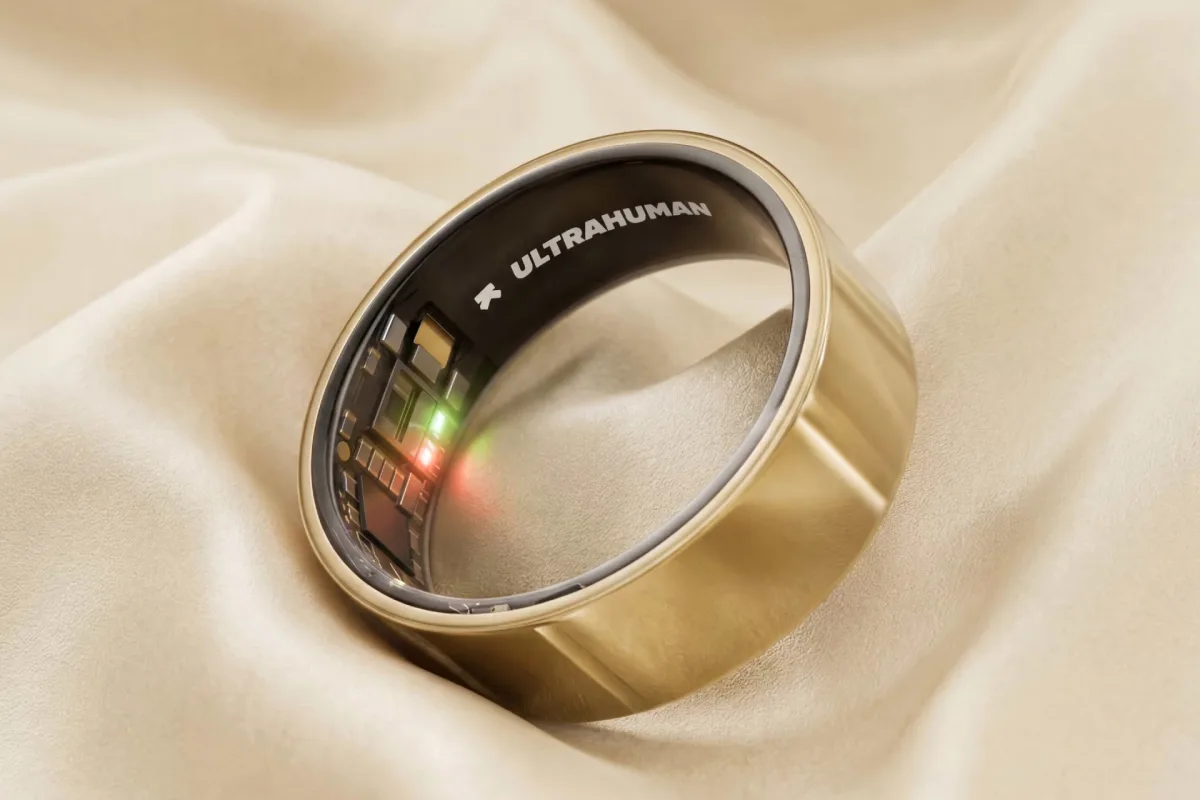
Ultrahuman, the India-based maker of health-monitoring smart rings, has entered into a partnership with Abu Dhabi's public health authorities to create a biological-age measurement system intended for eventual deployment across the entire United Arab Emirates.
The company announced on Monday the signing of a two-year memorandum of understanding with the Abu Dhabi Public Health Center (ADPHC). Under this agreement, the two organizations will jointly develop and validate a model that merges clinical biomarkers with information collected by wearable devices. The system will leverage these data points to calculate aging velocity and pinpoint factors—including sleep patterns, physical activity, heart health, and metabolic function—that may be either hastening or decelerating the aging process.
This collaboration represents another milestone in Ultrahuman's evolution from a hardware vendor into a broader health-data enterprise. The startup increasingly positions itself as a company whose primary asset is health information, with the smart ring functioning as a collection mechanism for data that feeds into algorithms addressing aging, longevity, and other health dimensions, according to CEO Mohit Kumar.
If you look at Ultrahuman as a company, we obviously have the Ultrahuman Ring, which is a way to acquire data from the human body. But truly, what we care about is not just the form factor, the ring, but what do we do with this data?
Mohit Kumar, CEO of Ultrahuman
Collaborating with a government entity enables Ultrahuman to extend its algorithms to a population vastly larger than its existing customer base, Kumar explained. To date, the startup has distributed approximately 800,000 smart rings worldwide. The Abu Dhabi initiative marks Ultrahuman's inaugural deployment of a health algorithm at the national-government level, with plans to make the biological-age model accessible to UAE residents through state digital-health infrastructure including TAMM and Sahatna, the company stated.
Although Ultrahuman's brand recognition stems from its smart rings, Kumar emphasized that the biological-age model has been engineered to operate independently of any specific wearable device. The system can ingest data originating from rings, wrist-worn trackers, wearable straps, patches, and clinical biomarkers simultaneously. Government digital-health systems will eventually grant residents access to their calculated health age through these platforms.
Over the coming two years, Ultrahuman and ADPHC will conduct research and clinical validation work on the model. Kumar indicated to TechCrunch that the wider deployment will unfold in stages, though he declined to specify timing details.
The UAE ranks among Ultrahuman's ten most significant markets and contributes between 4 and 5 percent of the company's total revenue, Kumar disclosed. The startup has maintained operations in the region for nearly five years and observes approximately 25 percent higher customer retention there relative to its other geographic markets.
Ultrahuman's current user population provides a limited demographic window compared to what a nationwide health system encompasses. The company's typical customer falls between ages 25 and 43, Kumar noted, whereas rolling out the model across the UAE would expose the algorithm to substantially more diverse age cohorts.
The biological-age model itself was constructed using Ultrahuman's accumulated user data, integrating chronological age with signals from wearables and, in certain cases, blood-test results, Kumar explained to TechCrunch. This methodology permits the startup to understand how health indicators ordinarily shift across the lifespan and spot variations from expected trajectories.
Kumar underscored that the model will not undergo training using information from the UAE. "We will deploy an algorithm on the UAE data," he stated, noting that Ultrahuman will have no access to personally identifiable information through this initiative.
Ultrahuman is not alone among smart-ring manufacturers in collaborating with Abu Dhabi on health prevention. In May, Abu Dhabi's Department of Health announced its own partnership with Ultrahuman's primary competitor, Oura, to integrate Oura's wearable information with the emirate's historical health records, with an initial emphasis on women's health and cardiometabolic disease risk.
Kumar stated that Ultrahuman has not identified any other company engaged with Abu Dhabi authorities specifically on a biological-age model. While he acknowledged that the government maintains relationships with multiple health-technology firms, he refrained from discussing the specifics of Oura's Abu Dhabi engagement.
These simultaneous partnerships underscore the competitive dynamic between Ultrahuman and Oura in the smart-ring sector as both organizations seek to expand beyond wearable hardware into the preventive-health domain. The Abu Dhabi collaboration also coincides with Ultrahuman's efforts to engineer a smart ring capable of executing software directly on the device, potentially supporting everything from AI-powered interactions to gaming applications.
Read more

Why Static Portfolios Are Failing Tech Professionals—and What Works Instead
The traditional portfolio has lost its power to land jobs and clients. Recruiters now want proof of real-world problem-solving, not polished case studies.

Lowe's Expands Media Network With Third-Party Measurement and AI Tools
The home improvement retailer is broadening its advertising platform across streaming, social and delivery services while introducing independent incrementality measurement and AI-powered discovery features.
Honeyjar brings AI-powered PR strategy to founders and communicators without expertise
A new startup founded by veteran communications professionals aims to democratize PR knowledge through AI, automating pitch research and media outreach while keeping humans in control of final decisions.