Top Wear OS Smartwatches in 2026: Which Model Fits Your Needs
Finding the right Wear OS smartwatch requires balancing battery endurance, device compatibility, software freshness, health capabilities, and cost. The market offers options ranging from daily-charge models to watches lasting several days, with some features tied to specific phone brands.
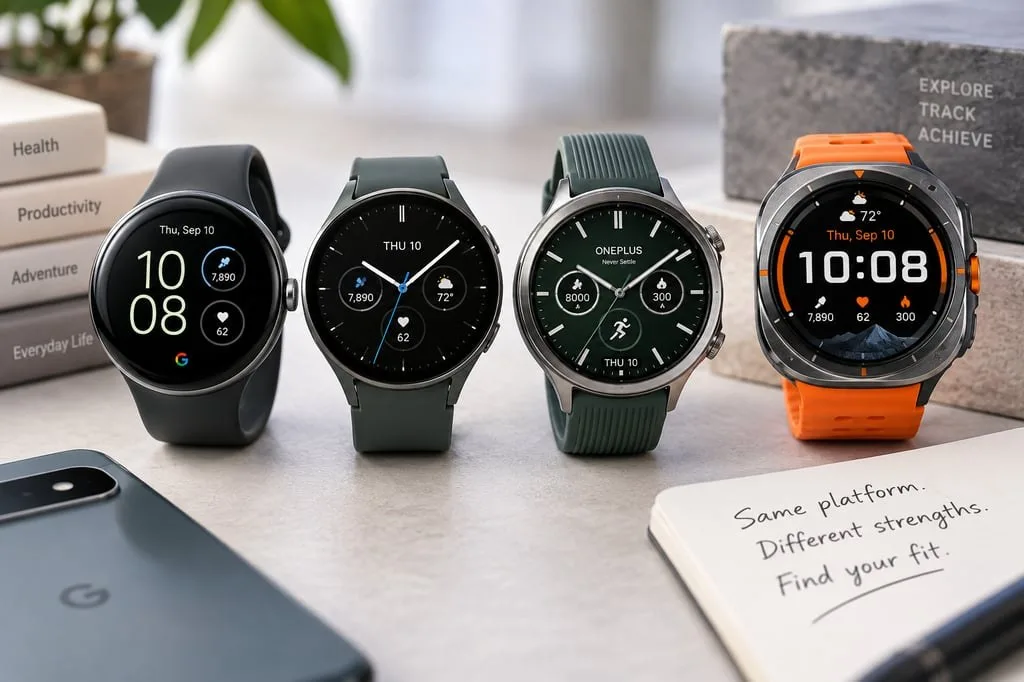
Selecting a Wear OS smartwatch during 2026 involves evaluating multiple factors: how long the battery lasts between charges, which phones it works with, how current its software remains, what health monitoring it provides, and what you'll pay. Depending on the model, you might recharge every night or stretch usage across multiple days, and certain advanced features or AI capabilities may only function with particular smartphone brands.
The Google Pixel Watch 5 stands out as the most versatile option for its up-to-date software, wide Android device support, comprehensive health and fitness tracking, and respectable battery performance. For those invested in Samsung's ecosystem, the Galaxy Watch9 delivers tighter integration. The 46mm OnePlus Watch 3 excels in battery longevity, while the Galaxy Watch Ultra2 targets users seeking premium materials, rugged construction, and extended runtime for outdoor pursuits.
- Battery duration reaches up to 30 hours (41mm) or 40 hours (45mm) when always-on display is active
- Certain AI and health capabilities carry phone-specific or geographic limitations
Pricing information reflects data gathered on September 10, 2026. Note that battery estimates from manufacturers employ varying test parameters and conditions, so direct hour-to-hour comparisons between models may not be reliable.
How we chose the best Wear OS smartwatches
Our evaluation prioritizes the smartwatch attributes that matter most during regular daily use. Extended battery performance becomes less valuable if essential functions won't operate with your phone, and an extensive feature set cannot compensate for poor physical design or software that's already becoming outdated.
We examined manufacturer pricing, battery performance claims, device compatibility, operating system versions, connection options, and feature prerequisites for each model. Where independent evaluations were obtainable, we consulted hands-on testing to understand how published specifications perform in actual use, including battery endurance, wearing comfort, GPS accuracy, pulse monitoring, and practical functionality.
Evaluation criteria
- Battery life and charging: Runtime influences sleep monitoring, exercise tracking, travel capability, and charging frequency. We reviewed manufacturer battery claims across different modes—such as always-on display versus Smart Mode—and cross-referenced these with independent test results when available. Figures from different operating modes were kept separate rather than averaged together.
- Software and support: The Wear OS iteration determines available features, app ecosystem, and how quickly a device may feel obsolete. We also weighed software lifespan, since smartwatch support can end while the device itself remains functional.
- Phone compatibility: We examined required Android versions, app requirements, account setup, LTE options, and features locked to specific manufacturers. These factors can substantially alter the user experience even when two watches run identical Wear OS releases.
- Health and fitness: We assessed sensor variety, sleep and exercise monitoring, positioning technology, cardiac measurement capabilities, paid services, geographic availability, and practical health notifications. Independent testing results were used where possible to evaluate real-world tracking reliability rather than relying solely on hardware specifications.
- Design and everyday use: We considered dimensions, mass, screen brightness, build quality, interaction methods, and wearability throughout daily activities, workouts, sleep, and other scenarios.
- Price and value: We compared US market pricing against capabilities and trade-offs. Higher-priced models required demonstrable advantages in areas like runtime, construction materials, durability, wireless connectivity, or specialized training features.
No single factor alone determines ranking position. A watch with outstanding battery performance, for instance, might rank lower than a competitor if it carries older software or lacks features that appeal to most users.
Best Wear OS smartwatches for 2026
Google Pixel Watch 5: Best overall
Priced from $399.99, the Pixel Watch 5 comes in 41mm and 45mm variants. The device operates Wear OS 7, with Google specifying battery life up to 30 hours on the smaller 41mm model and 40 hours on the 45mm model, both with always-on display enabled.
Compatibility extends to most phones with Android 12 or newer, meaning you don't require a Pixel handset to enjoy the fundamental smartwatch capabilities. Google offers LTE-equipped versions alongside 64GB storage capacity, dual-band GPS, and an extensive collection of wellness and activity features.
Testing by Android Central showed the device maintained operation for roughly two days while recording sleep and workouts. The evaluation noted that step counting and heart-rate measurements aligned more closely with reference instruments than the Galaxy Watch9 achieved in parallel testing.
Certain limitations exist within Google's ecosystem. The Proactive Assistance function demands a Pixel Watch 5 connected to a Pixel 11 or more recent phone, and some health functions differ based on location or region. Those purchasing specifically for particular AI or health capabilities should verify compatibility requirements beforehand.
The Pixel Watch 5 and Galaxy Watch9 begin only $20 apart in price, making differences in battery performance, device support, and platform-specific capabilities more meaningful than cost when deciding between them.
Samsung Galaxy Watch9: Best for Samsung phone users
The Galaxy Watch9 begins at $379.99 for the 40mm Bluetooth variant. The 44mm Bluetooth model starts at $409.99, while LTE-capable versions begin at $429.99.
Running Wear OS 7 with One UI 9 Watch, it incorporates Gemini, Samsung Health, Vitals, and a screen capable of reaching 3,000 nits brightness. It supports compatible devices running Android 13 or newer, though certain functions are restricted to Samsung Galaxy phones.
Battery performance represents the primary drawback. Samsung claims up to 30 hours with always-on display and 40 hours with it disabled. However, Android Central's testing of the 44mm model revealed it barely survived a complete day even with the always-on display turned off.
For Galaxy phone owners, the Watch9 unlocks deeper Samsung health capabilities, provided that regular charging sessions aren't problematic.
OnePlus Watch 3 46mm: Best for battery life
The OnePlus Watch 3 carries a $349.99 manufacturer suggested retail price in the US. Its architecture combines Wear OS with a separate efficiency-focused platform to minimize power consumption when full smartwatch capabilities aren't required.
OnePlus specifies the 46mm model lasts up to five days in Smart Mode and three days under demanding conditions. Wareable's independent testing achieved just under three days with always-on display active, including significant physical activity and GPS navigation.
Wareable observed that heart-rate accuracy improved relative to the previous generation but still trailed leading competitors during certain workout sessions. This makes runtime, rather than fitness measurement precision, the primary advantage of selecting the Watch 3.
The watch operates Wear OS 5 instead of Wear OS 7, and lacks an LTE option. Size also matters: the 43mm OnePlus Watch 3 achieves up to 60 hours in Smart Mode, substantially shorter than the five-day rating for the 46mm version.
Samsung Galaxy Watch Ultra2: Best for outdoor and premium use
Retailing for $699.99, the Galaxy Watch Ultra2 comes exclusively in a 47mm LTE configuration.
It runs Wear OS 7 and pairs an 800mAh battery with titanium construction, a display reaching 5,000 nits, dual-frequency GPS, 10ATM water resistance, and IP69K protection. Samsung estimates up to 60 hours between charges with always-on display enabled.
Wareable documented approximately four days of operation across two separate test periods involving regular exercise and sleep tracking. LTE functionality and continuous blood-oxygen measurement were deactivated during these tests—a significant detail when comparing against Samsung's published battery figures.
The evaluation highlighted strong heart-rate and GPS accuracy. Combined with the enhanced screen brightness, larger power cell, LTE support, and reinforced durability, the Ultra2 proves particularly valuable for hiking, trail running, diving, and comparable outdoor pursuits.
At $699.99 with a 47mm case, it commands substantially higher cost and occupies considerably more wrist space than the other models reviewed.
Which Wear OS smartwatch should you buy?
For the majority of Android users, the Pixel Watch 5 represents the optimal selection because it delivers the most well-rounded combination of current software, fitness tracking, broad compatibility, and battery performance.
The Galaxy Watch9 suits Samsung phone owners seeking deeper Galaxy ecosystem connection and willing to accept more frequent charging cycles. The OnePlus Watch 3 46mm appeals to those prioritizing multi-day battery intervals and not requiring LTE or the latest Wear OS iteration.
The Galaxy Watch Ultra2 justifies its premium pricing for users wanting extended battery duration, LTE capability, a more luminous screen, enhanced ruggedness, and hardware optimized for outdoor activities. If these enhancements aren't essential, the Pixel Watch 5 or Galaxy Watch9 deliver superior everyday value.
Read more
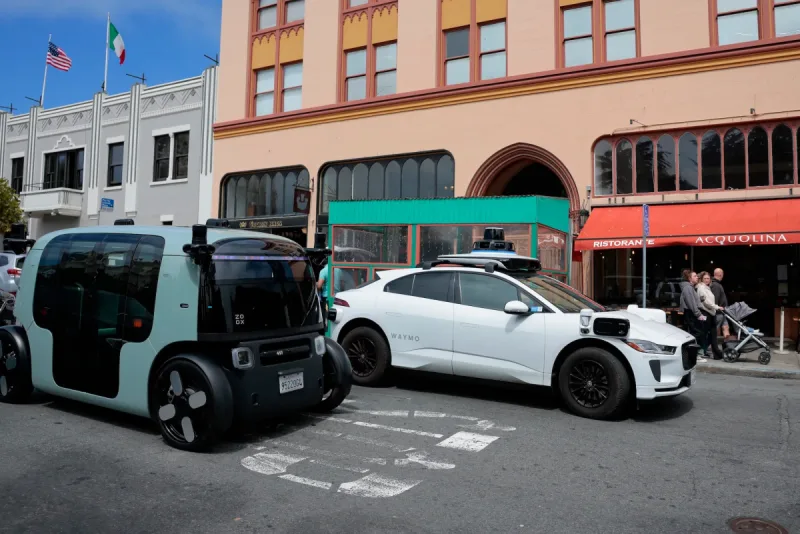
California Tightens Rules on Robotaxis as Incidents Mount
A new state law sets safety standards and accountability measures for autonomous vehicle operators, requiring local support staff and penalties for blocking emergency responders.

Wawa Elevates Long-Tenured Executive to CIO Role
The convenience store chain has named Bill O'Donnell, a 25-year company veteran, as its new chief information technology officer, putting him in charge of tech strategy, cybersecurity and digital operations.

ServiceNow Debuts Flow, a Conversational Service Desk Built for Speed Over Complexity
ServiceNow is rolling out Flow, a natural language service desk tool that automates employee requests through Slack and Microsoft Teams without requiring a full IT service management overhaul.