Six Business Laptops Built for AI: Which Model Fits Your Workforce?
Organizations deploying AI workloads across their workforce must balance NPU performance, memory, thermal management, and cost. We evaluate six leading business laptops to help IT leaders choose the right device for each role.

Running inference tasks, copilots, and on-device models on business laptops demands sufficient local processing power without sacrificing battery life or responsiveness. IT leaders and CIOs now weigh decisions involving NPU performance, memory capacity, thermal design, cost, and manageability. This guide compares six leading systems and identifies which roles each machine serves best.
1. HP ZBook X G2i: Best for AI-assisted work productivity
Why I chose HP ZBook X G2i
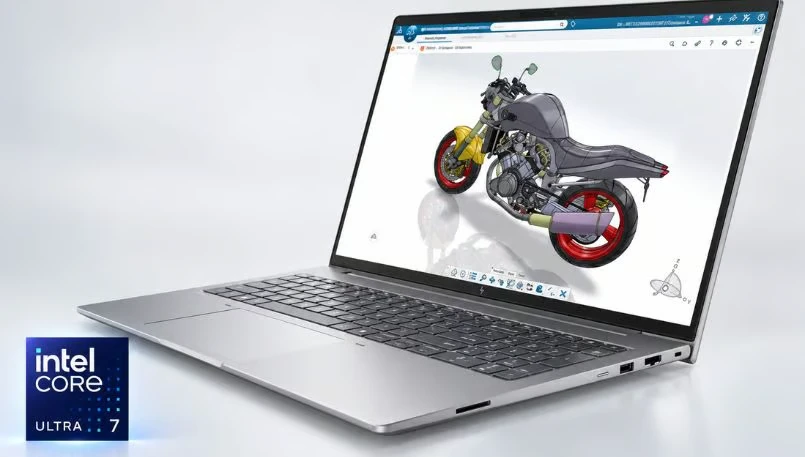
Technical professionals who integrate AI assistance into their daily workflow while managing data-heavy applications will find the HP ZBook X G2i well-suited. Its 50-TOPS NPU tackles supported AI functions including transcription, document generation, and information retrieval, while the RTX Pro 3000 handles GPU-accelerated work such as rendering, visualization, and AI inference.
Applications supporting NPU processing can delegate compatible tasks to the neural processing unit, freeing the CPU for spreadsheets and business applications. The 64GB memory configuration keeps multiple demanding applications running simultaneously without frequent slowdowns. This arrangement enables workers to leverage AI capabilities in the background while maintaining uninterrupted graphics and compute-intensive operations.
The tradeoff involves portability and expense. Weighing 4.41 pounds and positioned as a mobile workstation, the ZBook exceeds what most knowledge workers require for meeting summaries, email composition, or document searches. Organizations rolling out AI-powered productivity features to broader employee populations might prefer the Dell Pro 14 Plus, which delivers a 40-TOPS NPU in a lighter, more affordable package.
Pros
- RTX Pro graphics enable professional design software
- 50-TOPS NPU manages local AI features
- DCI-P3 display accommodates color-critical design work
Cons
- Heavier than competing alternatives
- High-end configurations command premium pricing
- 64GB maximum memory constrains larger local models
HP ZBook X G2i Specifications
- Processor: Intel Core Ultra 7 356H, 16 cores, up to 4.7 GHz
- Mobility: Mobile workstation; 200W AC adapter
- Display: 16-inch 2.5K IPS, 2560 × 1600, 120Hz, 400 nits, 100% DCI-P3
- Graphics: NVIDIA RTX Pro 3000 Blackwell, 12GB GDDR7
- Memory & storage: 64GB DDR5; 1TB PCIe Gen5 NVMe SSD
- Battery life: Up to 19 hours, preliminary MobileMark 30 estimate; 96Wh battery
2. Lenovo ThinkPad X1 Carbon Gen 14 Aura Edition: Best for content development
Why I chose Lenovo ThinkPad X1 Carbon Gen 14 Aura Edition
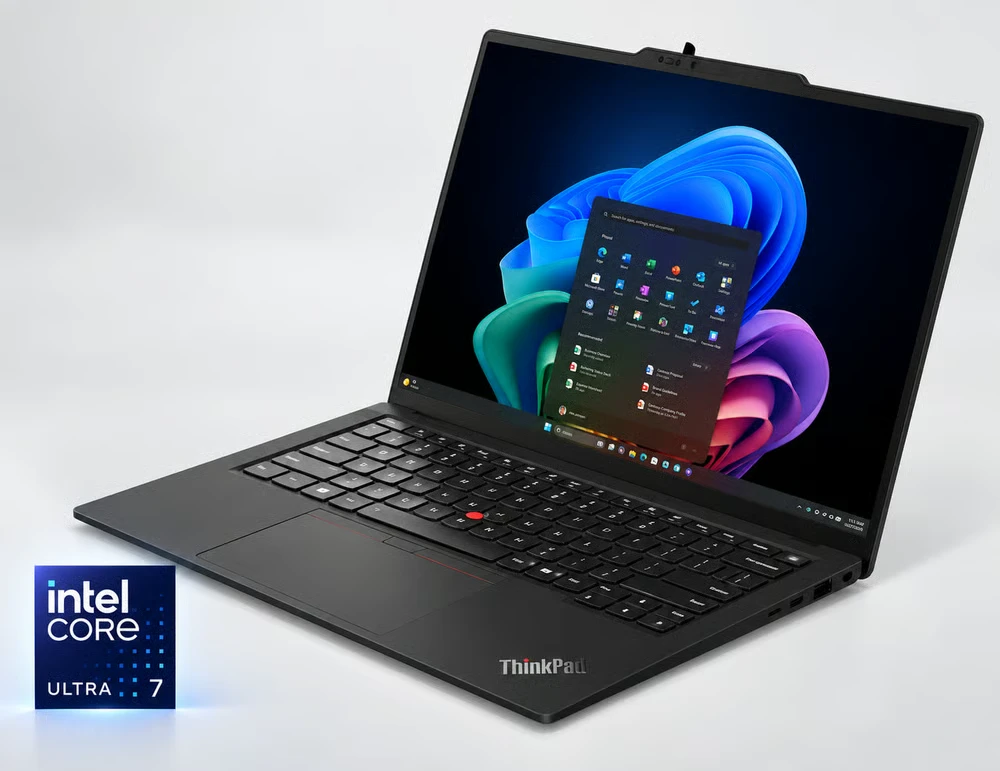
The ThinkPad X1 Carbon suits professionals who spend their day creating content while traveling. This model combines full sRGB coverage with 32GB of memory and tips the scales at just 2.15 pounds, making it ideal for mobile work.
Applications that support NPU functionality can leverage it for local transcription or image effects, preventing those operations from consuming CPU resources. Complete sRGB coverage supports digital graphics work, while 32GB of memory accommodates research tabs alongside creative applications. Battery estimates suggest extended periods away from power sources.
Integrated graphics may extend export times or diminish preview quality during video editing. They also deliver fewer resources for 3D projects or GPU-based image generation. Creators regularly handling these tasks should examine the ThinkPad T16g Gen 3, which offers discrete RTX graphics and expanded expansion capabilities.
Pros
- 2.15-pound design enables frequent travel
- 50-TOPS NPU supports collaboration enhancements
- Speakers deliver quality remote meeting audio
Cons
- Onboard memory cannot be upgraded
- Premium pricing raises deployment costs
- Keyboard deck flexes slightly under firm pressure
Specifications
- Processor: Intel Core Ultra 7 366H, 16 cores, up to 4.8 GHz
- Mobility: Ultraportable business AI PC; 65W USB-C adapter
- Display: 14-inch WUXGA IPS touch, 1920 × 1200, 500 nits, 100% sRGB
- Memory & storage: 32GB LPDDR5X; 1TB PCIe NVMe SSD
- Battery life: Up to 16 hours in MobileMark 30; 58Wh battery
3. HP EliteBook X G2i5: Best for data analysis & business intelligence
Why I chose HP EliteBook X G2i5
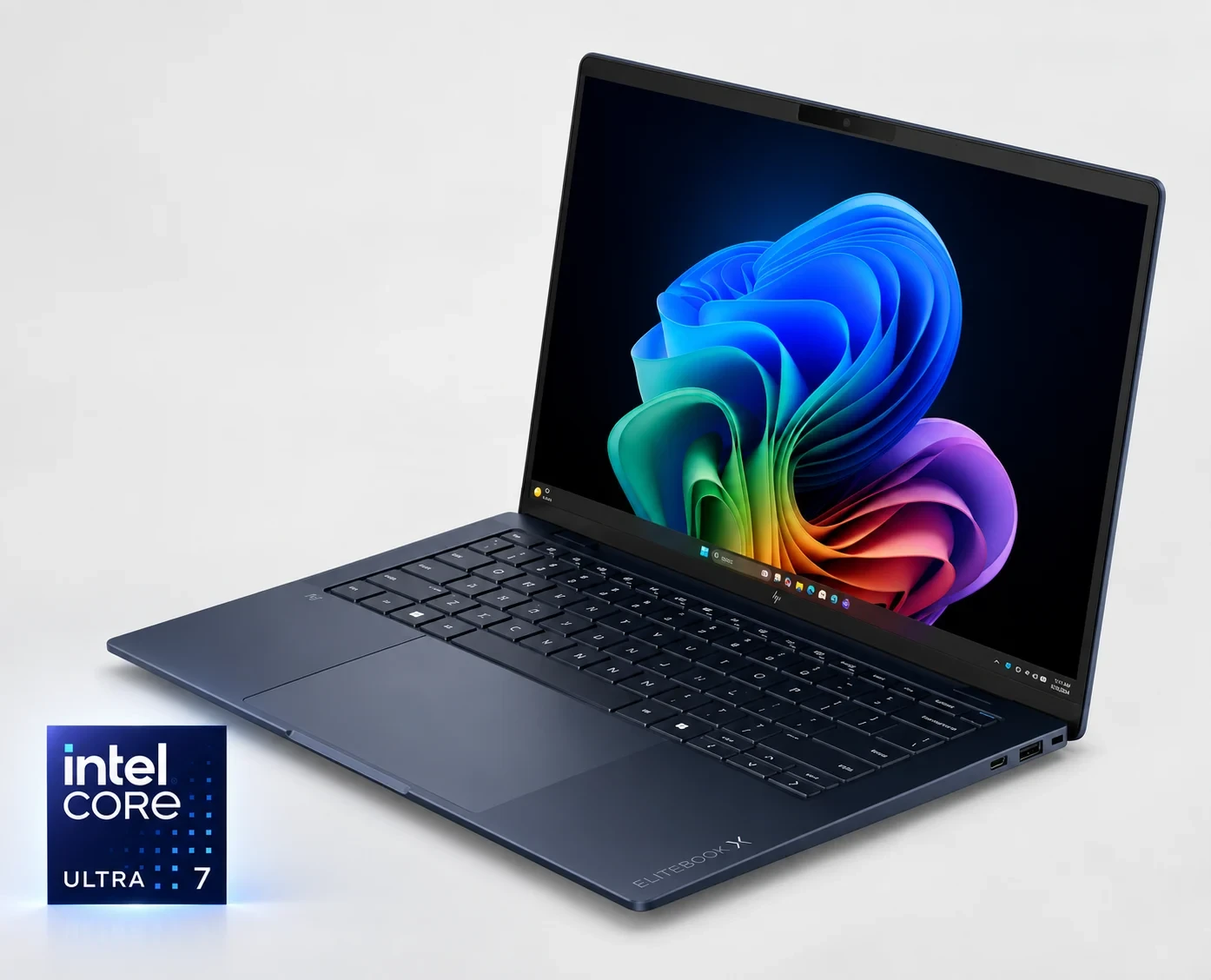
The HP EliteBook X G2i5 incorporates 64GB of memory, sufficient for handling large spreadsheets alongside business intelligence platforms. Its Core Ultra processor manages queries and calculations, while compatible applications can assign certain AI operations to the 50-TOPS NPU.
Users can maintain larger datasets locally or keep multiple dashboards accessible without rapidly exhausting memory capacity. When applications support NPU processing, they can route tasks such as summarization or pattern detection to the NPU while the CPU continues executing database queries. At approximately 2.2 pounds, the EliteBook travels easily between offices or client locations.
Integrated Intel graphics provide limited capability for model training and other computationally intensive analytics. The Dell Pro Max 16 Plus offers an alternative with RTX Pro GPU support for larger AI models and sustained high-load processing.
Pros
- 50-TOPS NPU supports local analytics features
- 64GB memory accommodates large analytical datasets
- 2.2-pound frame supports frequent travel
Cons
- Fan noise becomes distracting under load
- Pricing is difficult to scale for fleet-wide deployments
- Integrated graphics limit GPU-heavy analytics
Specifications
- Mobility: Ultraportable business AI PC; 65W USB-C GaN adapter
- Display: 14-inch WUXGA IPS, 1920 × 1200, 400 nits, 100% sRGB
- Memory & storage: 64GB LPDDR5X; 1TB PCIe NVMe SSD
4. Dell Pro Max 16 Plus: Best for technical collaboration & visual reviews
Why I chose Dell Pro Max 16 Plus
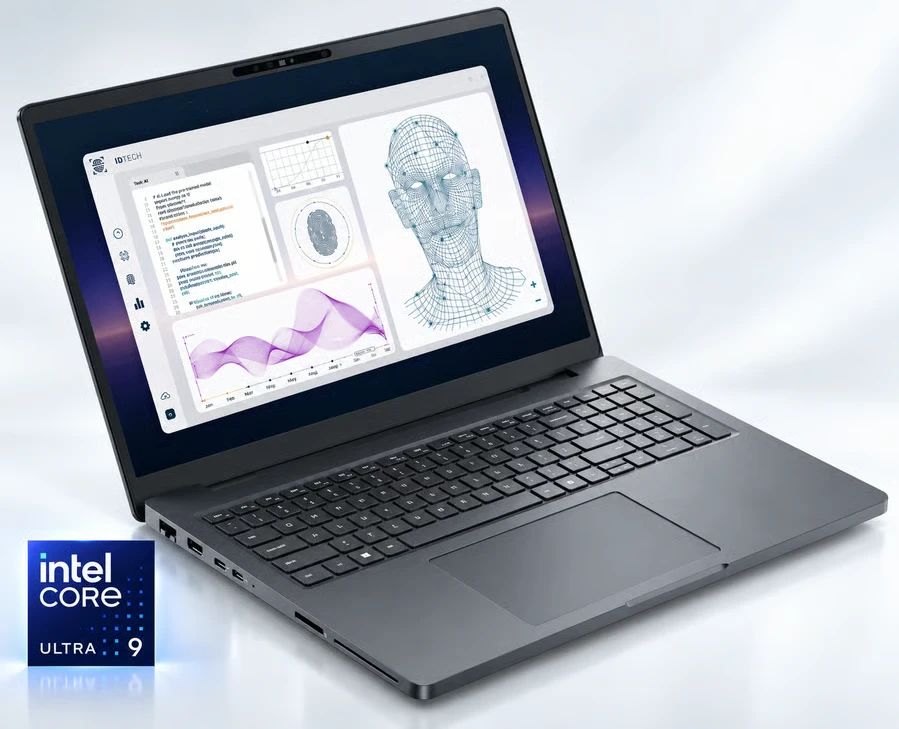
The Dell Pro Max 16 Plus addresses technical teams engaged with 3D designs or extensive datasets. Its RTX Pro graphics process intricate visuals, while 64GB of memory permits users to keep the source application open during screen sharing.
Camera options include an 8MP HDR unit with dual-array microphones. The 16-inch display provides sufficient space to display shared content alongside meeting controls, and Wi-Fi 7 accommodates compatible office networks. During video conferences, engineers and data specialists can examine visual details while maintaining access to their design or analytics applications.
The system weighs 5.63 pounds, and its 280W adapter adds additional bulk to travel bags. Employees primarily participating in document-focused calls might prefer the ThinkPad X1 Carbon, which starts at 2.15 pounds and moves more easily between conference rooms.
Pros
- RTX Pro graphics accelerate development workloads
- 64GB memory handles large development environments
- Thunderbolt 5 supports high-speed peripherals
Cons
- Not ideal for everyday portability
- Narrow keyboard may frustrate frequent typists
- Large power adapter adds travel weight
Specifications
- Processor: Intel Core Ultra 9 285HX vPro, 24 cores, up to 5.5 GHz
- Mobility: Mobile workstation; 280W USB-C adapter
- Display: 16-inch FHD+ non-touch, 1920 × 1200
- Memory & storage: 64GB DDR5; 1TB performance SSD
5. Lenovo ThinkPad T16g Gen 3: Best for software development
Why I chose Lenovo ThinkPad T16g Gen 3
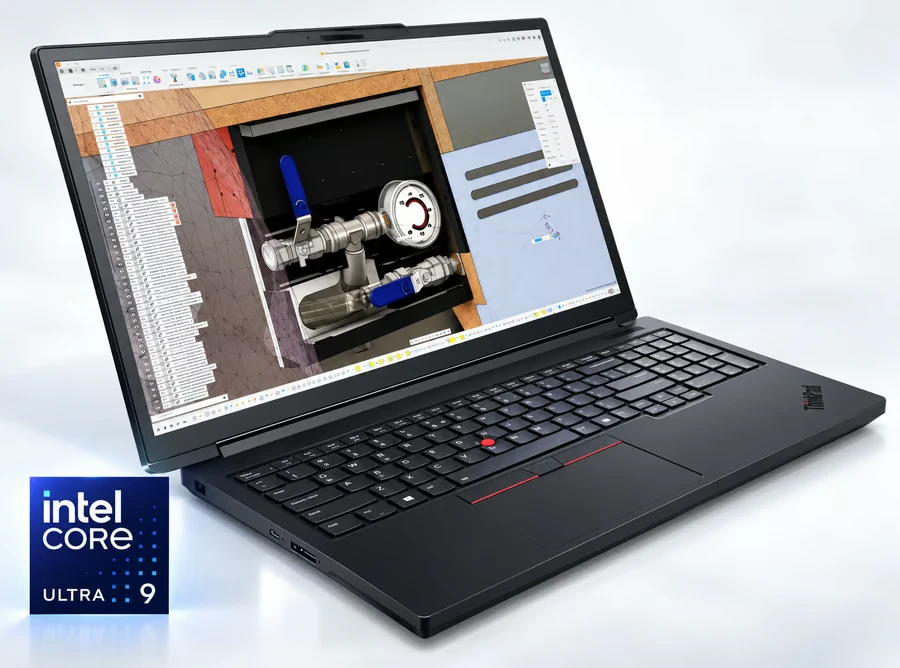
Developers executing containers locally or compiling large codebases will benefit from the ThinkPad T16g Gen 3 for these processor-demanding tasks. Its RTX 5080 Laptop GPU supports CUDA workloads and local model testing without routing each job to a cloud GPU.
With 64GB of memory, developers can operate an IDE alongside Docker containers or dedicate memory to a Linux development environment. Four memory slots enable configurations reaching 192GB, while three SSD slots allow project files to remain separate from model datasets. The 13-TOPS NPU plays a secondary role because compilers and containers rely primarily on the CPU, while model testing depends on the GPU.
When a software build and GPU model test execute simultaneously, the 180W adapter may constrain power available to both processors. Fan noise also rises during sustained workloads. Developers requiring RTX Pro graphics or professional GPU drivers might consider the Dell Pro Max 16 Plus, which includes a 280W adapter.
Pros
- RTX 5080 handles GPU-accelerated creative applications
- Four memory slots support future upgrades
- DCI-P3 display suits color-sensitive work
Cons
- RTX 5080 performance trails cheaper GPUs
- Fans become loud during prolonged use
- Power adapter limits CPU and GPU performance during extended workloads
Specifications
- Mobility: High-performance business laptop; 180W USB-C GaN adapter
- Display: 16-inch WQUXGA IPS, 3840 × 2400, 800 nits, 100% DCI-P3
- Graphics: NVIDIA GeForce RTX 5080 Laptop GPU, 16GB GDDR7
- Memory & storage: 64GB DDR5; 1TB PCIe NVMe SSD
6. Dell Pro 14 Plus: Best for design & engineering fieldwork
Why I chose Dell Pro 14 Plus
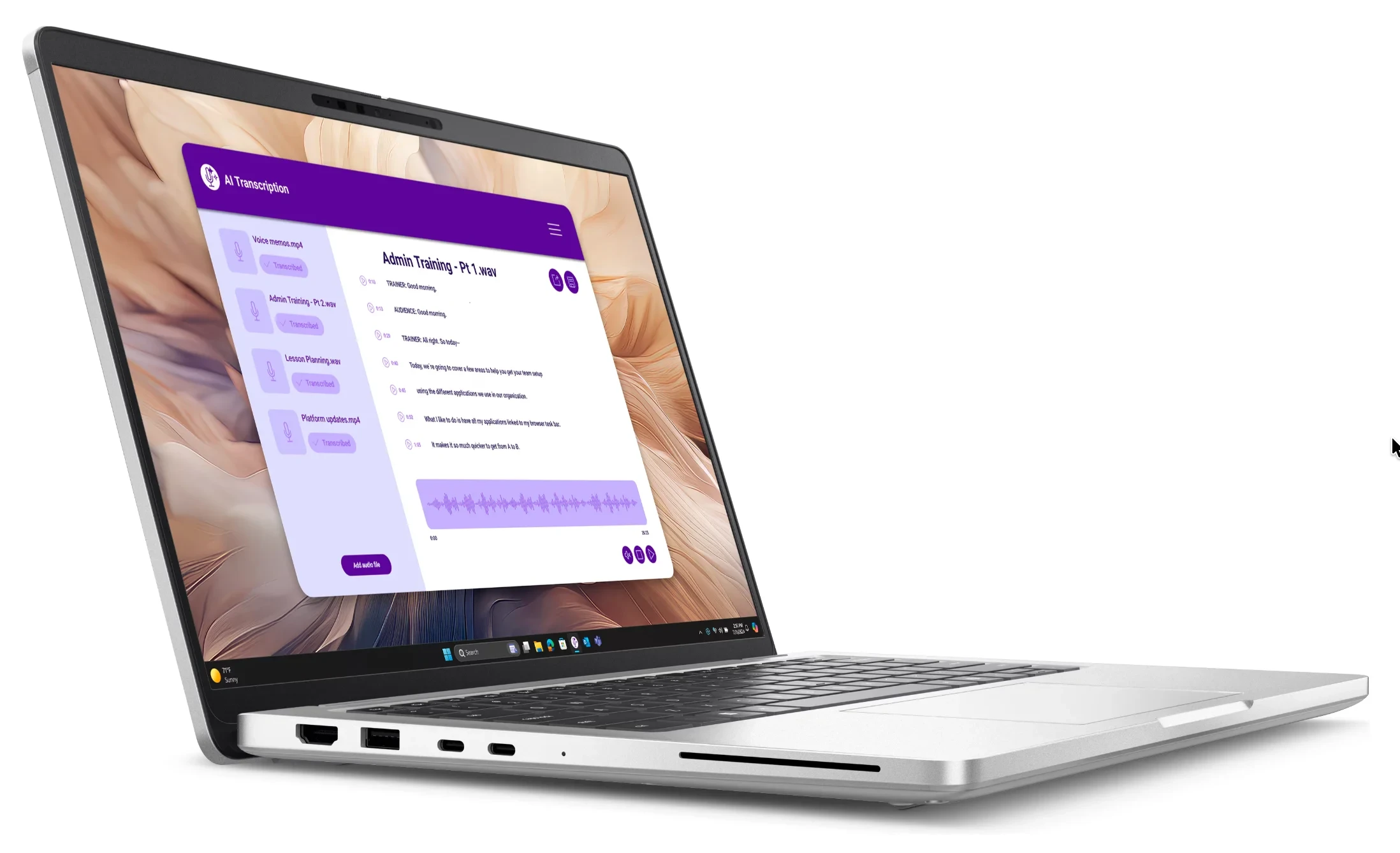
The Dell Pro 14 Plus serves construction professionals who review drawings or operate browser-based CAD and BIM applications. Its 14-inch form factor and extended battery life make it convenient to transport between project sites and field inspections.
Intel Arc graphics can execute 2D CAD software and display browser-based models, while the 40-TOPS NPU processes AI features from compatible applications. The base configuration, however, includes 16GB of memory, which may prove insufficient when engineering applications or large project files are active simultaneously.
Integrated graphics restrict GPU-based rendering, and the base display covers only 51% of the sRGB color space. For 3D modeling or rendering, the HP ZBook X G2i offers an RTX Pro 3000 GPU and 64GB of memory.
Pros
- 40-TOPS NPU supports local assistant features
- Up to 16 hours of battery life
- Ports support existing office peripherals
Cons
- 16GB onboard memory cannot be upgraded
- Integrated graphics restrict demanding local AI
- Base display has limited color coverage
Specifications
- Mobility: Standard business AI PC; 65W USB-C adapter
- Display: 14-inch FHD+ non-touch, 1920 × 1200
- Memory & storage: 16GB LPDDR5X; 512GB SSD
How I evaluated the best business laptops for AI workloads
Each laptop was assessed against its designated AI workload, so additional processing capacity counted only when the role could benefit from it. Specifications came from official manufacturer sources and Intel documentation. All six systems received ratings on a five-point scale across six weighted categories.
- Procurement and lifecycle value (15%): I documented the public price of each recommended configuration and verified warranty coverage at purchase. Repair accessibility and vendor deployment resources also influenced scoring because both affect total cost of ownership throughout the device's service life.
- Business laptop essentials (15%): I verified whether the processor could run applications associated with each role. Memory and storage were evaluated based on expected file sizes and application requirements. I also examined available ports and display hardware, then reviewed operating system options and business connectivity.
- AI workload suitability (30%): This category carried the highest weight because it measured CPU and NPU performance in handling AI tasks. Graphics and memory influenced the score when the workload depended on local processing. I also verified whether compatible applications could use the available AI hardware.
- Enterprise security and management (20%): I examined each laptop's built-in security features and user authentication options. Remote administration capabilities contributed to the score, along with vendor documentation for fleet deployment and recovery.
- Mobility and workplace experience (10%): I evaluated the combined weight of the laptop and power adapter when scoring portability. Battery capacity and charging options determined operating duration away from power. I scored the display according to each role's visual requirements and assessed the camera and microphones for video collaboration.
- Expert assessment (10%): After calculating specification scores, I verified whether each configuration included the hardware required for its applications. I assigned lower scores when a laptop included a dedicated GPU or more memory than the role required.
What should organizations look for in business laptops for AI workloads?
Organizations should begin by identifying the AI tasks assigned to each role and the applications in use. This assessment reveals whether a standard business laptop suffices or the role demands additional local processing capacity.
Match hardware to the workload
An NPU processes compatible assistant features with reduced power consumption, while a discrete GPU supports local model development or 3D rendering. Memory capacity should align with the size of datasets and applications employees access simultaneously.
Confirm application compatibility
Verify whether existing software can route AI tasks to the proposed NPU or GPU. IT should also determine whether processing occurs locally or in the cloud because this affects latency and data handling.
Evaluate security and management
Business laptops should meet the organization's encryption requirements and identity controls. Remote configuration and recovery tools can reduce servicing time across multiple locations. Intel's commercial PC guidance also recommends validated hardware configurations for fleet stability.
Test mobility and collaboration
Battery claims should be validated while running company applications and endpoint agents. Employees attending video meetings also require cameras and microphones that capture clear recordings for AI-generated transcripts.
Calculate lifecycle cost
Compare warranty coverage and repair options before deployment. During pilot testing, track application performance and support requests to determine whether the configuration suits wider rollout.
How do businesses choose between workstations and laptops?
A mobile workstation is also a laptop, but it delivers professional graphics and higher memory limits for workloads exceeding standard business PC capacity. Businesses should compare the applications each role uses before deciding between the two.
For cloud-based AI and office assistants
An NPU processes compatible features such as transcription or background removal locally.
For local model development or 3D rendering
These tasks can use a discrete GPU and additional memory.
Confirm that existing applications can use the NPU or integrated GPU. Otherwise, the added AI hardware remains idle.
Check whether CAD or engineering software requires professional graphics drivers. Some apps also certify specific workstation configurations.
Integrated graphics can support office software and light creative work. Memory options generally cover routine multitasking.
Professional GPUs process larger models and detailed visual assets. Higher memory limits allow larger datasets to remain open locally.
Lower weight and smaller power adapters support frequent travel. Battery capacity should be tested while running company software.
Added cooling and discrete graphics increase weight and power use. These systems work best when processing capacity takes priority over the weight.
Lower purchase prices support wider fleet deployment.
Higher prices may be justified when shorter processing times reduce project delays.
During a pilot, IT should record processing time and peak memory use for each role's applications. Intel and HP recommend matching device capacity to the workload rather than issuing one configuration across the fleet.
Which professionals benefit most from AI workstations?
AI workstations benefit professionals whose applications depend on a discrete GPU or high memory capacity. They also support employees who need local processing for protected data. The main groups include:
- Data scientists and machine learning developers: Local model training and fine-tuning require GPU memory, while large datasets consume system RAM.
- Engineers and product designers: CAD simulations and generative design software can use professional graphics with certified drivers.
- Media professionals: High-resolution video editing and 3D animation require more graphics capacity than integrated GPUs provide.
- Software developers: GPU-based code testing and local AI development benefit from Compute Unified Device Architecture (CUDA) support or similar acceleration frameworks.
Employees who simply use meeting summaries or document assistants can work with a standard AI PC. IT teams should assign workstations after they confirm which applications use the GPU and how much memory each workload consumes. HP and Intel both identify local AI development and professional visualization as workstation workloads.
The OneHP portfolio provides an example of how organizations can evaluate business PCs and workstations within the same workplace technology plan. After selecting devices by workload, IT can determine which endpoint controls and support services each employee group will require throughout the device lifecycle.
FAQs
When does an AI laptop need a dedicated GPU?
An AI laptop needs a dedicated GPU when users train models locally or render 3D designs. GPU acceleration can also reduce processing time in video editing and software built for CUDA. Integrated graphics are usually sufficient for meeting summaries or cloud-based AI because remote servers perform most processing.
Does a business laptop need an NPU to run AI applications?
No. Cloud-based AI applications run on the provider's servers and do not require an NPU. An NPU processes compatible on-device features such as transcription or video effects with lower power consumption. Before purchasing AI PCs, confirm whether employees' applications can use the proposed NPU.
How many NPU TOPS does a business AI laptop need?
A 40-TOPS NPU meets the current Copilot+ baseline and covers features such as live captions or video effects. Employees who run several local AI tools may benefit from 45 to 50 TOPS. For model training, GPU performance and memory capacity are more important than NPU TOPS.
Read more
California Tightens Rules on Robotaxis as Incidents Mount
A new state law sets safety standards and accountability measures for autonomous vehicle operators, requiring local support staff and penalties for blocking emergency responders.

Wawa Elevates Long-Tenured Executive to CIO Role
The convenience store chain has named Bill O'Donnell, a 25-year company veteran, as its new chief information technology officer, putting him in charge of tech strategy, cybersecurity and digital operations.

ServiceNow Debuts Flow, a Conversational Service Desk Built for Speed Over Complexity
ServiceNow is rolling out Flow, a natural language service desk tool that automates employee requests through Slack and Microsoft Teams without requiring a full IT service management overhaul.