Salesforce Unveils AIforce as Universal Interface Layer for Enterprise AI
At Dreamforce 2026, Salesforce introduced AIforce, a connective interface designed to bring its AI and data capabilities to any productivity platform, letting enterprises deploy AI agents without forcing users into the Salesforce environment.

Salesforce rolled out AIforce on Tuesday at Dreamforce 2026, positioning the new offering as an interface layer that bridges the company's agentic architecture. The tool connects Data 360, Customer 360 and Agentforce to what the company calls "any AI interface," enabling organizations to construct tailored user experiences within their existing productivity platforms.
The move combines model intelligence with Salesforce's data context to create a system compatible with major enterprise platforms. CEO and Chair Marc Benioff outlined the company's vision in the keynote, stating that "These four layers — data, apps and semantics, agents, and interface — that is what we want to transform right now."
Expanding the Agentic Bet
The new interface layer represents Salesforce's continued push into agentic systems as it competes for enterprise AI spending. Gartner projects global AI spending will reach $2.59 trillion this year, with enterprises doubling their investment in generative and agentic AI capabilities. Salesforce has positioned Agentforce as its primary vehicle for capturing this demand and sustaining revenue growth.
Benioff first mentioned AIforce during the company's Q2 2027 earnings call in August, calling it an "enterprise harness." The system sits atop Salesforce's core infrastructure, including Agentforce, and integrates with companies' existing AI productivity tools while preserving the data context and permission structures that exist within Salesforce. A zero data retention policy governs the system, according to Benioff.
People don't have to come to Salesforce to get work done. Salesforce comes to them, and Claude and Slack and ChatGPT and Teams, wherever they want to work. And it's a shift from software as the interface to software powering every interface.
Marc Benioff
Potential and Pitfalls
Terra Higginson, distinguished analyst at Info-Tech Research Group, sees AIforce as advancing Salesforce's headless CRM concept. "This takes Salesforce's idea of headless CRM to the next level and moves it closer to what I would think of as ambient CRM," Higginson said. "People can use CRM wherever it makes the most sense to them, while the data, logic, permissions and workflows that run the business stay within Salesforce."
The interface layer could accelerate customer time-to-value by reducing dependency on Salesforce administrators for problem resolution, Higginson noted. However, she cautioned that AIforce likely carries significant pricing implications, as AI introduces additional cost layers. Organizations will still need to maintain clean, connected and properly governed data underneath the new interface.
Igor Ikonnikov, advisory fellow at Info-Tech Research Group, flagged another consideration: while AIforce enables users to build custom interfaces, UI design demands specialized skills that may strain less technical customers. Although empowering business users to construct their own interfaces sounds promising in principle, expecting non-technical staff to grasp the entire system architecture presents real challenges, he said.
Cloud and Partnership Expansion
Salesforce also announced deepened partnerships with Google Cloud and AWS at Dreamforce. Through the updated AWS arrangement, enterprises can expose business context in tools like Amazon QuickSight, and AWS frontier agents will integrate into Slack. Salesforce's Hyperforce infrastructure, the company's next-generation public cloud platform, will operate on Google Cloud, allowing organizations to pull Salesforce data directly into Gemini Enterprise.
Read more

California Tightens Rules on Robotaxis as Incidents Mount
A new state law sets safety standards and accountability measures for autonomous vehicle operators, requiring local support staff and penalties for blocking emergency responders.
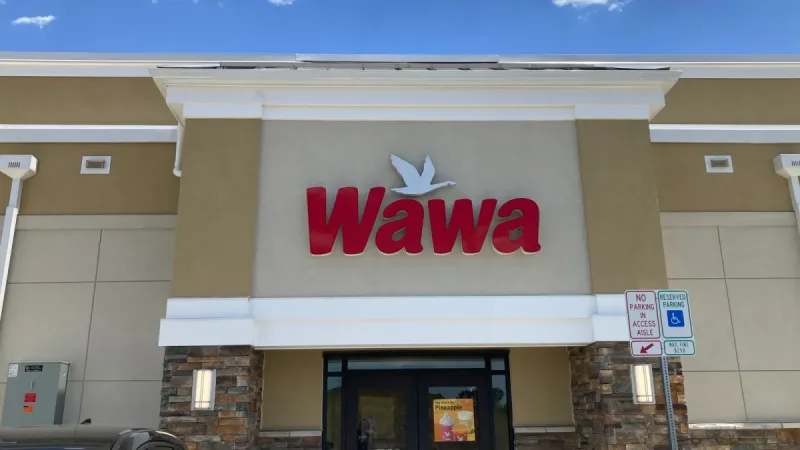
Wawa Elevates Long-Tenured Executive to CIO Role
The convenience store chain has named Bill O'Donnell, a 25-year company veteran, as its new chief information technology officer, putting him in charge of tech strategy, cybersecurity and digital operations.

ServiceNow Debuts Flow, a Conversational Service Desk Built for Speed Over Complexity
ServiceNow is rolling out Flow, a natural language service desk tool that automates employee requests through Slack and Microsoft Teams without requiring a full IT service management overhaul.