reMarkable's Paper Pure Embraces Simplicity Over Features
reMarkable has unveiled a tablet that deliberately rejects the multitasking capabilities of conventional devices, instead prioritizing distraction-free writing, sketching, and reading through intentional software constraints.
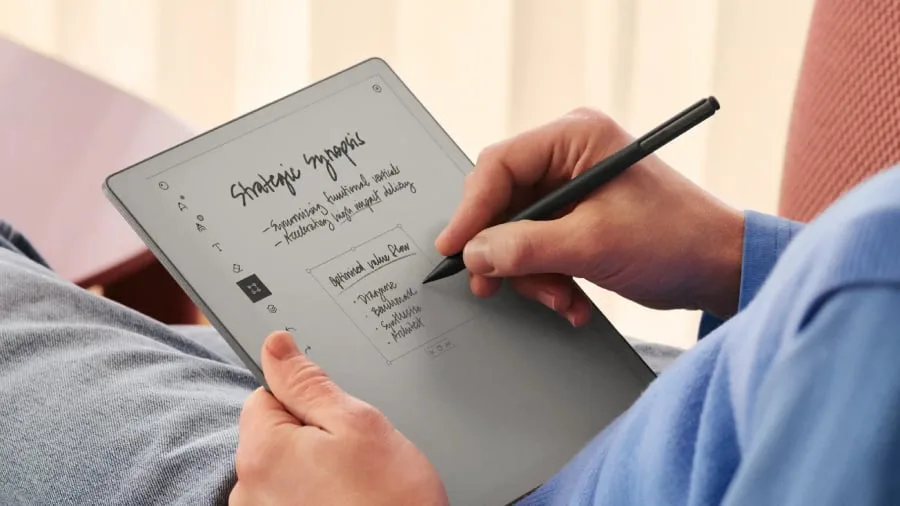
reMarkable has engineered a tablet that appears fundamentally opposed to what tablets typically do. Outwardly resembling a standard tablet with its processor, wireless connectivity, storage capacity, and expansive touchscreen, the Paper Pure employs deliberately constrained software architecture. The device eliminates app stores, system alerts, and task-switching capabilities that typically encourage users to jump between different activities. Its core purpose centers on note-taking, artistic work, and document consumption.
This minimalist approach represents the device's defining strength. Priced from $399 and bundled with a stylus, the Paper Pure replaces the reMarkable 2 with substantial technical improvements: 50% faster performance, 20% higher display contrast, four times the storage capacity, and battery life extending to three weeks. The device incorporates handwriting recognition, calendar-integrated note organization, and file synchronization capabilities that support a streamlined digital workflow without attempting to replicate iPad functionality, though certain capabilities depend on a Connect subscription.
The device presents an alternative vision for what tablets could be: fundamentally a digital writing instrument with embedded computing rather than a portable computer that happens to have a touch interface.
What's inside the reMarkable Paper Pure
The Paper Pure centers on a 10.3-inch grayscale E Ink screen featuring 1,872 by 1,404 pixel resolution and 226 pixels per inch density. reMarkable designates this as a Canvas display, incorporating palm rejection technology.
Palm rejection enables users to position their hand against the screen while writing without generating unwanted marks, replicating the tactile experience of traditional paper-based writing.
Beneath the display sits a 1.7GHz dual-core Cortex-A55 processor with 2GB of LPDDR4 memory. These specifications appear modest relative to contemporary iPads or Android tablets, yet the Paper Pure lacks the requirement to execute conventional tablet applications or facilitate resource-intensive parallel processing. The device operates on a proprietary Linux-based system called reMarkableOS.
Storage capacity has undergone significant enhancement. The Paper Pure provides 32GB of onboard storage, representing a fourfold increase from the reMarkable 2's 8GB allocation, according to The Independent.
reMarkable specifies the 3,820mAh battery as capable of supporting up to three weeks of operation, calculated on the basis of one hour of daily note-taking.
Certain productivity features necessitate reMarkable's Connect subscription service, encompassing handwriting search functionality, unrestricted cloud storage and synchronization, machine learning-based text conversion, and note modification via desktop and smartphone applications. Without Connect, cloud-stored files persist only if accessed or synchronized within the preceding 50 days.
The Paper Pure omits an integrated illumination system, requiring external lighting for use in low-light settings. Its monochrome presentation may present challenges for individuals who engage with color-based documents, data visualizations, or graphically rich materials.
When doing less becomes the feature
The Paper Pure aligns with an expanding category of devices engineered to deliberately constrain functionality.
According to reporting from New York Magazine, a resurgence of specialized single-function devices reflects consumer demand for technology that excels at isolated tasks without channeling users into the broader ecosystem their phones provide.
This movement extends into the smartphone market. The Minimal Phone 2 reduces features that promote compulsive engagement, whereas the Enough Phone pursues an alternative strategy emphasizing smaller form factors, repair accessibility, and user-replaceable batteries rather than expanded screens and concurrent application support.
The Paper Pure thus occupies a position within a larger product category rather than standing as an anomalous venture. While technological implementations differ, the fundamental philosophy remains consistent.
What this means for users
The Paper Pure's desirability hinges fundamentally on individual expectations regarding technology's role.
For individuals whose daily routine involves constant switching between notifications, communications, content streams, and professional software, a device that systematically eliminates these distractions could facilitate more productive composition or reading sessions. Conversely, for those depending on tablets to manage numerous simultaneous responsibilities, these identical limitations could rapidly prove counterproductive.
This positions the Paper Pure less as an improved tablet option and more as a deliberate selection of specialized digital instrument. The fundamental exchange involves surrendering adaptability in exchange for concentration, and expanding consumer enthusiasm for products built on this exchange indicates that certain buyers may willingly relinquish capabilities to gain improved attention management.
For prospective Paper Pure purchasers, the decision becomes straightforward: do you require another device capable of handling virtually everything, or would you benefit from technology engineered to accomplish a limited number of tasks with exceptional proficiency?
Read more

California Tightens Rules on Robotaxis as Incidents Mount
A new state law sets safety standards and accountability measures for autonomous vehicle operators, requiring local support staff and penalties for blocking emergency responders.

Wawa Elevates Long-Tenured Executive to CIO Role
The convenience store chain has named Bill O'Donnell, a 25-year company veteran, as its new chief information technology officer, putting him in charge of tech strategy, cybersecurity and digital operations.

ServiceNow Debuts Flow, a Conversational Service Desk Built for Speed Over Complexity
ServiceNow is rolling out Flow, a natural language service desk tool that automates employee requests through Slack and Microsoft Teams without requiring a full IT service management overhaul.