Red Hat's OpenShift 5 Brings AI-Driven Operations to Kubernetes as Teams Stretch Resources
Red Hat has released OpenShift 5, its first major platform update in seven years, embedding AI capabilities into Kubernetes infrastructure to help smaller IT teams manage growing workloads without expanding headcount.
Artificial intelligence is transitioning from strategic presentations into the operational backbone of enterprise infrastructure. As hiring constraints and reduced team sizes collide with expanding computational demands, organizations are demanding that their infrastructure platforms take on investigative, planning and remediation responsibilities directly.
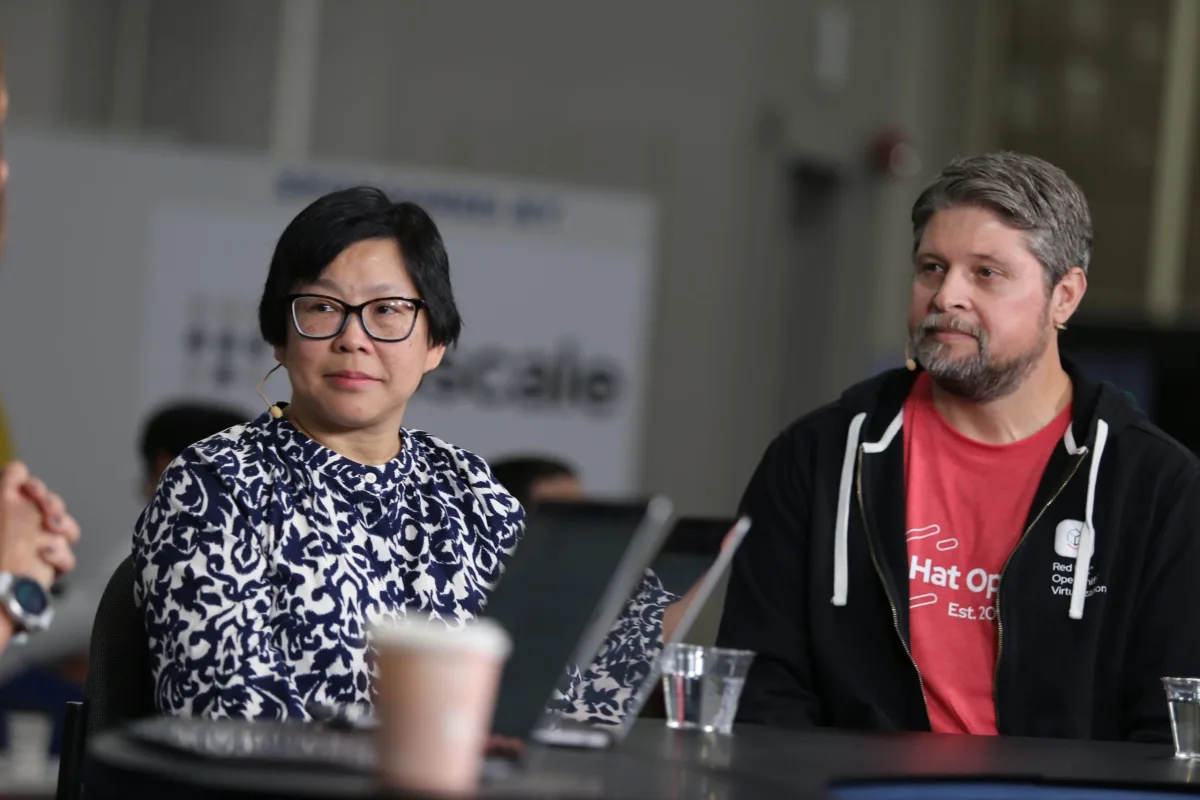
This transformation is materializing first in Kubernetes environments. Red Hat Inc. unveiled OpenShift 5 this week—marking the platform's first major release in seven years—incorporating Model Context Protocol servers, safety mechanisms and autonomous capabilities into its core architecture. The shift reflects fundamental changes in how customers interact with the platform, according to Mike Barrett, vice president and general manager of hybrid platforms at Red Hat.
We started putting in guardrails. We started putting in agent skills, and now you can really have an agentic experience with the platform. The platform itself can actually do things for you. It can notice what's running.
Mike Barrett, Red Hat
Barrett and Ju Lim, senior manager of product management at Red Hat, discussed OpenShift 5's AI-integrated capabilities during an exclusive interview at KubeCon + CloudNativeCon NA, broadcast through theCUBE, SiliconANGLE Media's livestreaming platform. The conversation centered on how the platform weaves artificial intelligence into system upgrades, problem diagnosis and routine administration.
From weeks of planning to one click
While upgrades appear straightforward in theory, the reality involves managing hundreds of applications across a single cluster, each carrying distinct dependencies, documentation and version compatibility constraints. OpenShift 5 leverages AI to navigate this complexity and generate an upgrade strategy, Barrett explained.
We have customers that sometimes plan this out in weeks and months. Now, through what Mike was just saying, we have a way where, through a single click, you can actually generate an AI plan that actually does all that risk analysis and assessment for you.
Ju Lim, Red Hat
The same approach extends to diagnostics. OpenShift 5 aggregates telemetry information, event logs and Kubernetes resource details to pinpoint issues and recommend solutions, according to Lim. All actions require explicit approval, preserving operator authority throughout the process. Fully independent troubleshooting and autonomous updates remain in technology preview status, per Virtualization Review. Red Hat's internal site reliability engineering group is piloting these capabilities.
We run OpenShift as a managed service, and they're seeing anywhere between an 8x and 10x time improvement to find the root cause of issues.
Mike Barrett, Red Hat
Security considerations are driving adoption momentum. The proliferation of software flaws and active exploits has compressed the window between public disclosure and actual attacks from multiple days to mere hours, Barrett noted. Organizations are seeking mechanisms to accelerate legacy application deployment, and Red Hat's strategy includes enabling existing virtual machines to operate within Kubernetes infrastructure.
https://www.youtube.com/embed/aXlPWhMFMXw?feature=oembed
We felt that really emphasized a number change. How people want to work with the platform is completely different now, and so we needed a major number.
Mike Barrett, Red Hat
Read more

Microsoft 365 Outage Exposes Risks of Vendor Concentration in Enterprise Infrastructure
A global Microsoft 365 outage that spanned Thursday and Friday revealed how dependent enterprises have become on a single provider's platform, raising questions about resilience and backup strategies across the industry.
How UX Research Keeps Pace With AI-Powered Development
As AI coding agents accelerate software shipping, research must adapt to stay relevant. A new approach called research-in-the-loop embeds evaluation mechanisms directly into product features, letting teams learn from releases in real time.
Beyond the lift-and-shift: Why data management decides VMware exits
Companies fleeing expensive hypervisor licenses discover that migrating virtual machines to Kubernetes is just the beginning. The real challenge lies in managing data across both containers and VMs on a unified platform.