Beyond the lift-and-shift: Why data management decides VMware exits
Companies fleeing expensive hypervisor licenses discover that migrating virtual machines to Kubernetes is just the beginning. The real challenge lies in managing data across both containers and VMs on a unified platform.
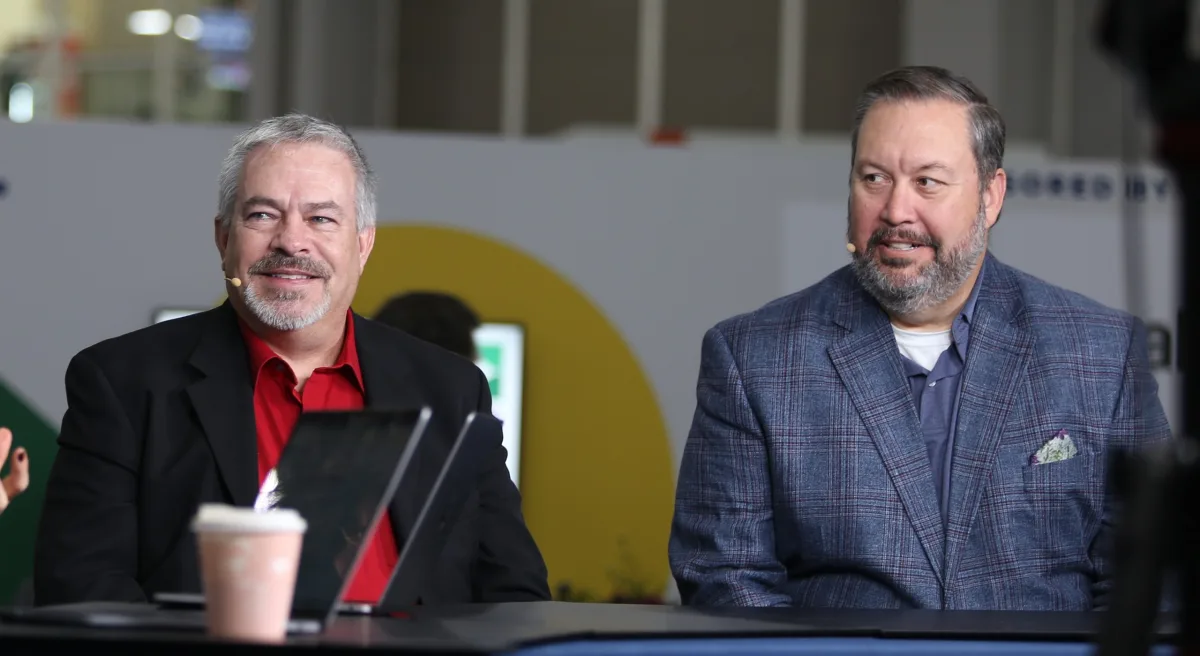
Organizations moving away from legacy hypervisors are learning that simply transferring virtual machines represents only part of the migration puzzle. Success in shifting to Kubernetes often hinges on deploying a data management layer that works consistently across infrastructure. Cost pressures from rising licensing fees are motivating enterprises to consolidate containers and VMs onto shared infrastructure.
This transition is underway at Mouser Electronics Inc., a major global distributor of electronic components. The company has operated Red Hat Inc.'s OpenShift for container workloads for approximately five to six years and is now constructing a production OpenShift Virtualization environment to transition applications away from Broadcom Inc.'s VMware. Ronald Waller, systems engineer at Mouser, explained the appeal of this approach.
It doesn't matter if we're running containers or VMs, we're running it on the same foundation, which really works well. Because we can manage those things with the same tool sets and same skill sets.
Ronald Waller, systems engineer at Mouser
A unified data layer bridges the gap
Kubernetes already functions as a shared control plane for containerized AI applications, and extending it to encompass virtual machines standardizes management across newer and legacy workloads alike. Everpure Inc., which underwent a rebrand from Pure Storage Inc. in the current year as part of a strategic shift toward data-focused offerings, positions Portworx as the corresponding abstraction layer for storage infrastructure.
Jon Owings, assistant vice president of global technical presales for cloud and data services at Portworx by Everpure, highlighted what enterprises need most during such transitions.
Kubernetes provides that ubiquitous control plane for all of them, and that's what customers are asking us for. The one thing that was missing was the same thing but for data.
Jon Owings, Portworx by Everpure
VMware administrators transitioning to Kubernetes face a demanding learning curve, one that Waller has navigated over the past year. When constructing Mouser's proof-of-concept cluster, storage configuration proved surprisingly straightforward compared to other challenges.
I asked the storage guy what I needed from him, and he handed me a user ID and an API key. I went to Portworx Central. I configured my spec for the operator and the storage cluster, created my secret, and boom, Portworx Enterprise did everything else on the backend. I didn't even have to think about it.
Ronald Waller, systems engineer at Mouser
Portworx continues developing capabilities for this specific scenario. The company integrated data management natively into OpenShift in May and demonstrated new artificial intelligence and virtual machine features at KubeCon. For organizations following Mouser's migration path, Owings views the departure from legacy hypervisors as an opportunity to redesign operational procedures using a data management layer that functions consistently across multiple cloud environments and Kubernetes variants.
https://www.youtube.com/embed/FAEGk8G0wec?feature=oembed
What can we change that we didn't like about the last 15 years? … Were we dependent on a vendor? Were we dependent on shell scripts or PowerShell? We have this great opportunity to do something new, and Kubernetes has that open API that allows you to be creative.
Jon Owings, Portworx by Everpure
Read more
Microsoft 365 Outage Exposes Risks of Vendor Concentration in Enterprise Infrastructure
A global Microsoft 365 outage that spanned Thursday and Friday revealed how dependent enterprises have become on a single provider's platform, raising questions about resilience and backup strategies across the industry.

How UX Research Keeps Pace With AI-Powered Development
As AI coding agents accelerate software shipping, research must adapt to stay relevant. A new approach called research-in-the-loop embeds evaluation mechanisms directly into product features, letting teams learn from releases in real time.

Protein Snacks From Venture-Backed Startups: A Taste Test Reality Check
Startups are flooding the market with high-protein sodas, bars, and frozen treats. We sampled seven products to see if they actually taste good.