Huang's exit creates funding vacuum for AI startups as Nvidia shifts investment strategy
Jensen Huang's departure from Nvidia removes a major source of capital for early-stage AI companies, with investors warning that his successor is likely to be far more selective about startup backing.
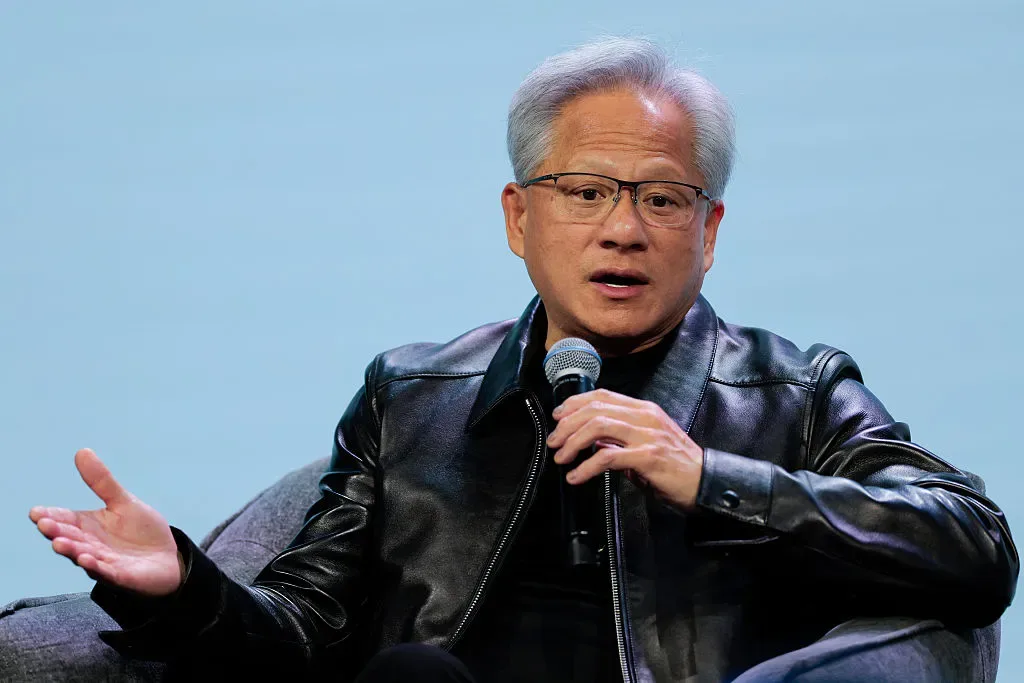
The announcement that Jensen Huang was stepping down as Nvidia's chief executive—ending a 33-year tenure that began when he co-founded the company—sent shockwaves through the venture capital world. One founder working in the neocloud space described the moment as devastating: "It's like a bomb went off," they told TechCrunch upon learning the news.
Nvidia's role as a venture investor has grown substantially in recent years. The chipmaker has deployed tens of billions of dollars annually into startups and participated in 105 funding rounds this year alone, frequently taking the position of lead investor, according to PitchBook data. Maria Davidson, who leads Relational Capital, expressed concern about what comes next: "If that direction changes, it'll be a big blow to so many young companies."
The loss of Huang's personal involvement threatens to reshape the startup landscape. Investors and founders worry that his departure could significantly alter dealmaking patterns, company valuations, capital availability, and competitive dynamics across the sector. Shamilla Bankiya, a partner at Dawn Capital, underscored the depth of Nvidia's influence: "Nvidia is carrying almost every AI-native startup from application to neocloud."
Huang's hands-on approach to dealmaking
Much of Nvidia's investment strategy has flowed directly from Huang's personal judgment. According to Umesh Padval, managing partner at Seligman Ventures, who has known Huang since both served on the board of Mellanox Technologies (which Nvidia acquired for approximately $7 billion in 2020), most major startup investment decisions originated with Huang himself. While some hope his successor will eventually resume aggressive dealmaking, few expect that to happen quickly.
Colette Kress, Nvidia's interim chief executive, is anticipated to implement a notably different approach, particularly regarding investments in AI startups that are central to the massive data center expansion underway. Wall Street has long viewed Huang's prolific dealmaking in this area with skepticism. One investor characterized Kress's likely stance plainly: "She's much more conservative. I don't think she's going to commit the same amount of money to keep the early-stage ecosystem going."
The breadth of Nvidia's startup bets
Nvidia's investment focus has centered on neoclouds, inference providers, and open-weight models—categories that demand substantial capital from smaller organizations to develop. Zain Javid, co-founder of hardware company Ghost, credited Huang's vision for enabling this ecosystem to flourish: "Jensen's initiatives are a big reason an ecosystem has emerged despite that."
The scope of Nvidia's portfolio reveals the company's outsized influence. Nvidia backed CoreWeave while it remained private and participated in two funding rounds for Crusoe, including a $1.4 billion Series E. The company acquired Hugging Face this year for $13 billion (expected to close in 2027) and maintains investments in Mistral AI, Lambda, and Black Forest Labs. Nvidia frequently positioned itself as the largest investor in these transactions. Last year, the company wrote an $800 million check into Reflection AI's $2 billion Series B round, according to the Wall Street Journal, before the open-source startup had begun generating meaningful revenue.
Bankiya described Huang's investment philosophy in geographic and ideological terms: "Jensen believed in open source and frankly speaking, Europe." The potential withdrawal of that support from regions outside the United States, particularly Europe, could create a substantial void. "It would be a massive funding and honestly ecosystem gap that no one can fill," Bankiya said.
Market concentration and competitive implications
Nvidia's dominance as an investor has occasionally resembled monopolistic behavior. By deploying large capital amounts across numerous startups, Nvidia effectively ensured those companies would rely on its chips, thereby strengthening its already commanding market position. A shift toward more conservative investment could paradoxically benefit competitors. Google's announcement this week of two new chips came amid the turmoil surrounding Huang's departure from Nvidia.
Some in the venture community hope that major cloud providers and alternative chipmakers will move to fill the funding gap. Dharmesh Thakker, a general partner at Battery Ventures, anticipates competition among large technology rivals: "depending upon who brings the best combination of a great product, an ecosystem and community to compete with CUDA, and the financial power to bankroll the ecosystem," he said. CUDA is Nvidia's software platform that enables developers to run AI models on its GPUs.
However, Thakker expressed skepticism that companies like Google, Amazon, Microsoft, and AMD will match Nvidia's historical investment intensity. While these firms may back mature startups to drive adoption of their own chips and cloud services, he doubted they would commit hundreds of millions to pre-revenue infrastructure startups as Nvidia has done.
Valuation pressures and investor caution
Under Huang's leadership, infrastructure companies requiring $100 million to $500 million in GPU purchases could frequently secure half that amount at $1 billion-plus valuations directly from Nvidia, according to one venture capitalist. Nvidia's participation on the cap table provided other investors with confidence to back these companies at elevated valuations. That dynamic is now expected to shift.
Going forward, Nvidia is likely to become more selective about which new companies it backs while reducing check sizes for existing portfolio companies. This shift is anticipated to pressure valuations downward. Padval captured the sentiment among investors: "When Nvidia was on the cap table, everyone felt safe." Without that backing, traditional venture capitalists are expected to proceed more cautiously and may even postpone certain investments.
Broader ecosystem resilience
Despite widespread acknowledgment that Huang's departure represents a significant loss for Nvidia, most observers do not believe his absence will derail the broader AI expansion. Amulya Vishwanath, a former Nvidia employee who now operates her own venture fund, offered a perspective grounded in accountability and systemic resilience: "founders and leaders must be held accountable, and that the ecosystem is bigger than one person. That talent will, and must, continue to thrive."
Read more
Nvidia's Startup Investment Spree Hits 120+ Deals in 2026, But Leadership Transition Raises Questions
Nvidia and its venture arm NVentures have backed more than 120 startups this year, surpassing last year's record, but Jensen Huang's sudden departure creates uncertainty about the company's future investment strategy.

LangChain Raises $300M at $3B Valuation as AI Agent Management Heats Up
The open-source framework turned enterprise platform has doubled its valuation in a year, backed by CapitalG and others, as it positions itself as a vendor-neutral alternative for building and managing AI agents.
YC Demo Day Fall 2026: December 2 date, who attends, how to follow
YC Demo Day for the Fall 2026 batch is on Wednesday, December 2, 2026, in San Francisco. It is invitation-only, but companies can be followed on Launch YC and the Startup Directory.