Microsoft 365 Outage Exposes Risks of Vendor Concentration in Enterprise Infrastructure
A global Microsoft 365 outage that spanned Thursday and Friday revealed how dependent enterprises have become on a single provider's platform, raising questions about resilience and backup strategies across the industry.
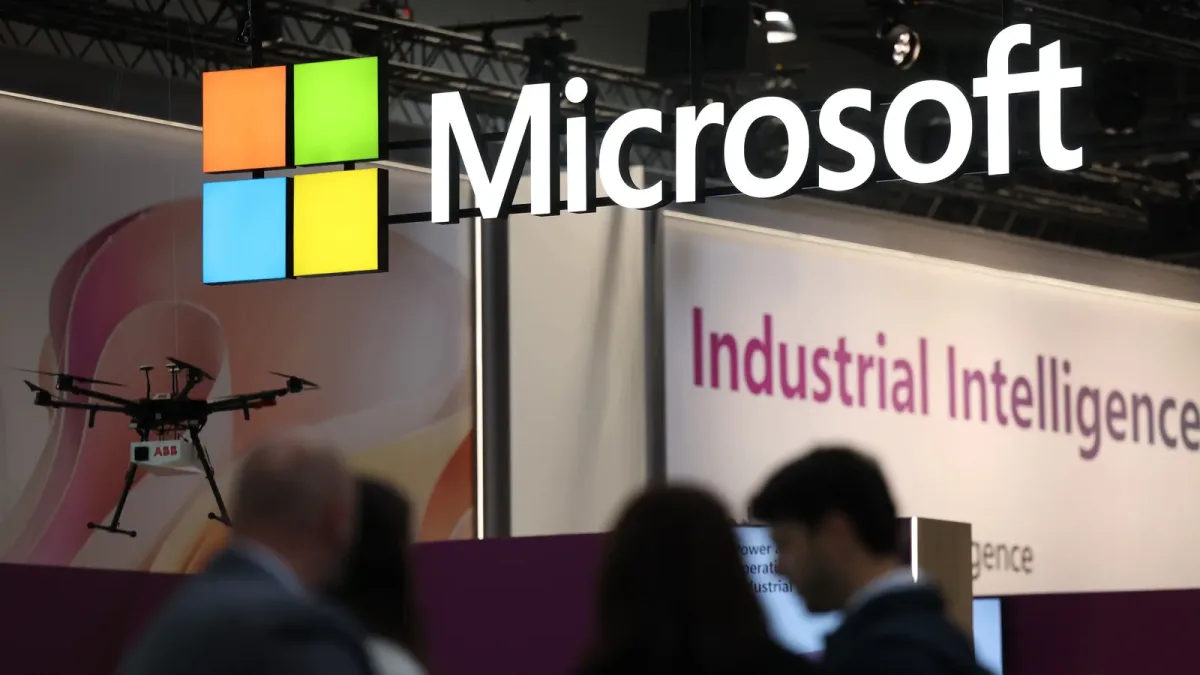
Microsoft 365 experienced a widespread service disruption beginning Thursday afternoon and extending into Friday, affecting access to its cloud-based productivity suite and disrupting operations for organizations worldwide. The company attributed the incident to a technical problem stemming from an "earlier network capacity upgrade that surfaced following a recent network change," according to a statement provided to CIO Dive. Microsoft ruled out malicious activity or involvement by AI agents as contributing factors and indicated it would release a detailed post-incident analysis.
The outage was driven by "elevated load across multiple regions, which is likely contributing to the connectivity errors," Microsoft confirmed. Gartner analysts highlighted the incident as a cautionary tale about enterprise dependency on single vendors. "For many enterprises, Microsoft 365 has become the connective tissue uniting corporate identity, endpoint compliance, enterprise security, and AI workflows," the research note stated. "When that single foundation degrades, the tightly coupled architecture transforms what should be an isolated infrastructure failure into an enterprisewide operational disruption."
Capacity Pressures Mount Across the Industry
Surging demand for computing resources has prompted substantial investment in cloud infrastructure and alternative offerings as enterprises increasingly depend on these systems. Catherine Boyce, an IT strategist at Bridgepointe Technologies, anticipates that capacity-related incidents will become more frequent for organizations relying on major technology providers. Many of her enterprise clients maintain redundant networks and multiple platforms as contingencies—if Microsoft Teams becomes unavailable, teams can switch to Zoom, for instance.
The financial impact of such disruptions is substantial. Outages are projected to cost businesses $73.5 million in 2026. Certain sectors, including healthcare and financial services, operate under zero-tolerance policies for platform downtime, making infrastructure reliability a critical business concern. "When we have a tech giant that is undergoing a massive outage that's affecting millions globally, that means basically that all the other companies, all other tech giants, or the Fortune 500 companies are potentially at the same risk," Boyce said.
Recommended Actions for Enterprise Leaders
Gartner recommends that CIOs take several steps to strengthen operational resilience:
- Deploy monitoring systems capable of detecting service interruptions
- Establish out-of-band communication channels and backup procedures
- Evaluate exposure to single-vendor dependencies, particularly for critical functions like email and identity management
- Maintain independent backup systems rather than relying exclusively on cloud provider redundancy
- Test AI workload dependencies under stress conditions before expanding deployment
Staffing Changes and Operational Risk
Boyce cautioned that Microsoft's recent severance offers to approximately 60,000 employees, alongside other significant workforce reductions announced this year, warrant consideration in the context of infrastructure reliability. While cost management remains a priority for enterprise leadership, large-scale incidents may reflect individual errors or oversights. "We're seeing security breaches, we're seeing hacks, we're seeing vulnerabilities, we're seeing outages, and it's just something to note," Boyce said. "Are we doing this too quickly? Are we doing the layoffs and consolidating at a pace where our technology is now at risk?"
Planning for 2027
As organizations develop their 2027 budgets, Boyce emphasized that security and infrastructure investments cannot be deferred. "Take a look at your data center, your cloud, your AI, because what worked for you in Q1 and Q2 is not going to be the same strategy or solution going into next year," she said.
Read more

How UX Research Keeps Pace With AI-Powered Development
As AI coding agents accelerate software shipping, research must adapt to stay relevant. A new approach called research-in-the-loop embeds evaluation mechanisms directly into product features, letting teams learn from releases in real time.

Beyond the lift-and-shift: Why data management decides VMware exits
Companies fleeing expensive hypervisor licenses discover that migrating virtual machines to Kubernetes is just the beginning. The real challenge lies in managing data across both containers and VMs on a unified platform.

Protein Snacks From Venture-Backed Startups: A Taste Test Reality Check
Startups are flooding the market with high-protein sodas, bars, and frozen treats. We sampled seven products to see if they actually taste good.