Pigment Unveils AI Interface Builder to Democratize Business Application Development
Pigment SAS has launched Pigment Frames, an artificial intelligence-powered tool that enables organizations to construct data-collection forms, planning scenarios, and leadership dashboards through conversational prompts rather than traditional coding.

Planning software vendor Pigment SAS unveiled an AI-driven interface creation system on Monday that empowers teams to build data-entry forms, scenario modeling tools and C-suite presentations by simply describing what they need in natural language.
The offering, branded Pigment Frames, constructs bespoke user interfaces that link seamlessly to Pigment's core planning infrastructure with live data synchronization. Unlike standalone generative AI products that produce isolated dashboards or apps without enterprise data integration, Frames maintains direct connections to governed information sources within the Pigment ecosystem.
"You can actually build any type of business application to collect data," explained Ben Previeux, Pigment's head of product and AI strategy. Although Pigment specializes in planning workflows, Previeux noted that existing customers leverage the system for operational data gathering beyond planning—including accounting contract specifics and vehicle fleet expenditure tracking.
The Frames capability serves multiple business functions, spanning financial operations, talent management, logistics networks and revenue teams. Organizations might deploy it to streamline recruitment workflows, track time-off requests or adjust commission structures. Teams can iterate on interface design and underlying calculations through conversational refinement.
Frames integrates with Pigment's Modeler Agent, which debuted in March and handles construction of underlying data structures, calculated fields, business rules and supporting logic. Combined, these tools enable end-to-end application generation from interface through backend architecture.
Previeux recounted a session with Uber Technologies Inc. where workshop attendees sketched an application concept on a whiteboard, photographed the drawing and transmitted it to the Modeler Agent. The system transformed the image into a functional Frame, enabling the team to refine interaction patterns before requesting the agent to construct the supporting infrastructure.
"It took about one hour for an application that may have taken several weeks to build otherwise," Previeux stated.
Verification and Security
AI-constructed applications must navigate a review-and-deployment sequence before going live. The agent validates mathematical expressions, object relationships and computed outputs, while team members can examine the agent's decision-making process and identify which Pigment data sources feed into specific calculations.
"We ask the user to verify because there is no 100% guarantee that something built by AI will work," Previeux said. The source-tracking capability helps teams validate that interfaces pull information from appropriate data repositories.
Frames leverages Pigment's established permission framework. User roles and access policies regulate what information displays to each team member, even when multiple individuals interact with the same Frame. A regional director reviewing revenue metrics would encounter only figures for their authorized territories.
"You can't access data you don't have access to in Pigment," Previeux noted. "The Frame is based on a security primitive that makes it very robust to handle thousands of users with their own access rights in production."
Early Adoption and Expanded Connectivity
Organizations already deploying Frames span Uber, Glean Technologies Inc., LinkedIn, Carta Inc., Unilever PLC, Supercell Oy and Vinci Concessions SA. Michael Miao, Vice President of Finance and Business Operations at Glean, stated in a company announcement that Frames transformed a labor-intensive analytical process into an interactive tool where staffing projections can be modified and their impact on hiring capacity computed instantaneously.
Pigment simultaneously rolled out Agent Connectors, enabling its AI systems to pull business information from Notion Labs Inc., Google Drive and Slack. Working alongside Pigment's existing Model Context Protocol infrastructure, these connectors establish bidirectional data movement.
Third-party AI tools can operate on Pigment information while Pigment's own agents retrieve data from external platforms. All connections respect the authorization rules already in place.
Pricing and Company Background
Pigment is introducing what it characterizes as the first complimentary trial for an enterprise performance management system. An AI-assisted setup process constructs an initial data model and interactive reporting dashboard based on user input. Frames comes bundled into the standard offering without separate fees, though customers pay for computational resources via a credit-based pricing structure.
Established in 2019, Pigment has accumulated approximately $400 million in funding and reports annual recurring revenue surpassing $100 million.
Read more

California Tightens Rules on Robotaxis as Incidents Mount
A new state law sets safety standards and accountability measures for autonomous vehicle operators, requiring local support staff and penalties for blocking emergency responders.
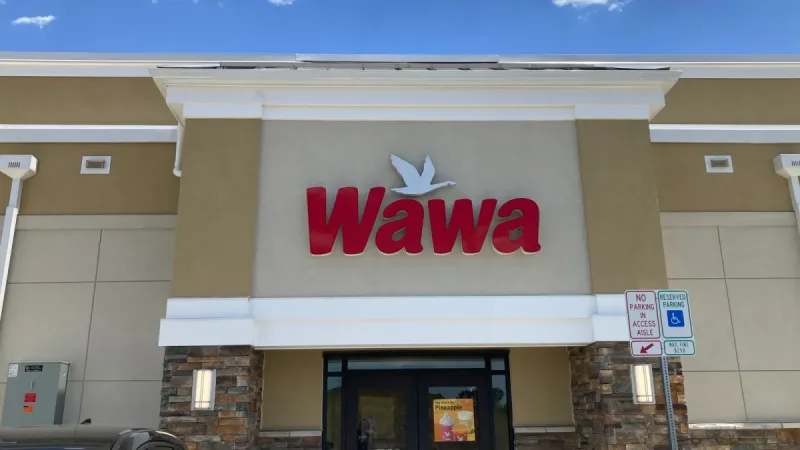
Wawa Elevates Long-Tenured Executive to CIO Role
The convenience store chain has named Bill O'Donnell, a 25-year company veteran, as its new chief information technology officer, putting him in charge of tech strategy, cybersecurity and digital operations.

ServiceNow Debuts Flow, a Conversational Service Desk Built for Speed Over Complexity
ServiceNow is rolling out Flow, a natural language service desk tool that automates employee requests through Slack and Microsoft Teams without requiring a full IT service management overhaul.