OpenClaw 2.0 Brings Collaboration and Security to Open-Source AI Agents
OpenClaw has released version 2.0, its largest update yet, introducing team collaboration features, streamlined setup, and enhanced security controls for the open-source AI agent framework.

The open-source agentic AI framework OpenClaw unveiled version 2.0 today, marking the most substantial overhaul since its inception. Rather than functioning as a browser-based question-answering tool like ChatGPT, OpenClaw operates as an autonomous digital assistant capable of performing actions directly on behalf of users, running either locally or in cloud environments. The platform offers free, open-source capabilities that enable users to repurpose it as a coding assistant, email organizer, calendar manager or activity monitor.
Though technically numbered 2026.8.1, the development team designated this release as 2.0 due to its scope, which encompasses quality-of-life enhancements, improved data retention, simplified deployment procedures and fortified security measures.
Installation and Setup Improvements
The OpenClaw team refined the initial setup workflow to help both newcomers and experienced users identify existing resources on their systems or cloud infrastructure. This detection capability extends to active ChatGPT or Claude subscriptions, application programming interface credentials and self-hosted language models. By establishing sensible default values for configuration parameters, the team reduced friction in the onboarding process, allowing users to begin interacting with their agent faster without needing to manually discover available resources.
Dashboard and Interface Redesign
The refreshed dashboard now functions as a comprehensive command center. Chat functionality occupies the primary position and adopts a familiar layout consistent with mainstream AI platforms, featuring a text input field for conversational interaction. Users gain the ability to initiate fresh conversations, return to previous work sessions and observe the agent executing tasks in real time.
The interface underwent a broader reconstruction introducing interactive elements, fresh widgets and customizable dashboards. Users can embed widgets within chat sessions, anchor them to dashboard views and configure automated actions triggered by specific events.
Team Collaboration Features
A significant constraint in earlier iterations prevented multiple users from accessing the same AI agent simultaneously. Shared cloud sessions now eliminate this barrier: team members can participate in active sessions and pick up where previous work concluded, distribute responsibilities to colleagues with complete context preserved, and work together synchronously on documents and workflow automations.
The OpenClaw team has adopted this collaborative capability internally, utilizing the multiplayer feature to develop the framework itself.
Additional Enhancements
A revamped search function enables users to retrieve earlier conversations by searching for exact text strings, individual words or specific phrases, then reopening the related message threads. This capability simplifies locating previous work and resuming interrupted tasks.
Security enhancements introduce defined trust zones, minimal-privilege authorization schemes and reinforced defenses against prompt injection attacks. The framework now establishes clear boundaries regarding who can initiate actions, what resources remain accessible, where execution occurs and which credential destinations are permitted. Implementation involves managing access points, assigning permissions according to user roles and controlling tool interactions.
Prior iterations of OpenClaw contained serious security vulnerabilities, making these protective measures essential for reducing potential attack vectors. Despite these improvements, users retain responsibility for securing their deployments against internet exposure and implementing robust authentication mechanisms, particularly when integrating personal data or enabling tools capable of executing operations on cloud platforms or local systems.
This release represents the first major version advancement for OpenClaw following OpenAI Group PBC's recruitment of Peter Steinberger, the framework's original creator.
Read more

California Tightens Rules on Robotaxis as Incidents Mount
A new state law sets safety standards and accountability measures for autonomous vehicle operators, requiring local support staff and penalties for blocking emergency responders.
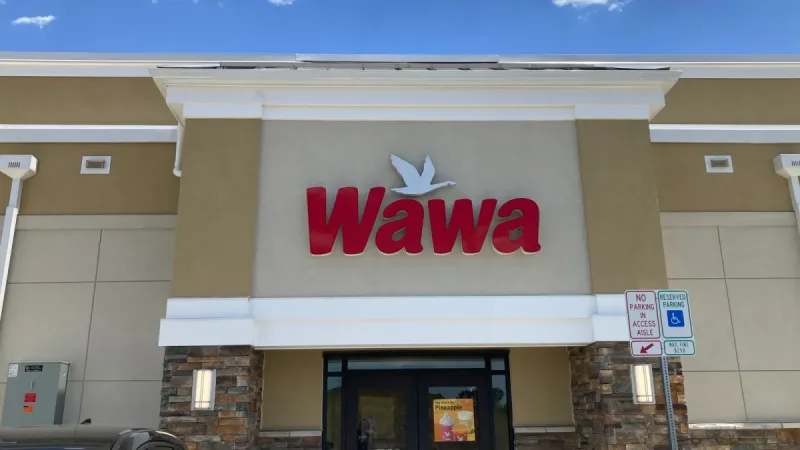
Wawa Elevates Long-Tenured Executive to CIO Role
The convenience store chain has named Bill O'Donnell, a 25-year company veteran, as its new chief information technology officer, putting him in charge of tech strategy, cybersecurity and digital operations.

ServiceNow Debuts Flow, a Conversational Service Desk Built for Speed Over Complexity
ServiceNow is rolling out Flow, a natural language service desk tool that automates employee requests through Slack and Microsoft Teams without requiring a full IT service management overhaul.