OpenAI Upgrades ChatGPT With Visual Interface, Moving Beyond Text-Only Responses
GPT-6 models now feature an "Intelligent UI" that generates interactive graphics, buttons and charts alongside text, letting the chatbot decide when visual elements better serve user needs.
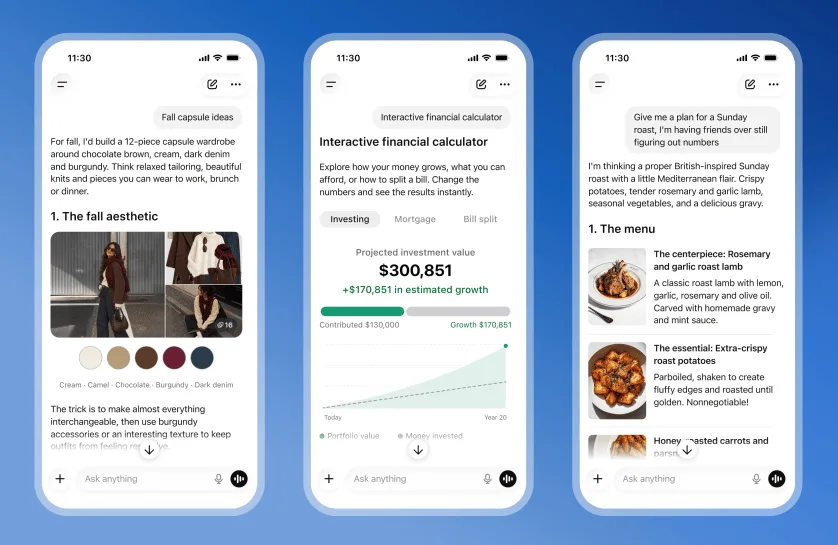
OpenAI Group PBC is reshaping ChatGPT's presentation layer by introducing what it calls an "Intelligent UI," moving the platform away from purely text-based answers toward a more visually dynamic experience. During a media briefing, the company unveiled how its GPT-6 models will autonomously choose to supplement or replace text with graphics, interactive buttons, forms and charts whenever the model determines such elements would enhance understanding.
The model itself will decide when a response benefits from visual treatment and embed these elements directly into its answer. For straightforward queries, ChatGPT will continue using text alone, but users can request a more interactive version at any time, prompting the system to restructure its output.
OpenAI demonstrated the capability with two scenarios. In one, a user asked for guidance assembling a 7-speed bicycle; rather than delivering paragraphs of instructions, the system produced a visual breakdown of major components with clickable elements for deeper exploration of each part. In another, someone requested a lamb roast meal plan with accompanying images and a recipe calculator that adjusts ingredient quantities based on guest count.
The visualizations themselves come from a pre-trained library of components that GPT-6 has learned. OpenAI Product Manager Aarush Selvan framed the initiative around accessibility and usability, stating that "learning complex topics easier" represents the core objective. He added, "ChatGPT has predominantly been a text-based interface. But the company wants to help people get things done, and it believes that "from the everyday things like planning a recipe or a trip or even trying to learn something, the most helpful answers aren't just text."
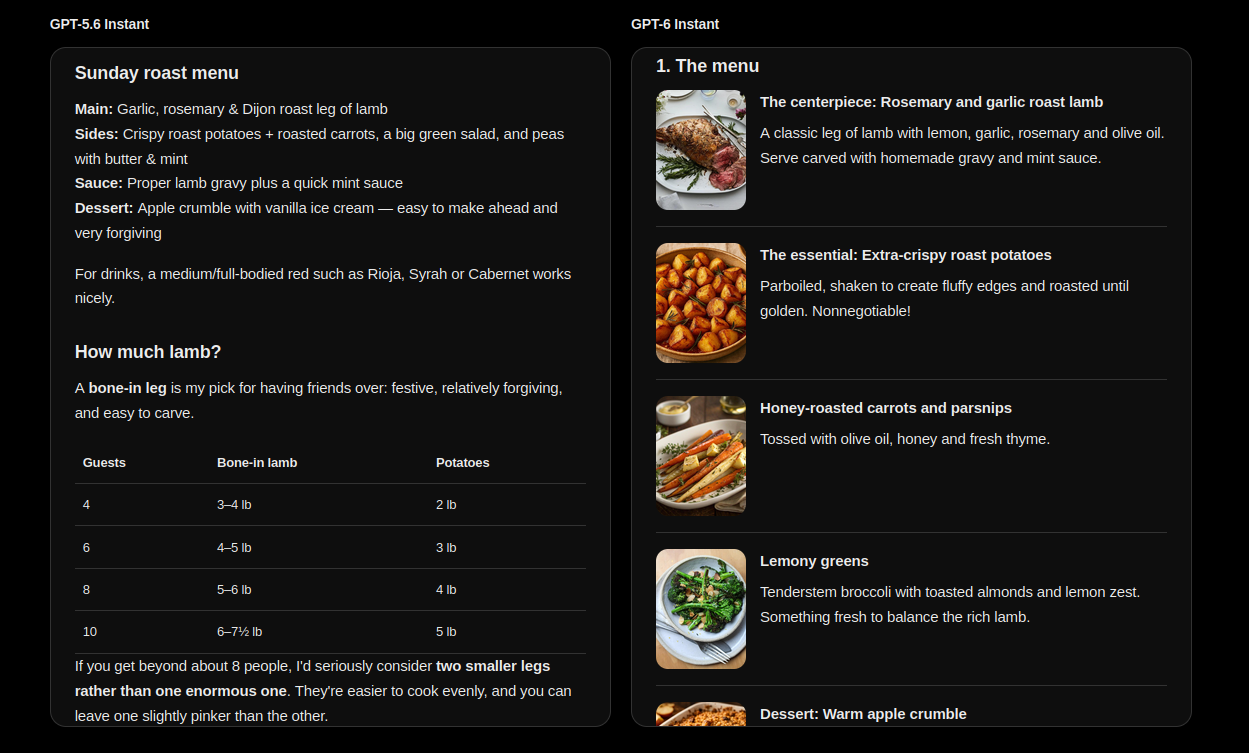
The approach echoes Google LLC's earlier "Generative Interface," which debuted alongside Gemini 3 last year, though OpenAI's version appears more graphics-intensive and visually elaborate. Google's feature generated considerable initial enthusiasm but ultimately did not meaningfully distinguish Gemini in the competitive chatbot landscape.
Several technical unknowns remain. OpenAI has not disclosed whether generating these additional visual elements will increase token consumption—a concern given that extra components likely require more processing. The vulnerability of visual outputs to AI hallucinations, a persistent challenge across chatbot systems, also remains unclear.
The visual push extends beyond interface design. Earlier this week, OpenAI announced plans to introduce image-based advertisements directly within ChatGPT responses, a development that could blur the distinction between user-facing content and sponsored material, though the company did not elaborate on implementation details.
The Intelligent UI rolls out immediately to ChatGPT Plus, Pro, Business and Enterprise subscribers, with Enterprise administrators able to control activation. Free and Go tier users gain access starting tomorrow.
Read more
Why Static Portfolios Are Failing Tech Professionals—and What Works Instead
The traditional portfolio has lost its power to land jobs and clients. Recruiters now want proof of real-world problem-solving, not polished case studies.

Lowe's Expands Media Network With Third-Party Measurement and AI Tools
The home improvement retailer is broadening its advertising platform across streaming, social and delivery services while introducing independent incrementality measurement and AI-powered discovery features.

Honeyjar brings AI-powered PR strategy to founders and communicators without expertise
A new startup founded by veteran communications professionals aims to democratize PR knowledge through AI, automating pitch research and media outreach while keeping humans in control of final decisions.