Microsoft's November outage highlights observability as critical infrastructure competency
A latent defect that persisted since July triggered Microsoft 365's massive outage affecting 430 million users, prompting the company to prioritize observability practices in its remediation plan.
Microsoft's investigation into the November 12 disruption of Microsoft 365 revealed the incident stemmed from a dormant bug introduced in July that saturated servers and created congestion persisting beyond 24 hours. The technology giant's postmortem identified 13 corrective measures, with three specifically addressing observability—the capacity to assess a system's operational state through measurable external indicators.
The company's remediation roadmap encompasses upgrading diagnostic data collection and change tracking mechanisms to accelerate problem identification, establishing more sophisticated detection capabilities for capacity constraints before infrastructure reaches maximum utilization, and strengthening alerting systems and customer notification velocity. Mark Moccia, VP and research director at Forrester, characterizes observability as an emerging essential skill for enterprise IT operations in an AI-driven landscape. "When the technology is capable of detecting vulnerabilities in your system much, much faster than it ever has before, you need best-in-class process and procedures to discover these things and shut them down before they cause damage," Moccia told CIO Dive.
The collision of legacy maintenance and innovation velocity
Chief information officers face mounting pressure as they simultaneously manage technical debt remediation and deploy contemporary capabilities. Contemporary AI systems can identify and weaponize system vulnerabilities at unprecedented speeds, creating a precarious situation where outdated infrastructure may harbor identical weaknesses replicated across numerous instances while concurrent feature rollouts expand organizational exposure to threats, according to Moccia.
The outcome has been a surge in service interruptions throughout 2026, culminating in several high-visibility incidents this month that disrupted commercial operations, aviation systems, financial institutions and government agencies. Moccia advocates that organizational leaders transition from incident response to anticipatory approaches by implementing robust operational frameworks, positioning observability as a mechanism to bridge this divide.
Moccia, who contributed to research examining "the tragically mundane story" of outages, recommends that CIOs begin by cataloging and ranking systems essential to organizational performance, then documenting interconnections to evaluate the potential scope of impact from service failures.
Building observability into architecture
Organizations should embed observability as a foundational principle during application development and system modernization, incorporating production surveillance, performance visualization, automated alerting, anomaly detection and response protocols into architectural planning from inception. Simultaneously, enterprises must treat observability as an integrated organizational strategy rather than permitting it to become compartmentalized within individual departments, requiring coordinated engagement across engineering, network operations and infrastructure teams alongside external technology partners.
The problem is ... there's not a well enough cross-organization coordinated effort to really understand, as features are introduced, what they're doing to the underlying compute and the network paths, et cetera, that are reliant upon those transactions for processing
Mark Moccia
The strategic importance of observability varies by sector, with large-scale cloud infrastructure operators like Microsoft and organizations managing confidential data in financial services confronting greater consequences than other industries, according to Moccia. Nevertheless, "based on our research and these incidents, it is certainly fast rising across the board," he noted.
Evidence suggests service disruptions show no indication of abating. According to the 2026 Observability Forecast from New Relic, more than 25% of enterprises encounter outages weekly or with greater frequency, with external vendors or cloud infrastructure providers representing the predominant source. Rapid problem detection has become instrumental to organizational response effectiveness, the report indicates.
Observability as a discipline is not: Update your documentation, buy some tools, install them, and then they're just going to run. This is an everyday, always-on kind of practice, and it's only going to get more and more important to make it central in focus because the pace of vulnerability discovery is not slowing down. It's going to get faster.
Mark Moccia
Read more
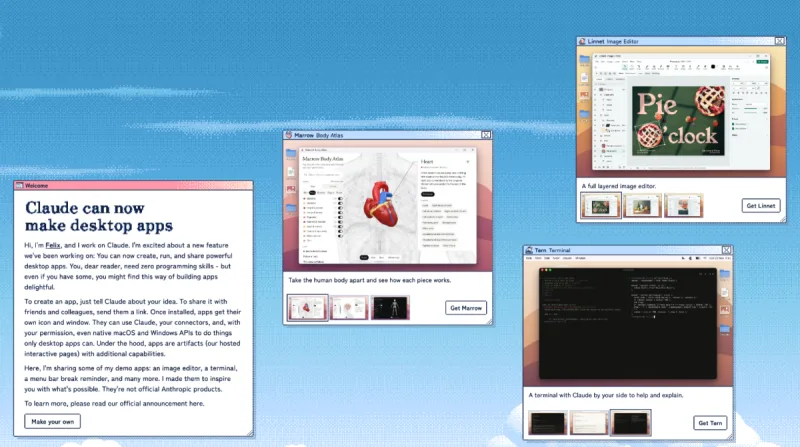
Anthropic Lets Users Turn Claude Artifacts Into Standalone Desktop Apps
Anthropic has rolled out a new capability allowing users to generate fully functional desktop applications for Windows and Mac systems through Claude prompts. The feature transforms Claude artifacts into independent apps that run outside the chatbot interface.
Why Chat Interfaces Are Failing AI Work—and What Comes Next
Conversational AI has democratized access to powerful models, but the chat box is fundamentally broken for managing real projects. The next leap requires interfaces that show decisions, not just dialogue.

Super Bowl 61 Sells Out: Brands Bet $8M-$9M Per Spot on Valentine's Day Game
Disney has already sold every advertising slot for Super Bowl 61 on February 14, 2027, with 30-second commercials commanding $8 million to $9 million each. The game is drawing both established players and first-time advertisers seeking to reach what could be another record-breaking audience.