Meta's Muse Climbs to No. 2 on App Store, But Lags Behind Rival AI Agents
Meta's newly launched AI agent Muse has reached the second position on Apple's App Store following its debut, though early download figures suggest a more measured start compared to the company's previous apps and competing AI services.
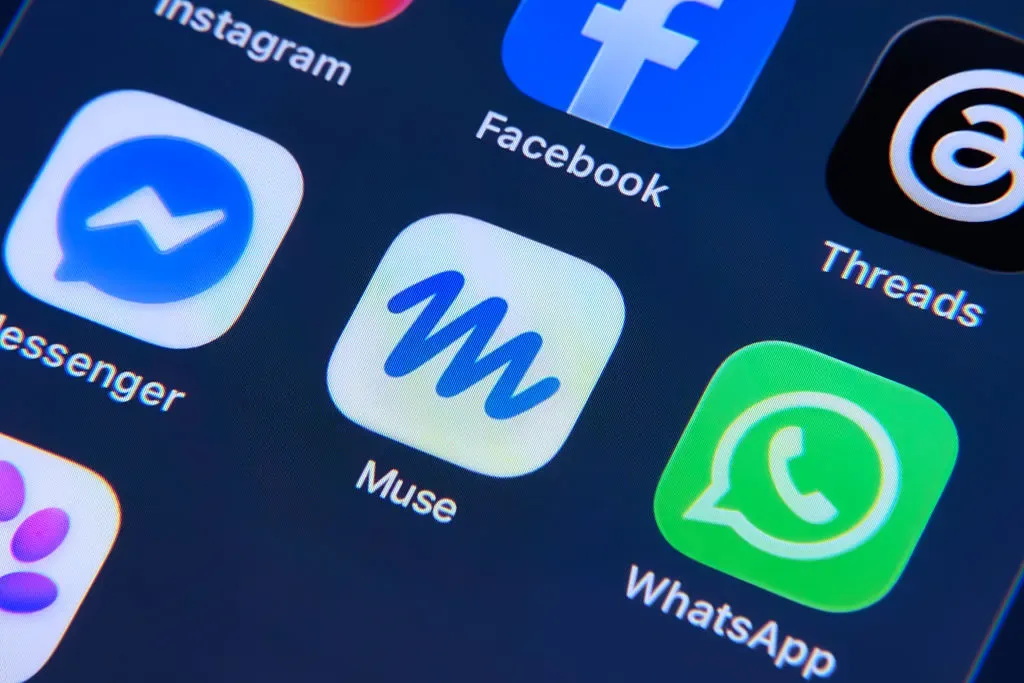
Following its Tuesday rollout, Meta's fresh AI application Muse is generating optimism on Wall Street and sparking conversation within tech circles on X. Market data now provides clearer visibility into how the app is resonating with American users, its initial target audience.
Sensor Tower, a market research organization, reports that Muse surpassed 83,000 downloads on iOS across the United States during its opening phase. (The application remains available exclusively in the U.S. at this stage.)
This achievement secured Muse's spot as the second-ranked app on the App Store's Top Charts. However, the launch trajectory appears more subdued when measured against Meta's previous app releases, including Threads and Meta AI. Threads generated over 4.3 million U.S. downloads on day one, while Meta AI attracted 108,000 U.S. downloads during its initial launch.
The comparison grows starker when examining ChatGPT's market entry. Within its first week, ChatGPT accumulated more than half a million U.S. installs—its sole market at launch. Extrapolating this figure suggests ChatGPT was averaging roughly 83,300 daily downloads at launch, a threshold Muse required double the timeframe to reach.
The slower initial performance does not necessarily signal difficulty for Muse. The application may simply be experiencing a more gradual ascent. The iOS version continues climbing the rankings, having advanced from fourth position on Wednesday to its current second-place standing.
The Android version demonstrates considerably weaker traction. On Google Play, Muse occupies position No. 338 within the Productivity category. (Android download metrics remain unavailable at present.)
Muse is simultaneously accessible through web browsers and WhatsApp, though these channels are excluded from the current download tallies.
Despite these early-stage figures, Muse warrants close observation given its significance as one of Meta's major strategic initiatives. The organization is positioning itself around the conviction that autonomous agents performing tasks on behalf of users will define the trajectory of consumer artificial intelligence—a commitment comparable in scope to the company's transition from Facebook to Meta in pursuit of metaverse technology.
Meta faces substantial competition in the agentic AI space. Participants range from Google's Gemini Spark to Anthropic's Claude Cowork. For consumer-oriented agents designed for everyday users, the primary rivalry centers on Meta's Muse versus Instinct, a text-message-based AI agent valued at $2.5 billion.
Despite documented privacy concerns and an expansive privacy framework, Instinct has earned enthusiastic endorsement from Silicon Valley figures regarding its performance capabilities.
While numerous agents concentrate on specialized domains such as professional or household management, Instinct emerges as the primary competitor, bolstered by $350 million in funding and rapid feature deployment. This week alone, Instinct introduced email addresses for its user base and disclosed plans for a social network feature—enabling one user's Instinct agent to communicate with agents belonging to their contacts for collaborative scheduling.
Should agents become the dominant paradigm, Instinct's capacity to construct a novel social framework grounded in actual real-world relationships may ultimately prove more strategically valuable than Meta's existing social graph, which encompasses both genuine acquaintances and distant followers.
Recent developments for Instinct include partnerships with Stripe and 1Password, along with a location-tracking capability enabling the agent to execute location-dependent operations.
Muse's market timing may have influenced its opening performance. The agent, which mandates users share additional personal details with Meta, debuted mere days after Meta finalized an $18 billion multistate legal settlement addressing social media's societal consequences. Meta's historical record includes substantial data breaches and repeated enforcement actions by the Federal Trade Commission regarding privacy infractions.
Read more

California Tightens Rules on Robotaxis as Incidents Mount
A new state law sets safety standards and accountability measures for autonomous vehicle operators, requiring local support staff and penalties for blocking emergency responders.
Wawa Elevates Long-Tenured Executive to CIO Role
The convenience store chain has named Bill O'Donnell, a 25-year company veteran, as its new chief information technology officer, putting him in charge of tech strategy, cybersecurity and digital operations.

ServiceNow Debuts Flow, a Conversational Service Desk Built for Speed Over Complexity
ServiceNow is rolling out Flow, a natural language service desk tool that automates employee requests through Slack and Microsoft Teams without requiring a full IT service management overhaul.