LeapXpert Tackles Enterprise AI Governance as Workplace Messaging Grows Complex
As artificial intelligence becomes embedded in workplace communication tools, enterprises struggle to maintain visibility and control over the data flowing through these systems. LeapXpert's platform aims to consolidate and govern AI-driven conversations across multiple channels.

Artificial intelligence's integration into workplace communication has created a paradox for organizations. While AI systems now routinely summarize, interpret, and even compose messages across chat platforms and collaboration tools, the resulting data remains largely unmonitored and unstructured. Employees generate thousands of messages daily, many processed by AI algorithms, yet enterprises lack centralized oversight of these conversations. This gap has spawned a new category of organizational risk: intelligent communication data that operates without governance frameworks.
Dima Gutzeit, CEO of LeapXpert, a business communications platform provider, sees this challenge as fundamental to enterprise strategy. "AI has made conversation the most valuable dataset inside organisations," he stated. "But without structure and governance, that value quickly turns into risk."
The enterprise communication blind spot
Historically, corporate messaging existed in two forms: archived emails treated as permanent records or temporary exchanges that vanished after use. The emergence of AI-powered tools like Microsoft's Copilot and Zoom's AI Companion has transformed this landscape. These systems now extract tone, context, and intent from chat histories, converting them into searchable knowledge bases. Yet many organizations have implemented these capabilities in isolated pockets, without coordinated visibility or control mechanisms.
Gutzeit observed that "Every enterprise is adopting AI somewhere in its communication stack," adding that "The problem is that few have a unified way to manage it in all channels, especially when client conversations happen on platforms like WhatsApp or iMessage."
The consequences of this fragmentation extend beyond theoretical concerns. A 2025 Kiteworks survey revealed that 83% of organizations acknowledge limited visibility into employee use of AI tools, while nearly half have already encountered at least one AI-related data incident. The issue encompasses not only potential data loss but also questions of accountability and regulatory compliance.
Turning conversations into intelligence
LeapXpert's solution centers on what the company terms "Communication Data Intelligence." The platform aggregates external client communications from WhatsApp, WeChat, iMessage, Microsoft Teams, and other channels into a single governed repository. Within this environment, LeapXpert's proprietary AI system, Maxen, evaluates messages for sentiment, intent, and compliance indicators while preserving complete auditability.
This architecture enables responsible interpretation of every exchange. Relationship managers, compliance personnel, and legal departments access the same auditable record showing who communicated what, when, and for what reason. The AI layer identifies anomalies, highlights potential policy breaches, and produces summaries to accelerate review cycles.
Gutzeit framed the approach as "bringing context to compliance," emphasizing that "Our goal is not to replace human communication, but to make it smarter, safer, and accountable."
Results in the real world
LeapXpert demonstrates the practical impact of its communications data intelligence framework through documented customer deployments. A North American investment management firm subject to SEC and FINRA regulations recently deployed the platform to unify its messaging infrastructure. Previously, compliance staff manually reviewed conversation samples from multiple archives, a labor-intensive process consuming significant daily hours.
Following LeapXpert's implementation, the firm consolidated all communications into a single auditable system. The results included a 65% reduction in manual review time and audit response times that improved from days to hours. Equally significant, the organization gained real-time awareness of emerging conduct risks while allowing employees to continue using their preferred communication channels with clients.
Gutzeit characterized these outcomes as evidence of an industry-wide realization: "They have to move together," referring to the necessity of aligning innovation with compliance in regulated sectors.
Governing the AI era of communication
The proliferation of built-in AI capabilities across mainstream platforms intensifies the governance challenge. Slack, Salesforce, and Microsoft Teams now feature generative assistants that summarize conversations or suggest actions—functions that may automatically process confidential information. Without explicit governance protocols, these embedded features can replicate the risks associated with external tools.
Gutzeit identifies LeapXpert's design philosophy as a distinguishing factor. The platform operates under a zero-trust security model, encrypting all messages in transit and at rest. Organizations maintain complete data ownership through bring-your-own-key encryption, while AI processing occurs in isolated, secure environments. "Our systems are built so enterprises can benefit from AI without surrendering control of their data," Gutzeit stated.
The path ahead
Gutzeit anticipates that as AI becomes more prevalent in enterprise communication, governance will transition from a defensive necessity to a source of competitive advantage. "We're entering a phase where AI will understand communication, not just record it," he explained. "That means compliance officers and business leaders can both derive value from the same dataset."
He views this evolution as the natural progression of enterprise communication technology. "AI will only be transformative if it's trusted," Gutzeit noted. "Transparency, auditability, and context are what make that possible."
For organizations seeking to balance the benefits of AI innovation against the requirements of oversight, LeapXpert positions itself as enabling AI systems that monitor, comprehend, and maintain accountability.
Read more

California Tightens Rules on Robotaxis as Incidents Mount
A new state law sets safety standards and accountability measures for autonomous vehicle operators, requiring local support staff and penalties for blocking emergency responders.
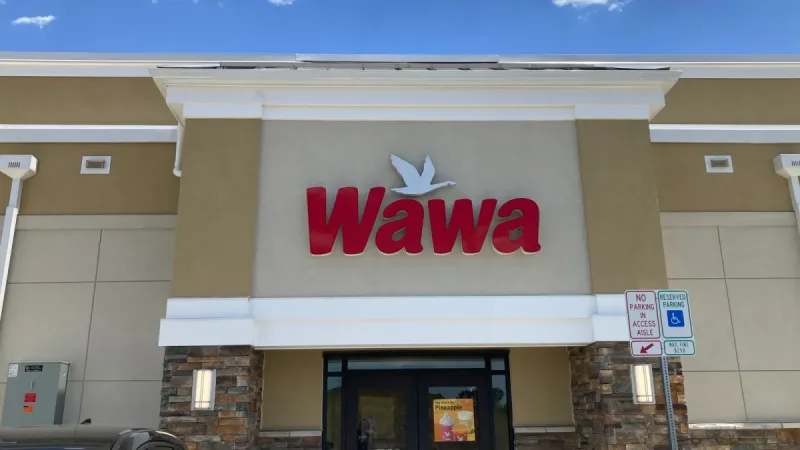
Wawa Elevates Long-Tenured Executive to CIO Role
The convenience store chain has named Bill O'Donnell, a 25-year company veteran, as its new chief information technology officer, putting him in charge of tech strategy, cybersecurity and digital operations.

ServiceNow Debuts Flow, a Conversational Service Desk Built for Speed Over Complexity
ServiceNow is rolling out Flow, a natural language service desk tool that automates employee requests through Slack and Microsoft Teams without requiring a full IT service management overhaul.