iPhone 18 Pro vs Pixel 11 Pro: Premium Flagships Diverge on Strategy and Price
Apple's iPhone 18 Pro and Google's Pixel 11 Pro both command premium prices above $1,000, but they prioritize different strengths—Apple emphasizes performance and professional video tools, while Google centers its experience around Gemini AI and computational photography.
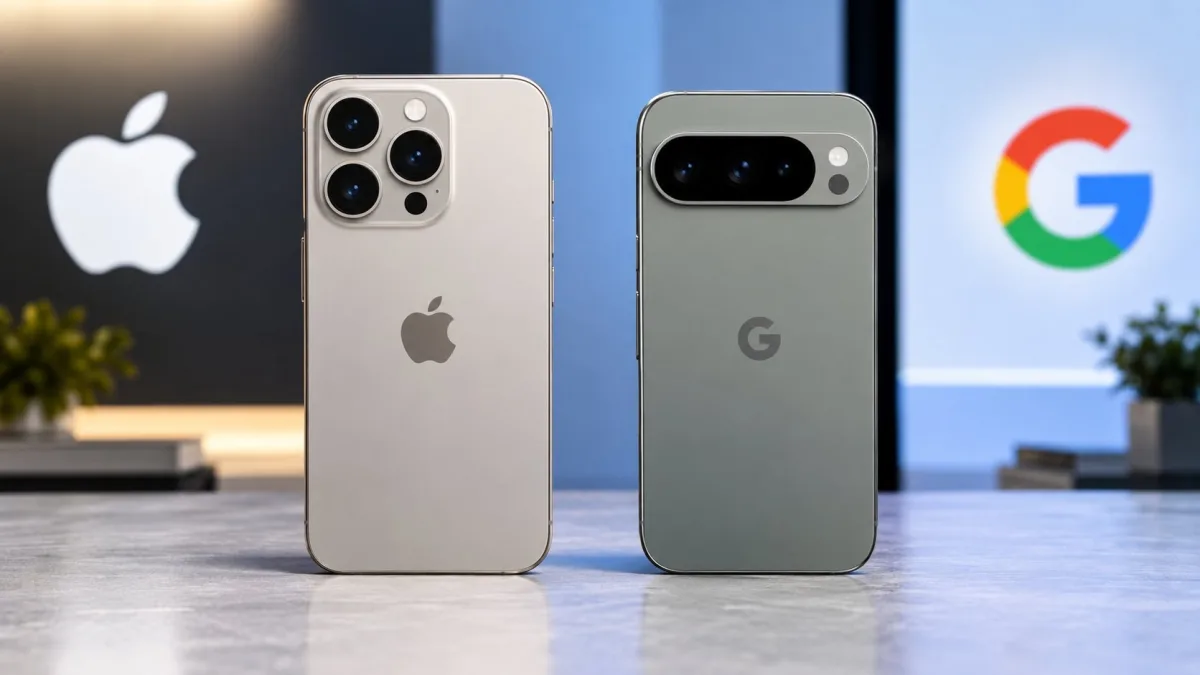
Two of the year's most expensive smartphones represent fundamentally different visions of what a premium handset should deliver. The Pixel 11 Pro launches at $1,099 for 256GB of storage, while the iPhone 18 Pro starts at $1,199 at the same capacity. Google has built its flagship around Gemini and advanced computational photography capabilities. Apple instead prioritizes raw processing power, professional-grade camera and video features, privacy protections, and seamless connectivity with its broader ecosystem of devices and services.
Design and displays
Both devices feature identical 6.3-inch OLED screens with adaptive refresh rates reaching 120Hz, meaning neither requires users to sacrifice compactness for flagship-tier display technology. Apple specifies a Super Retina XDR OLED panel capable of 3,000 nits peak brightness outdoors, whereas Google's display reaches 3,600 nits. However, these manufacturer specifications may not reflect identical testing conditions, making direct brightness comparisons unreliable.
Weight differs marginally between the two: Pixel 11 Pro tips the scales at 204 grams (7.2 ounces), compared to 211 grams for iPhone 18 Pro. Both phones carry IP68 certification for dust and water resistance. Storage options reveal a more meaningful distinction. While both begin at 256GB, the Pixel 11 Pro maxes out at 1TB. Apple extends its storage ladder to 2TB on the iPhone 18 Pro, providing additional headroom for users managing substantial video libraries or large files locally.
Performance and cameras
Apple's A20 Pro chip and Google's Tensor G6 processor reflect divergent engineering philosophies, though independent benchmarking remains insufficient to declare a definitive performance victor. Apple pairs its A20 Pro with an advanced vapor chamber system, targeting sustained performance under demanding AI workloads. Google combines the Tensor G6 with its Titan M3 security coprocessor, having engineered the Pixel 11 generation around Gemini Intelligence capabilities.
Camera hardware similarly diverges. The iPhone 18 Pro employs three 48-megapixel rear sensors, with the primary camera featuring variable aperture settings and the telephoto delivering 4x magnification plus an 8x optical-quality zoom option. Pixel 11 Pro pairs a 50-megapixel main sensor with a 48-megapixel ultrawide and 48-megapixel 5x telephoto. Google advertises Pro Zoom capabilities extending to 120x, while emphasizing computational tools including Magic Capture, Video Boost, Night Sight Video, and Zoom Enhance as central to its photography approach.
For video production workflows, the iPhone 18 Pro presents a more comprehensive professional toolkit. It supports ProRes RAW, Apple Log 2, genlock, and 4K Dolby Vision recording at up to 120 frames per second. The Pixel 11 Pro offers 8K recording through Video Boost, 4K video at up to 60 fps, 10-bit HDR video, and AI-assisted capture and editing capabilities. Buyers prioritizing professional video work will find iPhone 18 Pro more suitable, while those valuing computational photography and AI-driven shooting features should favor Pixel 11 Pro.
AI and software ecosystems
Artificial intelligence represents the most significant differentiator between these flagships. Gemini sits at the core of the Pixel 11 experience, integrated with Gemini Live, Circle to Search, Live Translate, Magic Capture, and other Pixel-exclusive AI capabilities. Google bundles six months of Google AI Pro with the Pixel 11 Pro, granting higher Gemini usage limits and 5TB of cloud storage. Google notes that feature availability varies by country, language, age, and subscription status, meaning the complete AI experience will differ across markets.
Apple's next-generation Siri AI begins rolling out in beta with iOS 27 starting September 14. Apple states it will initially require English-language settings on supported devices, with additional languages arriving in October. Siri AI will not launch in the EU on iPhone initially, and certain Apple Intelligence features carry regional and language restrictions. The new Siri adds personal-context awareness, on-screen recognition, camera-based assistance, and cross-app information access. Apple Intelligence processes compatible tasks locally on-device and leverages Private Cloud Compute for more intensive operations.
For buyers seeking the most mature AI implementation at launch, Pixel 11 Pro holds the advantage. Gemini already functions as a central component of Google's shipping flagship, whereas Apple's Siri AI arrives as a beta with broader availability constraints. However, ecosystem considerations can shift this calculus. Users already invested in Macs, Apple Watches, AirPods, iCloud, and other Apple services gain tighter integration through iPhone. Conversely, Pixel 11 Pro aligns more naturally with Android and Google-centric environments.
Enterprise deployment follows the same pattern. Apple Business provides automated enrollment into device management, while Android Enterprise supports zero-touch and large-scale enrollment approaches. Organizations standardized on either platform will find existing applications, identity infrastructure, management systems, and employee workflows often outweigh minor hardware specification differences.
Battery, charging, and long-term support
Battery specifications demand careful interpretation because Apple and Google employ different measurement methodologies. Apple rates iPhone 18 Pro for up to 23 hours of typical use and up to 34 hours of video playback. Google advertises more than 30 hours of battery life for Pixel 11 Pro. These figures lack direct comparability and do not establish a clear battery winner.
Charging speeds also differ. Apple claims iPhone 18 Pro reaches 50 percent charge in approximately 15 minutes using a compatible 60W or higher adapter. Google states Pixel 11 Pro reaches up to 55 percent in about 30 minutes with a 30W USB-C PPS charger or higher. Real-world battery endurance depends on display power consumption, processor efficiency, network conditions, software optimization, and usage patterns—factors that manufacturer specifications alone cannot capture.
Google provides more transparency regarding long-term support. Its Pixel update policy guarantees Pixel 11 Pro receives seven years of operating system and security updates from the device's initial availability through the Google Store in the US, with Pixel Drops included throughout that period. Apple maintains a history of supporting iPhones for years but does not publish a fixed software-support commitment for iPhone 18 Pro. Buyers seeking a defined lifecycle guarantee therefore gain more certainty from Google.
Which $1,000+ flagship should you buy?
The $100 price gap at the 256GB tier does not alone determine the better choice. Each phone invests its premium in distinct areas.
- Best for the Apple ecosystem: iPhone 18 Pro. Those already using Macs, Apple Watches, AirPods, iCloud, and other Apple products derive the clearest advantage from remaining within Apple's ecosystem.
- Best for the Google or Android ecosystem: Pixel 11 Pro. It brings Google's latest Pixel software, Gemini capabilities, and Android services while costing $100 less at launch.
- Best for AI features: Pixel 11 Pro. Google's flagship ships with Gemini as a central component, while Siri AI launches as a beta with additional regional and language limitations.
- Best for camera and video priorities: The answer depends on specific needs. Pixel 11 Pro delivers computational photography, AI capture tools, and an extended advertised zoom range. iPhone 18 Pro excels in professional video with ProRes RAW, Apple Log 2, genlock, and 4K Dolby Vision recording at up to 120 fps.
- Best for long-term support certainty: Pixel 11 Pro. Google's seven-year commitment is explicit, whereas Apple does not publish a comparable fixed support duration for iPhone 18 Pro.
Pixel 11 Pro delivers Google's AI-first flagship vision at $1,099, bundled with a defined seven-year support commitment and computational photography deeply woven into the Pixel experience. iPhone 18 Pro commands an additional $100 for Apple's approach: the A20 Pro's processing power, a higher 2TB storage ceiling, more robust professional video capabilities, and deeper integration with Apple's broader device ecosystem.
Neither phone emerges as a universal victor. Pixel 11 Pro makes the stronger case for buyers prioritizing AI-first experiences and Google-centric workflows, while iPhone 18 Pro better serves those whose premium priorities center on Apple's ecosystem, video production tools, and hardware integration.
Read more
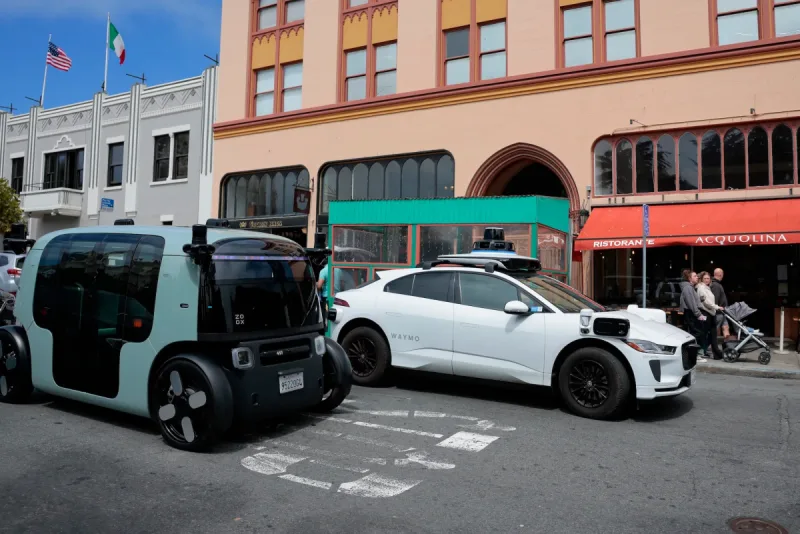
California Tightens Rules on Robotaxis as Incidents Mount
A new state law sets safety standards and accountability measures for autonomous vehicle operators, requiring local support staff and penalties for blocking emergency responders.
Wawa Elevates Long-Tenured Executive to CIO Role
The convenience store chain has named Bill O'Donnell, a 25-year company veteran, as its new chief information technology officer, putting him in charge of tech strategy, cybersecurity and digital operations.

ServiceNow Debuts Flow, a Conversational Service Desk Built for Speed Over Complexity
ServiceNow is rolling out Flow, a natural language service desk tool that automates employee requests through Slack and Microsoft Teams without requiring a full IT service management overhaul.