HP Rolls Out Intel-Based Business PCs Designed for Distributed Workforces
HP's 2026 commercial PC portfolio spans laptops, convertibles, and desktops powered by Intel processors, engineered for employees working across multiple locations rather than fixed office settings.
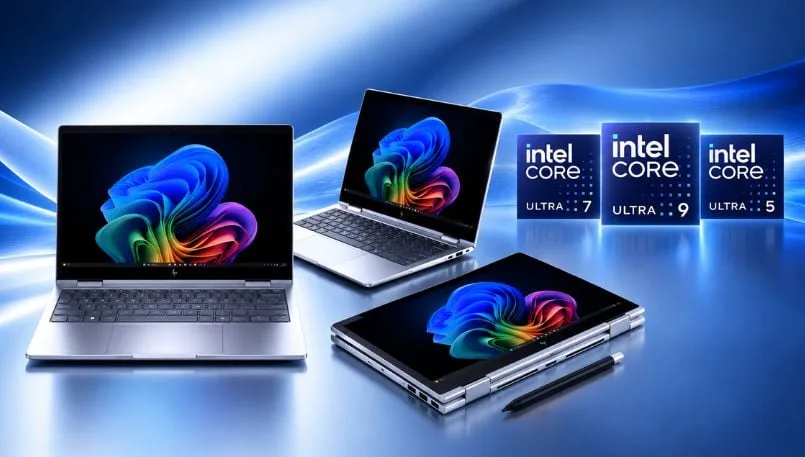
Work no longer happens exclusively at a desk. HP's newest commercial PC lineup for 2026 features Intel-based machines in laptop, convertible, and desktop form factors, designed to support staff who split time between conference rooms, remote offices, client locations, and collaborative spaces. Unveiled at HP Imagine 2026, the portfolio spans the EliteBook, ProBook, and EliteDesk families, with configurations tailored to enterprise organizations, mid-market firms, and traditional office environments.
When IT departments evaluate hardware upgrades, the choice involves more than raw processing power. Considerations include physical design, on-device AI capabilities, protection mechanisms, network features, system administration tools, and the feasibility of deploying identical machines across different job functions.
How HP organizes the lineup by work patterns
HP designed the EliteBook 8 G2 Series for professionals and artists who alternate between independent tasks and group work. The Intel-based EliteBook 8 Flip G2i introduces a 13-inch flip design that functions as a laptop, tablet, tent, or stand, complete with an integrated stylus for marking and sketching.
HP's technical specifications indicate Intel Core Ultra 5 and Core Ultra 7 variants for the Flip model, paired with memory configurations reaching 64GB of LPDDR5x and storage up to 2TB. Connection options encompass Thunderbolt 4, HDMI 2.1, Wi-Fi 7, Bluetooth 6, and optional 5G support, though the actual combination varies by model.
The EliteBook 6 G2 Series delivers adaptable setups for smaller enterprises, large corporations, and government agencies, enabling IT administrators to maintain consistency across a larger employee base.
HP positioned the ProBook 4 G2 Series toward expanding small and midsize operations. This family includes the Intel-powered ProBook 4 Flip G2i, which incorporates a touch-sensitive screen and tablet functionality while remaining below the premium EliteBook category.
The EliteDesk 8 G2 Series addresses stationary workplace settings. These desktops incorporate on-site AI processing, security features built into the hardware, HP Wolf Security for Business, and various physical configurations for offices where portability takes a back seat to administrative oversight or spatial constraints.
HP positioned the broader Imagine 2026 collection as a way to simplify operations across machines and geographic locations. "As we look ahead, the Future of Work is about making work simpler in a world that's getting more complex," according to Bruce Broussard, HP's interim chief executive officer.
What Intel Core Ultra Series 3 brings to the table
Intel stated that its Core Ultra Series 3 processors merge computational speed, energy-efficient cores, and low-power cores alongside an integrated neural processing unit. Qualifying processors can deliver as much as 50 NPU TOPS and certain variants support Intel vPro, a feature set designed for corporate IT environments.
Not every system offers the same capabilities. Intel indicated that Arc graphics, Wi-Fi 7, Evo certification, and certain AI features hinge on the processor model, hardware design, installed software, and geographic market. IT departments must examine each option thoroughly, as processor generation, graphics performance, wireless technology, and administrative capabilities can vary significantly across the product range.
What IT buyers should evaluate
HP announced in March that the EliteBook 8 G2, ProBook 4 G2, and EliteDesk 8 G2 families were slated for availability beginning in April, with the EliteBook 6 G2 following in June. The EliteBook 8 Flip G2i is currently available through HP's web storefront, though stock, cost, and available options may differ by product.
IT teams should assess processor level, RAM capacity, drive space, vPro support, network capabilities, screen configurations, and system-management features across the different options.
On-device AI performance is contingent on the processor type and software setup. Intel cautioned that some AI capabilities may demand extra software, paid services, system backing, or setup adjustments, while Wi-Fi 7 functionality requires matching hardware, system software, and network infrastructure.
Before rolling out a single model company-wide, organizations should align each option with the actual computing demands of the role and examine runtime between charges, heat output, warranty coverage, and compatibility with existing systems once production units become available for hands-on evaluation.
Read more
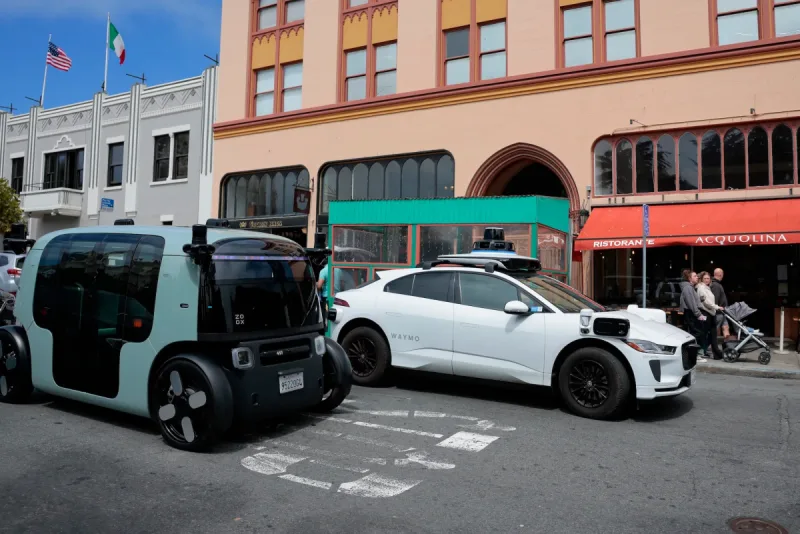
California Tightens Rules on Robotaxis as Incidents Mount
A new state law sets safety standards and accountability measures for autonomous vehicle operators, requiring local support staff and penalties for blocking emergency responders.

Wawa Elevates Long-Tenured Executive to CIO Role
The convenience store chain has named Bill O'Donnell, a 25-year company veteran, as its new chief information technology officer, putting him in charge of tech strategy, cybersecurity and digital operations.

ServiceNow Debuts Flow, a Conversational Service Desk Built for Speed Over Complexity
ServiceNow is rolling out Flow, a natural language service desk tool that automates employee requests through Slack and Microsoft Teams without requiring a full IT service management overhaul.