Cyanogen's Ex-Leader Builds AI-First OS to Challenge Windows
Kirt McMaster, who previously attempted to dethrone Android, is launching Kora Systems with a Linux-based operating system designed around AI agents and models. The system arrives in 2027 and targets the 45–50 million people who depend heavily on AI for work.

A decade after Cyanogen's failed bid to break Google's grip on Android, co-founder Kirt McMaster is pursuing a new challenge: unseating Microsoft's Windows. His venture, Kora Systems, unveiled a Linux-based desktop operating system on Tuesday that embeds AI models and autonomous agents directly into the user experience, enabling them to function across applications, manage files, and maintain context as tasks shift. The system will debut in 2027 as a free offering compatible with Intel, AMD, and Qualcomm Snapdragon-based machines.
Kora's roughly 50-person engineering team has leveraged AI development tools from OpenAI and Anthropic to accelerate progress. McMaster disclosed to TechCrunch that these tools have multiplied development velocity by at least five times, with the most significant acceleration occurring over the last half-year.
Windows commands roughly 77% of the global desktop operating-system market as of October, with Apple's OS X holding close to 10%, per StatCounter web traffic analysis. Yet McMaster contends Kora need not compete for Windows' entire installed base. Instead, he is zeroing in on a narrower demographic: those who depend on AI extensively and will invest in premium models and services.
McMaster estimates that between 45 million and 50 million individuals currently drive the majority of AI consumption and revenue. "Microsoft can keep its billion users," McMaster stated, projecting the AI-focused user segment will expand beyond 200 million by 2033.
Lessons from his five-plus years at Cyanogen shaped McMaster's strategy. That company remained tethered to Google Mobile Services despite offering capabilities beyond Google's Android variant, ultimately crippling its capacity to establish a truly independent platform. "If you are trying to compete with an incumbent but are still reliant on them, you have no chance," McMaster told TechCrunch.
At Cyanogen's tail end, McMaster began exploring how to embed third-party services directly into an operating system. Kora extends this concept: AI models and agents operate across applications and access files without being locked into individual apps.
The Palo Alto firm previously operated as Playtron, a gaming-focused operating-system company under McMaster's leadership. It rebranded to Kora in July 2025 as it pivoted toward AI. McMaster noted that emerging competitors like Perplexity and OpenAI were moving into AI-powered web browsers, but he determined browsers lacked sufficient system access for AI agents to handle complex operations. An operating system offered a superior foundation.
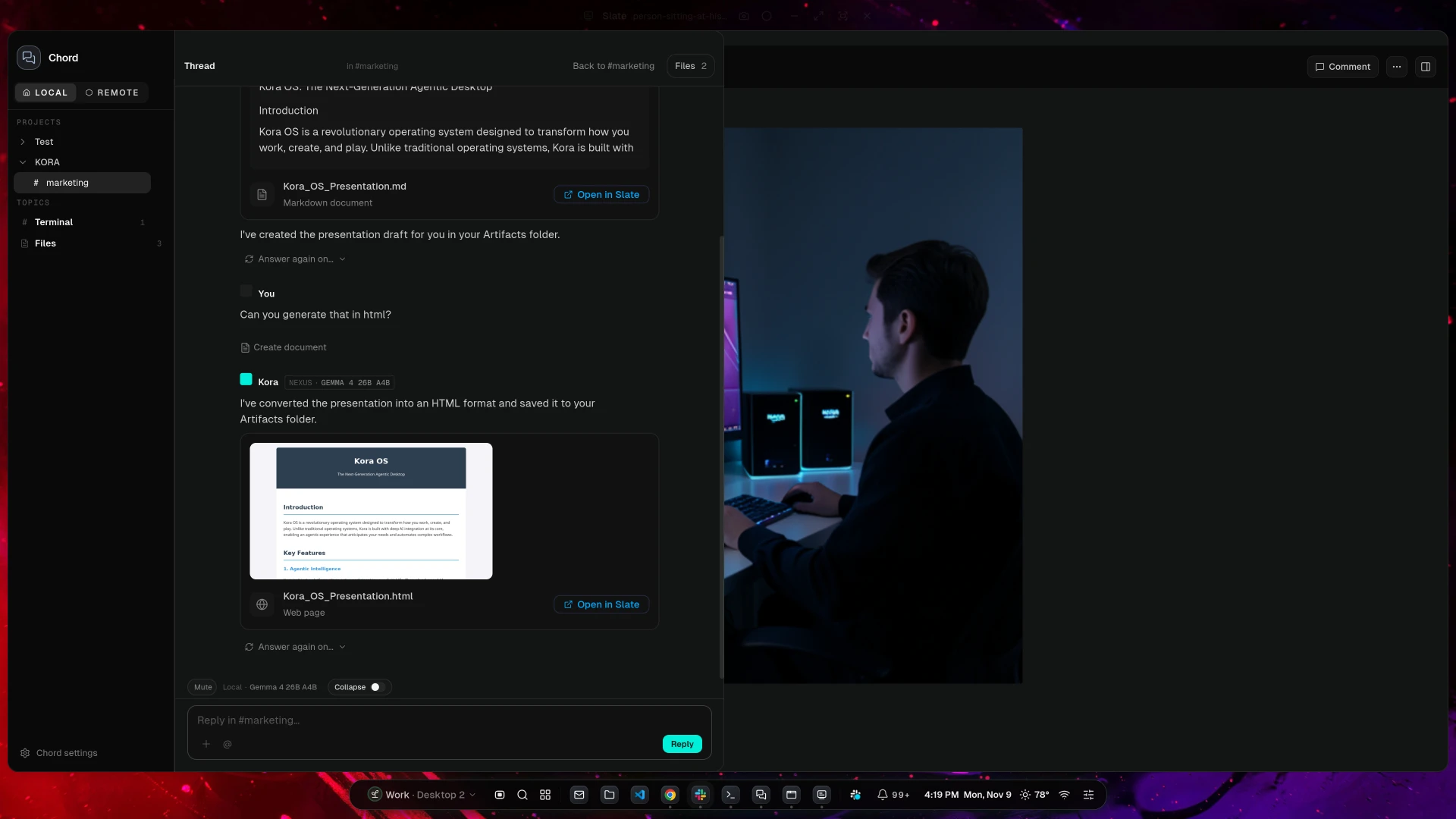
The rebranding allowed Kora to build upon nearly three years of development invested in Playtron's Linux-based gaming platform, GameOS, rather than beginning entirely from scratch.
The operating system enables users to interact with multiple AI models and agents across applications while preserving conversation history, documents, and context. AI agents can also operate within isolated workspaces with constrained access to files and resources.
Though McMaster drew on Cyanogen experience, none of Kora's engineers came from that company. The team was recruited primarily from the Linux gaming sector, McMaster explained.
Kora runs on Linux and employs Nix, departing from Playtron's earlier reliance on Fedora Silverblue. While Linux and Nix are open-source, McMaster emphasized that Kora's proprietary components—its Cortex AI engine and desktop interface—remain closed. The company plans to support AI models and services from multiple vendors but has not committed to open-sourcing its own technology.
Gaming remains on Kora's roadmap. McMaster indicated the company will roll out AI-driven tools permitting developers to build, distribute, and play games within the operating system itself. Android app compatibility is also planned.
Kora's team has collaborated closely with Qualcomm engineers for nearly a year to fine-tune the operating system for Snapdragon-powered PCs, including the Snapdragon X2 Elite. Alongside Qualcomm, Kora is partnering with Saudi Arabia's Humain on an enterprise variant called Humain OS, scheduled for Snapdragon laptops in 2027. Additional partnerships with PC manufacturers are expected to be announced later, though McMaster withheld specifics and timelines.
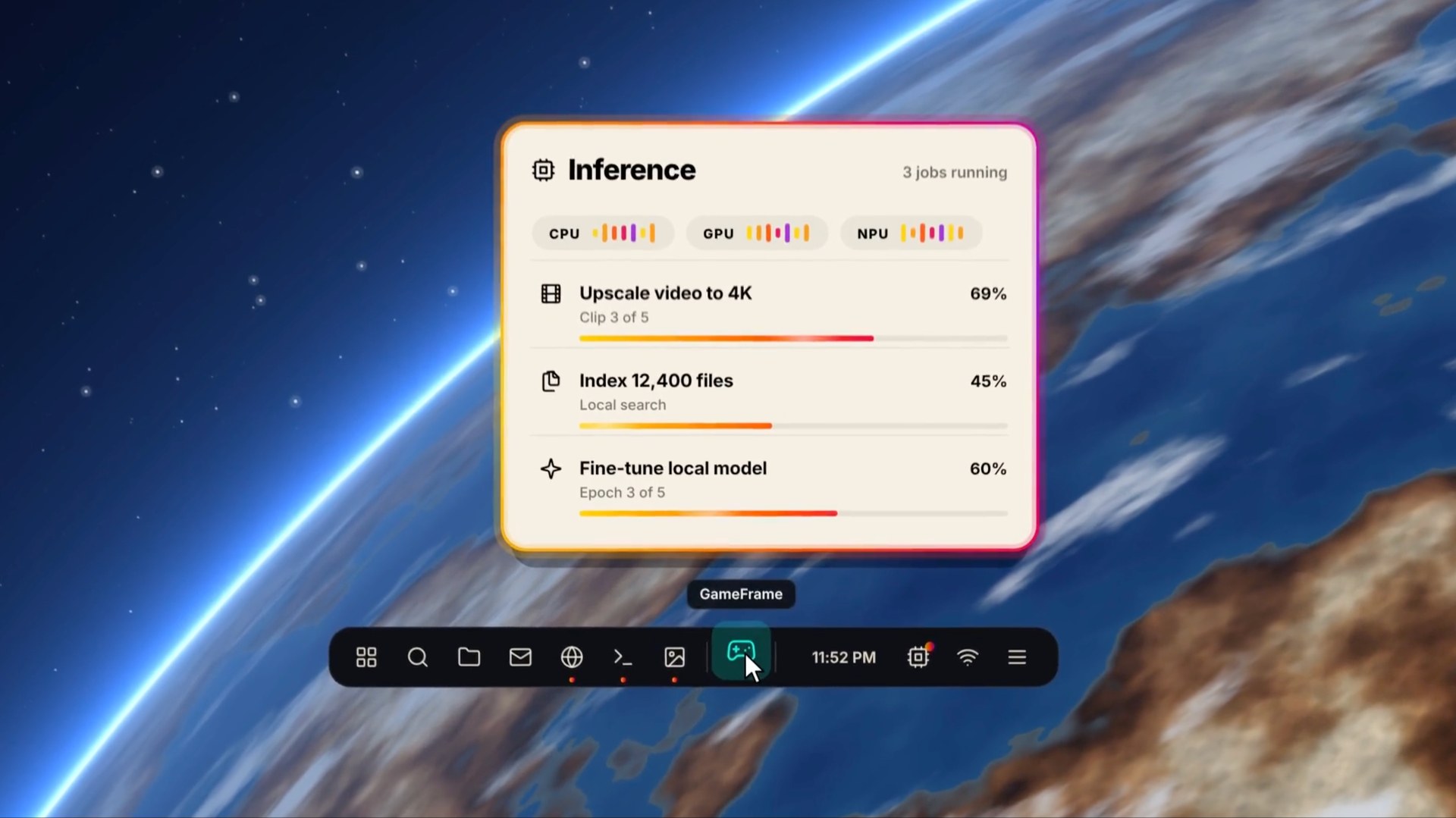
Revenue will flow through subscriptions bundling AI model access and agentic services. The Cortex engine is architected to execute AI tasks locally when feasible and offload heavier workloads to cloud-based models.
Kora's backing includes Samsung Next, Square Enix, Alumni Ventures, Polychain, VanEck, and Circle—all prior Playtron investors. McMaster confirmed the company has secured additional capital following its AI pivot but declined to reveal total funding or valuation. He asserted Kora maintains sufficient runway to operate for years ahead.
Read more

Microsoft 365 Outage Exposes Risks of Vendor Concentration in Enterprise Infrastructure
A global Microsoft 365 outage that spanned Thursday and Friday revealed how dependent enterprises have become on a single provider's platform, raising questions about resilience and backup strategies across the industry.

How UX Research Keeps Pace With AI-Powered Development
As AI coding agents accelerate software shipping, research must adapt to stay relevant. A new approach called research-in-the-loop embeds evaluation mechanisms directly into product features, letting teams learn from releases in real time.

Beyond the lift-and-shift: Why data management decides VMware exits
Companies fleeing expensive hypervisor licenses discover that migrating virtual machines to Kubernetes is just the beginning. The real challenge lies in managing data across both containers and VMs on a unified platform.