Canva's Professional Ecosystem Challenge to Adobe's Dominance
Canva has unified Affinity, Cavalry, Flourish, and Leonardo into an integrated creative platform while keeping core tools free, signaling a serious bid for professional designers who have long relied on Adobe.

Canva has woven together Affinity, Cavalry, Flourish, and Leonardo into a cohesive professional creative ecosystem—and the company is maintaining free access to the foundational Affinity and Cavalry applications. While Adobe remains entrenched, this move represents Canva's most explicit attempt yet to capture the attention of seasoned professionals. For the past several years, Canva occupied a distinct niche: efficient, accessible, template-driven, and occasionally prompting experienced designers to remark, "I'll polish this in Illustrator."
The company is now pursuing a considerably more ambitious strategy. ProSuite integrates these four tools into what Canva describes as a complete workflow: design in Affinity, add motion in Cavalry, build data visualizations in Flourish, create variations with Leonardo, then distribute and expand through Canva. This represents a thoughtfully conceived approach.
What should concern Adobe
Affinity has evolved into a unified platform handling professional vector design, image manipulation, and document composition. The newest iteration introduces a Blend Tool and embedded scripting capabilities, along with direct IDML support, enhanced RAW image processing, and Canva's AI-powered Scene Decomposition technology.
The critical factor involves compatibility across file formats. Affinity can open PSD, AI, IDML, and DWG files while maintaining layers and structural integrity—the precise capability that determines whether professionals can realistically transition to new software.
Both Affinity and Cavalry remain free for individual users. Cavalry delivers professional 2D animation capabilities without requiring payment for standard individual workflows. The word "free" carries substantial weight in this context.
Professional creatives do not abandon their tools because a vendor mentions "AI" dozens of times during a presentation. They switch when an alternative preserves their files, integrates with their process, operates as a serious instrument rather than a simplified toy, and eliminates subscription costs. Affinity is approaching that inflection point.
Adobe maintains institutional momentum, decades of ingrained habits, and an ecosystem where "please send the PSD" remains an unquestioned request. Yet Canva now presents a genuine alternative: create in professional software, animate the output, grant specific colleagues editing permissions within Canva while protecting the original file, and prevent designs from being compromised by well-intentioned modifications.
Canva's vision extends to the final handoff
The most compelling aspect involves how work transfers between tools. Canva plans to allow motion designers to designate which animation components from Cavalry—including text and color properties—remain editable within Canva, while the underlying animation stays protected. This enables marketing departments to swap "Summer sale" for "Autumn sale" directly in Canva without contacting a designer, launching After Effects, or inadvertently converting typography to something resembling a bakery storefront.
This reflects a pragmatic approach to AI-powered creative tools: not "eliminate the designer with automation," but "prevent talented professionals from spending entire afternoons reformatting 83 variations for social media."
Canva's messaging around creative craft follows its characteristic style. However, the underlying product strategy proves more persuasive than marketing language. When AI commoditizes basic creative output, aesthetic judgment, precise control, and brand fidelity become increasingly valuable rather than obsolete.
One limitation warrants mention: accessing Canva's AI features within Affinity requires a Canva premium subscription. The free tier covers the base Affinity and Cavalry applications, not all AI-powered functionality surrounding them.
Historically, Canva represented the platform where non-professionals created polished-looking work. The new ambition extends further: establish Canva as the starting point for professional creative work, the conduit through organizational structures, and the guardian of quality throughout the journey. Adobe should not sound alarms. However, dismissing this challenge would be unwise.
Read more
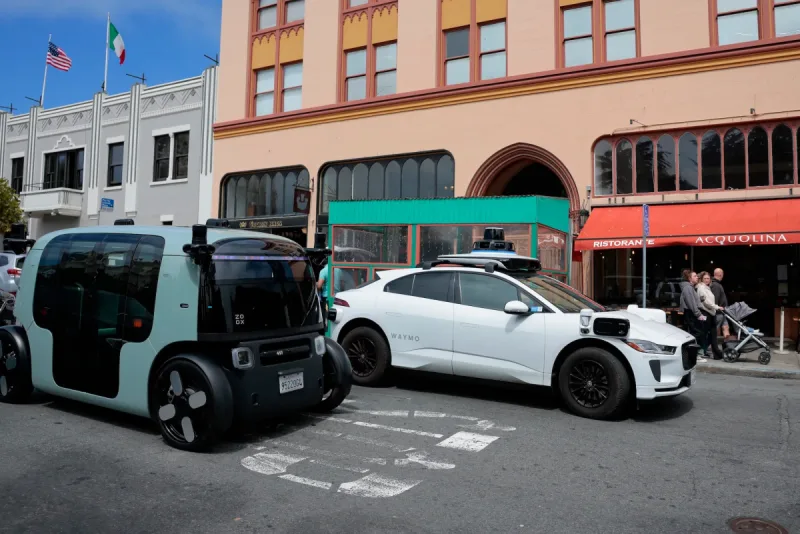
California Tightens Rules on Robotaxis as Incidents Mount
A new state law sets safety standards and accountability measures for autonomous vehicle operators, requiring local support staff and penalties for blocking emergency responders.
Wawa Elevates Long-Tenured Executive to CIO Role
The convenience store chain has named Bill O'Donnell, a 25-year company veteran, as its new chief information technology officer, putting him in charge of tech strategy, cybersecurity and digital operations.

ServiceNow Debuts Flow, a Conversational Service Desk Built for Speed Over Complexity
ServiceNow is rolling out Flow, a natural language service desk tool that automates employee requests through Slack and Microsoft Teams without requiring a full IT service management overhaul.