Apple's Rebuilt Siri Gains Context Awareness and Cross-App Control in iOS 18 Beta
Apple has started distributing Siri AI in beta as part of iOS 18, introducing an assistant that understands personal context, reads your screen, and performs actions across multiple applications.
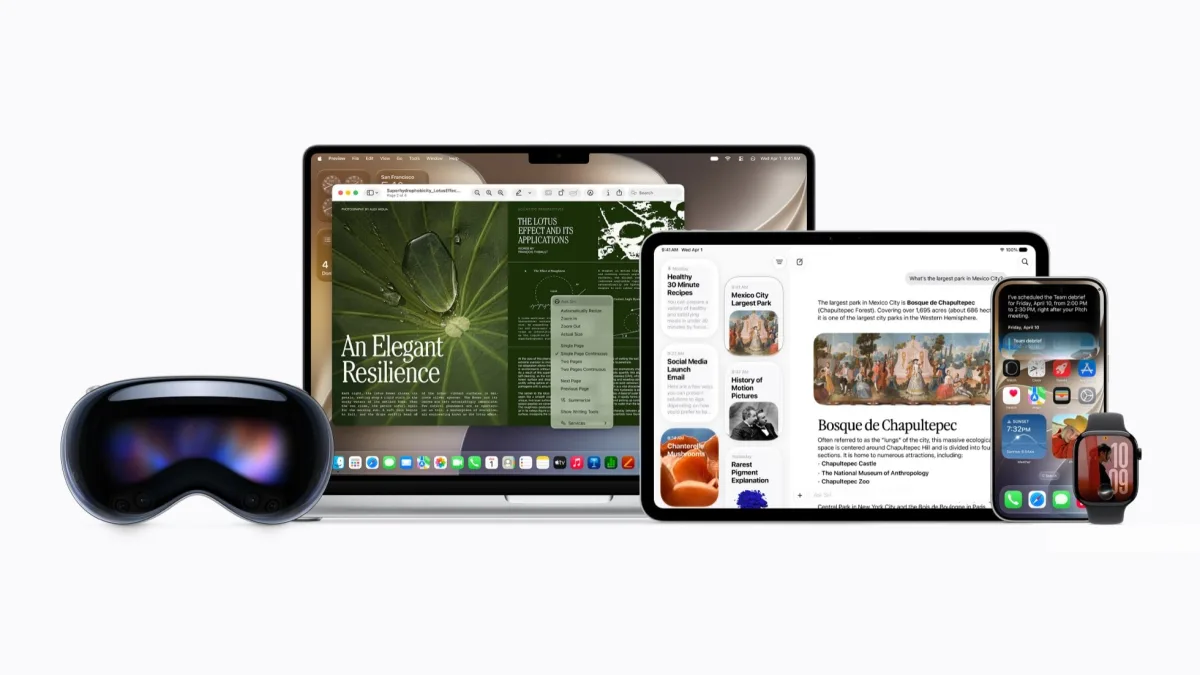
For years, Siri has been relegated to handling simple requests like setting timers. Apple is now attempting to transform it into an intelligent assistant capable of grasping the nuances of your daily life.
On September 14, Apple initiated the beta rollout of Siri AI alongside iOS 18 for eligible iPhones. This reimagined assistant brings the ability to grasp personal context, view content displayed on your device, retrieve information from web searches, and execute commands spanning multiple apps. The launch represents the culmination of extensive development work, including a public beta phase for iOS 18 that allowed early testers to experience the overhauled assistant.
The fundamental shift extends beyond simply expanding Siri's knowledge base. Apple is positioning the assistant as a tool that comprehends your activities and leverages that understanding to take meaningful action. Below are seven practical capabilities now available with the updated Siri.
1. Retrieve information scattered across your messages and emails
The new Siri AI draws on personal context from Messages, Mail, Photos, Calendar, and similar applications to surface information without requiring you to recall its location. Apple illustrates this with a scenario where you ask what a family member hopes to accomplish during an upcoming stay. Siri locates the pertinent message, identifies a recipe shared via email, and populates Reminders with the necessary ingredients. This capacity to leverage personal context represents perhaps the most significant distinction between the new Siri and its predecessor.
2. Ask questions about content currently visible on your screen
You no longer must describe what you're viewing before requesting Siri's assistance. According to Apple's documentation for Siri AI, the assistant recognizes onscreen material, including photographs and PDF documents. You might display a food image, inquire with Siri about its identity, discover a matching recipe, and direct the assistant to add the components to your shopping list. This capability builds on the screen-aware functionality Apple has been promoting as part of its Siri transformation. TechRepublic has previously documented which Apple devices support Siri AI, a critical detail since the enhanced assistant demands Apple Intelligence-compatible hardware.
3. Engage in genuine back-and-forth dialogue
Siri AI maintains conversational continuity, permitting you to pose follow-up questions without restarting the interaction. For instance, you might ask about a vacation spot, then request information on activities, weather conditions, or other specifics. The assistant synthesizes personal context with current web information when responding to subsequent inquiries. Apple has unveiled a dedicated Siri application that preserves conversation history and employs iCloud to securely distribute that record across compatible Apple devices.
4. Direct Siri to perform tasks within multiple applications
The capabilities of the new Siri transcend mere question-answering. The assistant can already execute broad actions like composing emails or modifying and distributing images. Third-party integrations remain limited at launch, though Apple indicates that more partnerships are forthcoming. These will include drafting messages in Microsoft Outlook, locating assignments in Notability, and storing dining recommendations in Tripsy. This represents a continuation of the multi-app functionality Apple was refining throughout the iOS 18 beta testing phase.
5. Point your camera at an object and ask Siri about it
The Camera application now features a Siri mode that merges the assistant with Apple's Visual Intelligence capability. Direct your camera toward an item, and Siri can respond to inquiries, hunt for relevant details, or recommend actions based on what it detects. Apple describes one use case in which you aim the camera at a restaurant bill and use Siri to facilitate splitting the cost with companions via Apple Cash. The Siri mode can additionally identify details suitable for generating a personalized pass within Apple Wallet.
6. Pose general questions to Siri without launching a search browser
Siri AI now possesses what Apple terms "broad world knowledge," enabling it to pull current information directly from the internet. Questions spanning travel, athletics, pastimes, dining establishments, and comparable subjects now yield thorough responses and invite further exploration, rather than simply presenting a list of search links. This development introduces considerations regarding Siri's information sources. Apple has reportedly pursued licensing arrangements with media organizations for Siri AI as it expands the assistant's capacity to respond using up-to-date online material.
7. Create, refine, and receive critique while staying in your current task
The new Siri AI also encompasses writing capabilities. Apple's iOS 18 documentation indicates that users can instruct Siri to generate an initial version, offer critique, and adjust the voice or register of their text for a particular readership. Paired with Siri's multi-app functionality, this positions the assistant as particularly valuable for rapid emails, text exchanges, note-taking, and routine writing activities.
What Siri AI means for your iPhone
A critical point to grasp is that upgrading to iOS 18 does not automatically grant access to Siri AI. Apple specifies that the beta requires an Apple Intelligence-compatible iPhone: either the iPhone 15 Pro or 15 Pro Max, or any iPhone 16 variant or more recent.
The beta launch initially supports English, with French, Japanese, Korean, Portuguese, and Spanish versions scheduled for October. Availability is not yet extended to iOS users in the European Union, and Apple notes that certain server-dependent Apple Intelligence capabilities, including Siri AI, are subject to daily usage caps. Since this remains a beta release, Siri AI demonstrates substantially expanded functionality compared to the previous version, but users should anticipate gaps as Apple continues to develop features, expand third-party compatibility, introduce additional languages, and broaden regional access.
For iPhone owners, the practical question is whether Siri AI reduces the need to switch between applications. Recovering a buried flight reservation, responding to something already displayed, composing a message, or converting information into a calendar entry are individually minor undertakings. If Siri can dependably link these operations, the enhancement becomes more valuable than simply improving the assistant's response quality.
This also suggests that testing the rollout makes sense before purchasing a new device primarily for AI capabilities. Multiple earlier Apple Intelligence-compatible iPhones can execute Siri AI, so the newest hardware may not be necessary to experiment with it. Certain Siri AI functions are restricted to more recent devices, however, so review Apple's compatibility specifications for the particular features you desire before making an upgrade decision.
Ultimately, an enhanced Siri matters only if it genuinely reduces time spent on your routine daily activities.
Read more

California Tightens Rules on Robotaxis as Incidents Mount
A new state law sets safety standards and accountability measures for autonomous vehicle operators, requiring local support staff and penalties for blocking emergency responders.

Wawa Elevates Long-Tenured Executive to CIO Role
The convenience store chain has named Bill O'Donnell, a 25-year company veteran, as its new chief information technology officer, putting him in charge of tech strategy, cybersecurity and digital operations.

ServiceNow Debuts Flow, a Conversational Service Desk Built for Speed Over Complexity
ServiceNow is rolling out Flow, a natural language service desk tool that automates employee requests through Slack and Microsoft Teams without requiring a full IT service management overhaul.