Apple's iPhone Duo and iPhone 18 launch: 15 key takeaways from the event
Apple CEO John Ternus held his first launch event, introducing the company's first foldable phone alongside new iPhone models, smartwatches, and audio devices. Here's what mattered most from the 78-minute presentation.
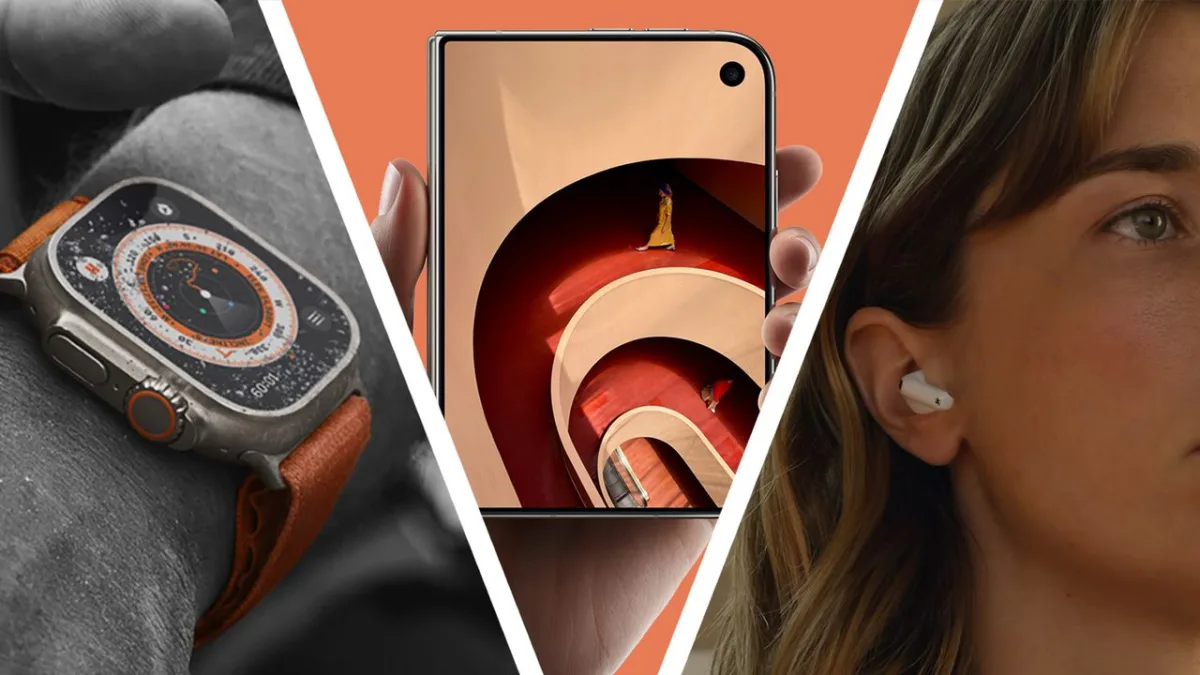
During his inaugural Apple launch event, newly appointed CEO John Ternus unveiled a substantial product lineup spanning foldable phones, flagship handsets, wearables, and audio gear. The presentation lasted 78 minutes and covered numerous announcements, both major and minor, that shaped the company's latest hardware strategy.
1. The iPhone Duo is Apple's first foldable
After years of speculation, Apple has entered the foldable market with the iPhone Duo, positioning itself against competitors like Samsung's Galaxy Z Fold 8 and Google's Pixel 11 Pro Fold. The device employs a wider, passport-style design similar to Samsung's approach, unfolding to a 7.6-inch display that delivers a tablet-like experience.
The iPhone Duo launches in star white and night sky colorways, with pre-orders beginning Friday, October 16, and general availability on Friday, October 23. Pricing starts at $1,999 / £1,999 / AU$3,499 for the 256GB model.
2. iOS 27 has learned some unique tricks for the iPhone Duo
Apple invested considerable effort into optimizing iOS 27 for the foldable experience. When closed, navigation controls shift to the right side of the display for easier thumb access. The software enables side-by-side app layouts and allows users to pin app pairs for quick access. Camera functionality includes a selfie preview that combines the outer screen with rear cameras.
3. The Duo brings Apple Pencil to the iPhone for the first time
The iPhone Duo supports Apple Pencil, marking the first time a stylus has worked with an iPhone. While the accessory doesn't ship with the device and lacks a dedicated storage slot like Samsung's Galaxy S26 Ultra, users can employ it on either screen for selections and creative work.
4. The Duo's two screens are the same aspect ratio
Both the 5.4-inch outer display and 7.6-inch inner screen share a 1:1.4 aspect ratio, which Apple says ensures "visual continuity" when transitioning between them. The larger display supports both portrait and landscape orientations, with applications scaling accordingly.
5. The iPhone 18 Pro and Pro Max have some serious camera boosts
Camera enhancements dominated Apple's iPhone 18 Pro and Pro Max presentation. A new 48MP main sensor features variable aperture—a first for iPhone—enabling improved light control. The devices introduce a new "computational imaging pipeline", enhanced Photographic Styles, and expanded professional Camera app controls for greater capture flexibility.
6. The iPhone 18 Pro Max is the ultimate iPhone for battery life
The iPhone 18 Pro Max delivers up to 45 hours of video playback on the eSIM variant, setting a new iPhone battery endurance record. The standard iPhone 18 Pro reaches 36 hours of video playback with eSIM, while both models feature improved charging speeds compared to their predecessors.
7. The A20 Pro chip is a big leap forward
The A20 Pro processor powers the iPhone Duo, iPhone 18 Pro, and iPhone 18 Pro Max, featuring a 6-core CPU, 7-core GPU, and dual 16-core Neural Engines for AI workloads. An upgraded vapor chamber supports thermal management. Apple claims the iPhone 18 Pro achieves up to 40% sustained performance gains versus the iPhone 17 Pro.
8. The new base AirPods 5 come with ANC
The AirPods 5 arrive in two versions, both featuring Active Noise Cancellation that Apple describes as "best-in-class". Design refinements and algorithmic improvements deliver up to 50% greater noise reduction compared to AirPods 4 with ANC. Transparency mode has also been upgraded to more accurately represent voices and ambient sounds.
9. Siri Recap is creepy, always-on audio feature for the Apple Watch 12
The Apple Watch 12 introduces Siri Recap, a feature that monitors conversations and generates summaries for later review. Apple maintains that the system processes audio in real-time without recording and that no one, including Apple itself, can access the audio stream. The feature may raise privacy concerns for some users.
10. iOS 27 will launch on September 14 with Siri AI
iOS 27 reaches users globally on Monday, September 14, following its June announcement. The centerpiece is a Siri AI upgrade that aims to match ChatGPT and Gemini capabilities, offering app integration and comprehensive responses.
11. The new Apple Watches have a Health Sensing System
The Apple Watch 12 and Apple Watch Ultra 4 incorporate what Apple calls "the most accurate heart rate sensing in a wearable", achieved through higher-frequency heart rate and heart rate variability measurements via new optical and electrical sensors. These capabilities form part of a broader Health Sensing System offering deeper fitness insights.
12. There's a redesigned Health app as well
To complement new Apple Watch capabilities and Apple Intelligence updates, the iPhone Health app underwent redesign. A new Insights tab delivers "timely health information", while a Longevity tab shows extended health trends, including a Health Age metric comparing fitness metrics against chronological age.
13. We'll have to wait longer for a new Apple TV 4K
Apple TV 4K did not appear at the event, despite the third-generation model launching in 2022. Pre-event rumors suggested a refresh was coming, but nothing materialized. Code references in Apple software indicate a new device is in development.
14. There's no new base iPhone 18 (yet)
The standard iPhone 18 did not debut at the event, though reports suggest it remains in development rather than canceled. Leaks indicate a March-ish launch alongside the iPhone Air 2 and iPhone 18e. Apple's rationale includes spreading revenue more evenly throughout the year, reducing September pressure, and competing with manufacturers who launch earlier.
15. Apple largely spared us from price hikes
Pricing proved mixed but relatively restrained given industry memory shortages. The iPhone 18 Pro and Pro Max each cost $100 more than their direct predecessors. Apple Watch models maintained prior pricing, while the AirPods 5 actually undercut the AirPods 4 launch price.
Read more

California Tightens Rules on Robotaxis as Incidents Mount
A new state law sets safety standards and accountability measures for autonomous vehicle operators, requiring local support staff and penalties for blocking emergency responders.

Wawa Elevates Long-Tenured Executive to CIO Role
The convenience store chain has named Bill O'Donnell, a 25-year company veteran, as its new chief information technology officer, putting him in charge of tech strategy, cybersecurity and digital operations.

ServiceNow Debuts Flow, a Conversational Service Desk Built for Speed Over Complexity
ServiceNow is rolling out Flow, a natural language service desk tool that automates employee requests through Slack and Microsoft Teams without requiring a full IT service management overhaul.