Amazon Haul Takes Aim at Temu and Shein With Its Own Discount Marketplace
Amazon launched Haul in beta last November to compete with Chinese discount platforms that have captured consumer attention through ultra-low prices. The new service operates separately within the Amazon app but lacks many of Amazon's signature conveniences.

The past year witnessed Chinese e-commerce platforms like Shein and Temu surge in popularity, reshaping online retail despite concerns about consumer trust. These marketplaces thrived by offering prices so low that they appealed to shoppers struggling with post-pandemic inflation.
Amazon responded by introducing Haul, a beta service launched last November designed to challenge these discount giants. The move reflects market realities: Temu ranked as the top marketplace app globally and in the U.S. for downloads in 2023, surpassing Amazon Shopping. While Amazon maintains advantages in product variety, quality, and shipping speed, Temu and Shein continue gaining ground through aggressive pricing.
What is Amazon Haul?
According to Amazon's announcement, Haul represents "a shopping experience dedicated to offering customers affordable prices on a wide range of everyday products." Currently available only on mobile devices as a distinct section within the main Amazon app, it functions as a completely separate shopping environment with its own search interface, shopping cart, and payment process.
The visual design differs markedly from standard Amazon. Colorful emojis, prominent discount banners, and emoji-labeled indicators like "Best Seller" and "Selling Fast" replace traditional star ratings. Product categories span fashion, home goods, lifestyle items, and electronics, though inventory consists entirely of unbranded goods—phone cables, keychains, hair accessories, casual clothing, and small gadgets.
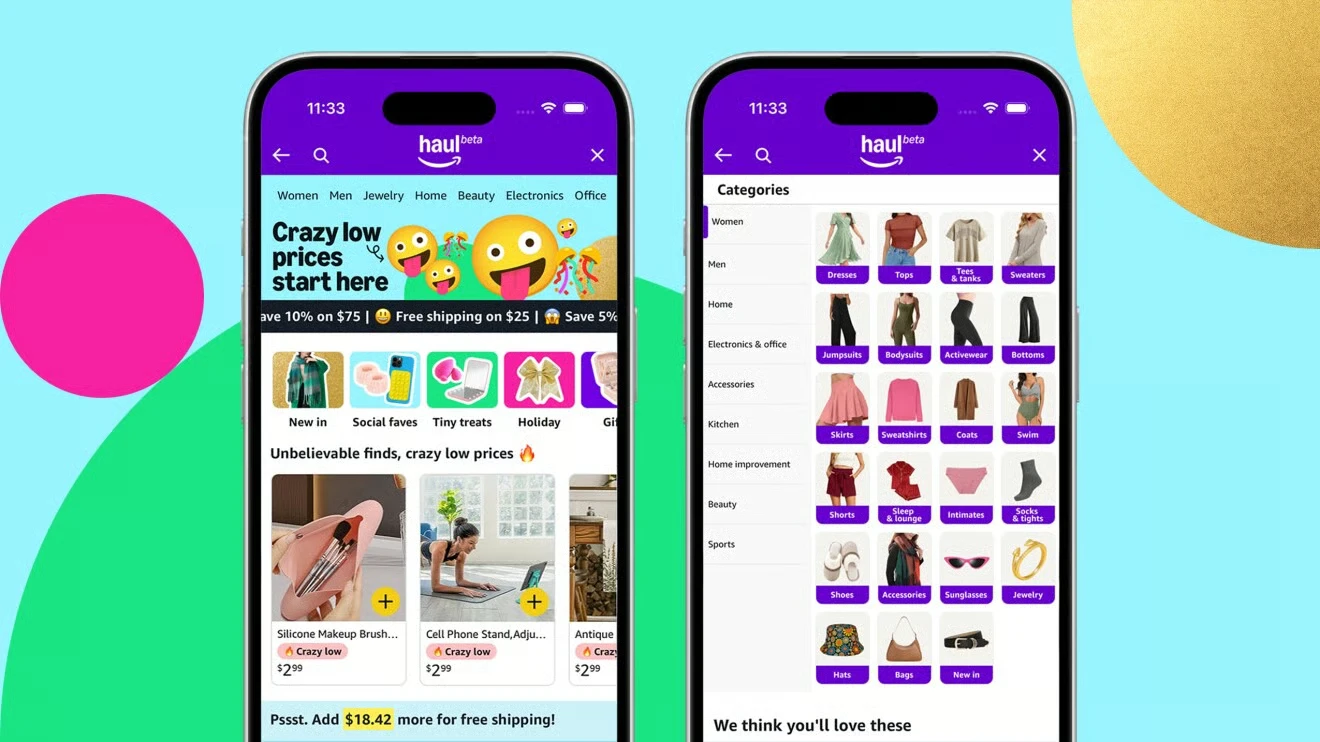
The beta experience introduces several operational differences from Amazon's standard service:
- Delivery times: Orders do not qualify for Prime membership benefits. Shipments typically arrive within one to two weeks since items originate directly from Chinese manufacturers.
- Return window: Customers have 15 days from delivery to return items, compared to Amazon's standard 30-day policy. Returns remain free of charge.
- Final sale policy: Items priced at $3 or below are classified as final sale and cannot be returned or refunded.
How does Amazon Haul work?
The platform operates differently across several dimensions. Product listings display emoji-based indicators rather than numerical ratings, though customer reviews remain available to inform purchasing choices.
Tiered discounts reward higher spending: orders between $50 and $74.99 receive an additional 5% off, while orders of $75 or more qualify for 10% off. Shipping becomes complimentary when orders reach $25; below that threshold, a $3.99 fee applies. Prime membership does not extend to Haul purchases.
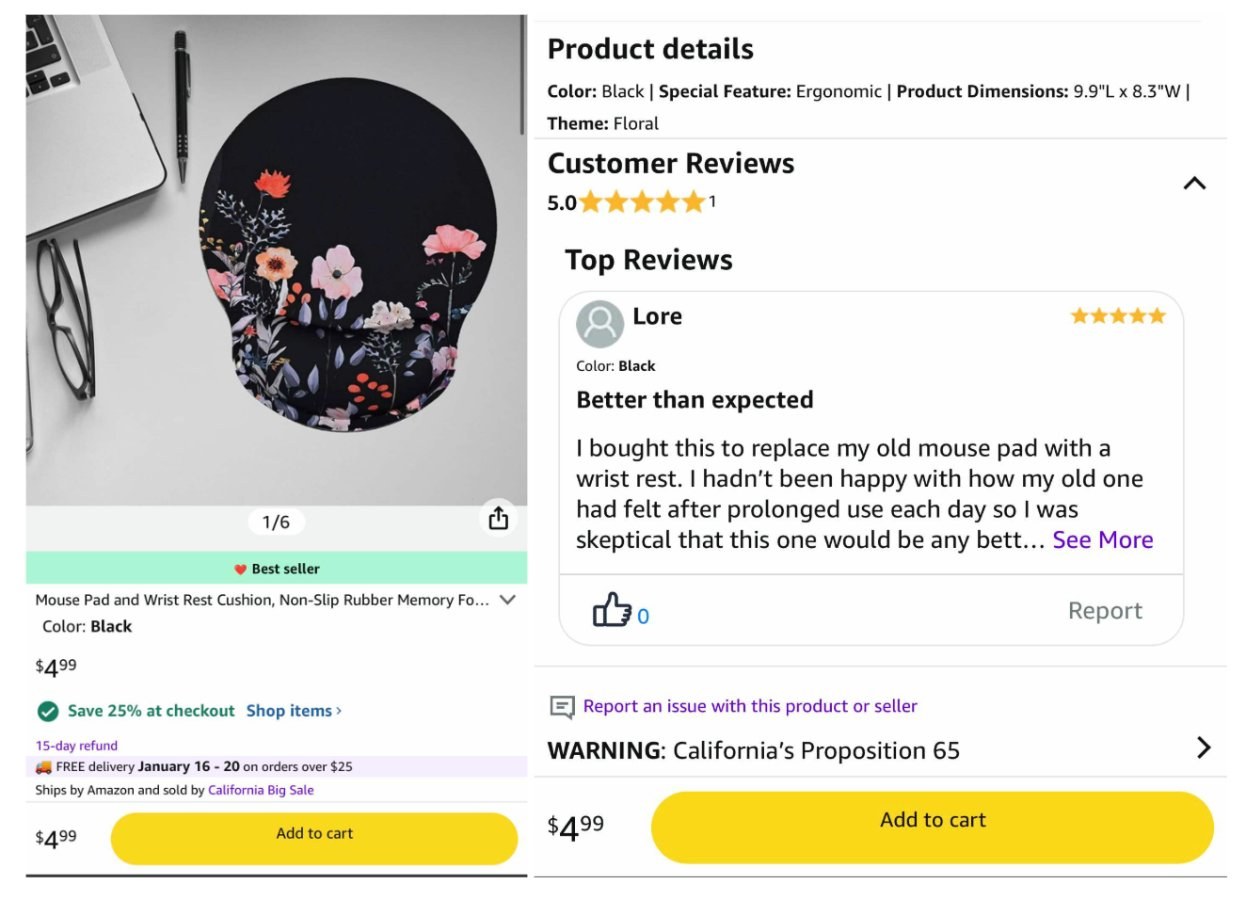
Amazon employs a wholesale dropshipping model where orders route directly to Chinese manufacturers for shipment. This structure eliminates warehousing costs and import taxes, enabling the platform to maintain low prices. The one to two-week delivery window reflects this direct-from-manufacturer approach.
The 15-day return window is notably shorter than Amazon's 30-day standard, though considerably more restrictive than Temu's 90-day policy. Amazon's operational model closely mirrors that of Temu and Shein, positioning Haul as a direct competitive response. Market data underscores the threat: Temu's U.S. user base reached 51.4 million by the first quarter of 2024, while Amazon's domestic user count declined from 69.6 million to 67 million during the same period.
What makes Amazon Haul different from Temu or Shein?
With Haul still in beta, meaningful differentiation remains limited. The platform bears striking similarities to Temu, prompting comparisons to a direct imitation. The primary distinction lies in consumer protection: unlike Temu, which has faced mounting controversies, Haul purchases benefit from Amazon's A-to-Z Guarantee, allowing customers to shop with confidence backed by Amazon's reputation as the world's leading online retailer and most-visited marketplace in the U.S.
However, Amazon appears to underutilize its core strengths. Haul operates as an isolated experience within the app rather than integrating with Amazon's main shopping ecosystem, and it excludes Prime membership benefits entirely. Amazon's sophisticated recommendation algorithm, which personalizes suggestions based on browsing and purchase history, has not been confirmed for Haul. Amazon has not disclosed Haul's sales performance from the recent holiday season.
Consumer preferences have shifted regarding shipping expectations. Rather than prioritizing speed and free delivery, many shoppers now accept longer wait times in exchange for lower prices and greater shopping volume—a dynamic Temu's "Shop like a billionaire" Super Bowl campaign effectively capitalized on.
How does Amazon Haul impact consumers?
From a consumer perspective, another ultra-low-price marketplace expands shopping options. While pricing and product selections may overlap significantly across these platforms, shoppers must exercise greater vigilance to distinguish legitimate products from counterfeits and substandard items.
Environmental impact and concerns
The emergence of yet another ultra-cheap marketplace raises environmental concerns. Research indicates growing consumer preference for retailers offering sustainable products or implementing environmentally responsible practices.
Yet persistent inflation and economic uncertainty push many consumers toward cheaper options regardless of environmental consequences. This tension between affordability and sustainability remains unresolved, with budget constraints often overriding environmental considerations.
Frequently Asked Questions
How does Amazon Haul compare to Shein and Temu?
Amazon designed Haul as a competitive response to the expanding influence of Chinese discount marketplaces. Pricing structures and shipping policies align closely with Temu's model. Amazon distinguishes itself by authenticating and guaranteeing products sold through Haul.
What types of products can I find on Amazon Haul?
The platform offers merchandise across multiple categories: fashion, home goods, lifestyle products, and electronics.
Is there free shipping on Amazon Haul?
Free shipping applies to orders totaling $25 or more. Orders below this threshold incur a $3.99 shipping charge. Delivery typically takes one to two weeks.
Are there discounts available on Amazon Haul?
Yes. Following Temu's model, spending thresholds unlock additional savings. Orders valued between $50 and $74.99 receive an extra 5% discount, while orders of $75 or higher qualify for an additional 10% off.
Why are some items cheaper on Amazon Haul compared to Amazon's main site?
Haul sources products from Amazon's existing network of China-based sellers who import individual items into the U.S. under the de minimis provision, enabling significantly lower pricing.
Read more
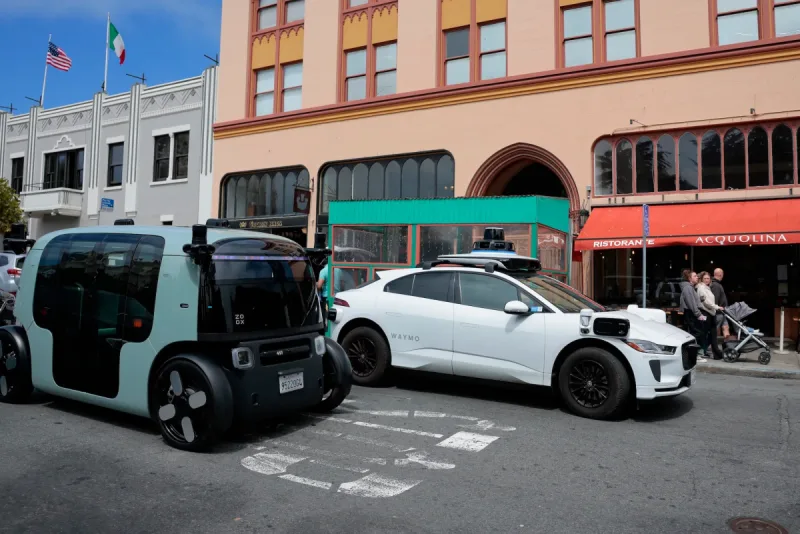
California Tightens Rules on Robotaxis as Incidents Mount
A new state law sets safety standards and accountability measures for autonomous vehicle operators, requiring local support staff and penalties for blocking emergency responders.
Wawa Elevates Long-Tenured Executive to CIO Role
The convenience store chain has named Bill O'Donnell, a 25-year company veteran, as its new chief information technology officer, putting him in charge of tech strategy, cybersecurity and digital operations.

ServiceNow Debuts Flow, a Conversational Service Desk Built for Speed Over Complexity
ServiceNow is rolling out Flow, a natural language service desk tool that automates employee requests through Slack and Microsoft Teams without requiring a full IT service management overhaul.