AI as a UX Multiplier: How Designers Should Think About Artificial Intelligence in Their Workflows
Artificial intelligence is reshaping how UX professionals work, but it won't replace them. The question now is how to leverage AI strategically to amplify human judgment and skills.
The adoption of artificial intelligence in UX work has moved past the question of whether it should be used. Organizations across the industry are now asking when and how to integrate AI into their processes. While AI remains incapable of handling entire UX workflows independently, many leading teams have discovered ways to position AI as an enhancement to existing practices rather than a replacement for them.
The promise of AI does not automatically translate into superior or faster work. Practitioners need to approach these tools with clear thinking and critical evaluation. The goal should be making AI serve your work, not the reverse.
Integrating AI into UX Workflows
Rather than handing off entire UX processes to AI, the most effective practitioners treat themselves as strategists who use AI to expand their capacity. The work remains directed by human hands, but AI acts as a force multiplier that enables new possibilities.
- Start with small tasks while remaining alert to AI hallucinations and unreliable outputs
- Craft prompts that include context, specific requests, rules, and examples
- Deploy AI as a content editor, research assistant, ideation partner, and design assistant
- Avoid overreliance on AI, which can erode core UX skills
- Treat AI collaboration like working with a talented intern—it requires oversight
A notable shift is occurring among nondevelopers who are building sophisticated agentic AI systems through self-directed learning rather than formal training. Meanwhile, AI compresses the design process itself; experienced designers still move through the same phases, but accomplish them more quickly. The technology does not eliminate steps—it accelerates them. This distinction matters: AI-generated holiday advertisements, for instance, often lack the authenticity and emotional depth that human creators bring, underscoring why creative judgment remains essential.
Career Strategy and the Evolution of UX Roles
AI is reshaping UX job roles in ways that feel unsettling but are undeniable. This is neither the first nor the last transformation the field will experience. Rather than resisting these changes, UX professionals should adapt their skills and mindsets to remain valuable.
Fundamental capabilities—understanding people and asking the right questions—will not disappear. Designers preserve their value by concentrating on strategy, storytelling, meaningful outcomes, and the ability to make sound judgments from data. As AI expands what individuals can accomplish, generalist UX professionals who grasp multiple disciplines and think strategically are becoming increasingly sought after.
Staying current with AI advancements does not require constant study. Small experiments and a balanced diet of optimistic and skeptical AI coverage suffice. Good taste and discernment will remain necessary to produce superior designs as AI democratizes creation. The field has already learned this lesson before: the hype cycle around VR led to widespread disappointment, and AI faces the same risk. The single category of "AI design" has already fractured into four distinct types of work. Even as AI adoption grows, consulting clients continue to demand strong judgment, rigorous research, and respect for real-world constraints.
Design
The skills gaining importance are shifting toward core UX work—defining user needs, clarifying user intent, and ensuring excellent journeys—rather than UI design focused on moving pixels in design tools. Creating meaningful context for AI is becoming increasingly critical.
AI-generated prototypes show potential but carry significant risks. Promptframes leverage AI to elevate wireframe fidelity, enabling better feedback from users and stakeholders. Realistic tables and charts created with AI can enhance user testing outcomes. As more interface work becomes AI-generated, the output of research and design shifts from human-facing documents to curated context that directs AI behavior.
Building useful and usable AI-powered systems requires embedding user needs and design judgment into clearly defined evaluation criteria. Outcome-oriented design establishes adaptive frameworks that respond to individual user goals rather than optimizing a single interface for average users. Precise visual keywords, references, mock data, and code snippets yield better AI-prototyping results than vague instructions.
Research
AI-generated information cannot yet substitute for actual data collected from real people. Your customers control their spending decisions, not algorithms. While AI can support many research phases—from planning through analysis to reporting—the focus must remain on insights about actual users.
AI proves most valuable during planning and analysis phases. Careful prompting that breaks down each step enables AI to help construct a research plan. Key research questions for UX teams involve generative AI interfaces, emerging UI types, augmenting traditional methods, and AI-generated data sources. Digital twins are improving their ability to simulate human behavior for research purposes. Synthetic users can extend research efforts but fall far short of replacing studies with real participants.
Even if AI matches researcher output quality, the team learning that occurs from observing users cannot be outsourced. AI can function as a thought partner during analysis but should not drive interpretation. AI generates polished survey drafts quickly, yet human expertise remains necessary to identify subtle design flaws that compromise data quality. AI-moderated interviews deliver faster feedback at scale, but they do not replace in-depth, human-conducted semistructured interviews. Methodological blind spots in UX research tools become more consequential once AI handles planning and analysis. Outsourcing qualitative analysis to AI jeopardizes both insight quality and researcher credibility.
Writing
Generative AI possesses remarkable writing capabilities, yet excessive reliance on it can strip away distinctive style, tone, and message. Short-term time savings may come at the cost of long-term monotony and sameness. Including tone words in prompts typically produces flat results, whereas providing existing copy and requesting multiple alternatives generates more natural output. Three specific prompting practices enhance the quality of AI-generated edits.
Service Design
Service design involves planning and organizing a business's resources to improve employee experience, which indirectly benefits customers. AI is beginning to contribute in both directions. It can boost internal employee productivity, enabling better customer service, while also interfacing directly with customers to deliver its own experience.
AI agents will increasingly execute actions on behalf of users and organizations, transforming how services are delivered and experienced. As AI becomes central to service delivery, new metrics must evaluate AI-to-AI performance, human-AI collaboration, data quality, and user trust.
Ideation and Workshops
Many UX practitioners leverage AI as an individual thinking partner for ideation. Its role in group settings is equally valuable. Framing AI as a "cybernetic teammate" offers a powerful way to strengthen the outputs of collaborative problem-solving.
Teams using AI to augment ideation outperformed both individuals and teams without AI, as well as individuals working alone with AI. Thoughtful preparation leads to more successful AI-enhanced workshops. Five key practices support effective facilitation of these sessions.
State of AI for UX Work
The following findings capture AI's impact on UX work at specific moments in time. While some observations remain relevant, others have shifted as AI capabilities have advanced and adoption within the UX field has expanded.
- AI-simulated users show promise for filling data gaps and predicting population-level trends (2025)
- Narrowly scoped AI design tools proved most useful but were not ready to replace designers (2025)
- UX-related activities ranked among the top request types made with Claude, with many focused on writing (2025)
- In 2025, UX must transition from toolkit reliance to delivering user value with AI, requiring reassessment of tactics and deeper skill development (2025)
- By April 2024, most AI tools designed for UX failed to meaningfully support core design workflows (2024)
- Programmers using GitHub Copilot increased throughput by 126%, with less experienced coders seeing the greatest gains (2023)
- Support agents using AI handled 13.8% more inquiries per hour while slightly improving resolution quality, particularly benefiting less-skilled agents (2023)
- Generative AI boosted employee output by 66% on average, proving especially beneficial for less skilled workers and complex tasks (2023)
- Many AI-powered UX research tools fall short of their stated capabilities (2023)
- Business professionals using ChatGPT wrote faster and produced higher-quality outputs than those without it (2023)
- Before large language models became widely available, Jakob Nielsen predicted numerous ways AI would reshape user experience and UX professional work (2020)
Most AI-powered tools for UX lack reliability and accountability in their outputs, requiring buyers to demand proven accuracy. Following instability in 2025, the UX field is stabilizing, though differentiation and demonstrated business impact remain critical for success.
Podcast Episodes
- Jakob Nielsen examines how past turbulence in the UX field parallels recent AI impacts
- AI can enhance productivity and innovation in UX work, though it introduces risks and challenges
- Don Norman and Sarah Gibbons encourage UX professionals to think ambitiously following AI's advancements
- AI tools for research offer both strengths and limitations, with the user research role continuing to evolve
- AI will redirect designers' attention from design minutiae toward creating meaningful change
- Ned Dwyer explores approaches for balancing UX research democratization with organizational rigor
- Christian and Jamie discuss risks associated with relying on unverified AI tools for UX analysis
Read more
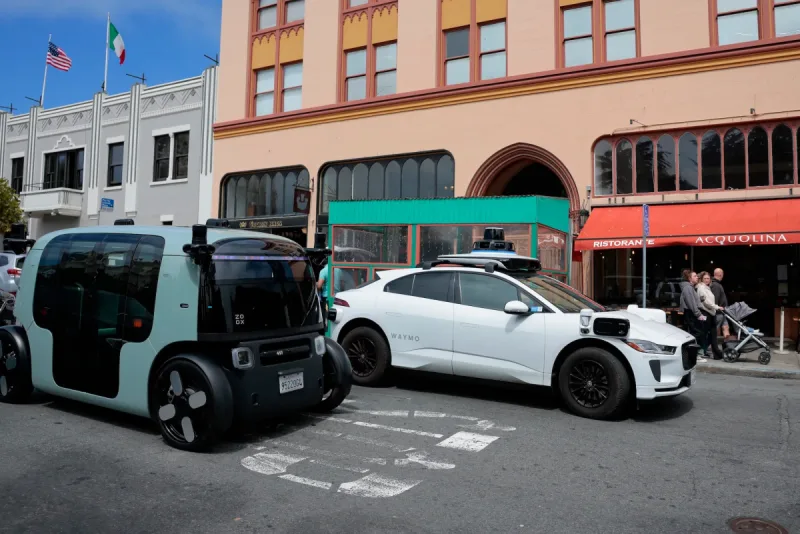
California Tightens Rules on Robotaxis as Incidents Mount
A new state law sets safety standards and accountability measures for autonomous vehicle operators, requiring local support staff and penalties for blocking emergency responders.

Wawa Elevates Long-Tenured Executive to CIO Role
The convenience store chain has named Bill O'Donnell, a 25-year company veteran, as its new chief information technology officer, putting him in charge of tech strategy, cybersecurity and digital operations.

ServiceNow Debuts Flow, a Conversational Service Desk Built for Speed Over Complexity
ServiceNow is rolling out Flow, a natural language service desk tool that automates employee requests through Slack and Microsoft Teams without requiring a full IT service management overhaul.