A 1973 Typeface Gets a Digital Second Life With Variable Font Technology
Kanon Foundry has revived Paperclip Contour, an obscure 1973 design, transforming it into Clippy—a full-featured digital typeface that feels surprisingly contemporary for the web.

Typography follows different trajectories. While some fonts remain timeless, others vanish from circulation for decades before resurging with unexpected relevance. Clippy exemplifies the latter path, emerging as a peculiar choice for contemporary digital work.
Kanon Foundry drew inspiration from Paperclip Contour, a 1973 creation by Ad Werner. Designer Tor Weibull reimagined the typeface's characteristic rounded, flowing characters, expanding them into a comprehensive digital type family. Remarkably, despite its half-century gap, the design reads as surprisingly current.
The original Paperclip Contour operated under significant constraints: it offered only lowercase letters, numerals and essential punctuation marks in an outlined format. Clippy substantially broadens this scope, introducing uppercase variants and scaling the family to encompass 530 glyphs supporting 219 languages.
The typeface's most distinctive feature emerges through motion. Clippy leverages variable-font technology to transition between upright and slanted presentations, causing letterforms to tilt backward and forward rather than adopting a standard italic treatment. The result resembles typography experiencing a slight equilibrium issue.
This unconventional quality may explain its current appeal. The design world has grown fatigued with restrained geometric sans serifs that have saturated digital interfaces. Unusual, expressive typography has regained cultural currency.
Clippy would likely prove unsuitable for body copy in a financial services application. However, deploying it prominently across a website's hero section would be entirely appropriate. Over five decades after Paperclip Contour's initial release, its distinctly eccentric character set has discovered the digital infrastructure it required.
Read more
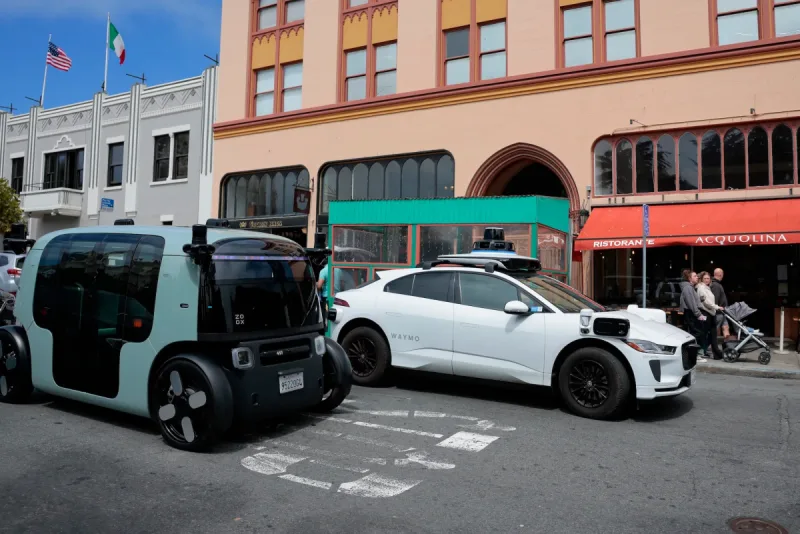
California Tightens Rules on Robotaxis as Incidents Mount
A new state law sets safety standards and accountability measures for autonomous vehicle operators, requiring local support staff and penalties for blocking emergency responders.
Wawa Elevates Long-Tenured Executive to CIO Role
The convenience store chain has named Bill O'Donnell, a 25-year company veteran, as its new chief information technology officer, putting him in charge of tech strategy, cybersecurity and digital operations.

ServiceNow Debuts Flow, a Conversational Service Desk Built for Speed Over Complexity
ServiceNow is rolling out Flow, a natural language service desk tool that automates employee requests through Slack and Microsoft Teams without requiring a full IT service management overhaul.