Oracle AI World Oct. 28: What's on the agenda for enterprise AI and data modernization
Oracle will showcase how modernized databases serve as foundations for trustworthy AI systems at its Las Vegas event later this month, with theCUBE providing live coverage of announcements across AI agents, lakehouse technology and platform capabilities.
Enterprises have long pursued database modernization for operational efficiency and reduced costs. However, research indicates a more substantial opportunity exists: AI initiatives deployed on top of refreshed data infrastructure can unlock considerable business value.
Moving away from disconnected data environments—which impede team velocity and complicate oversight—remains a key objective. Scaling AI projects reliably in production environments will take center stage at Oracle AI World, happening in Las Vegas later this month.
For Oracle customers, the strategic question is becoming: Are we simply reducing infrastructure cost, or are we creating a better platform for repeatable AI execution? The value is not only in automation, standardization and operational efficiency. The bigger opportunity is using that foundation to get onto the AI learning curve earlier, free skilled teams from routine administration, improve governance consistency and accelerate the development of AI use cases over time. Database modernization is still an IT decision. But, increasingly, it is also an AI readiness decision that impacts all parts of the business.
Dave Vellante, theCUBE Research
TheCUBE, the livestreaming platform operated by SiliconANGLE Media, will deliver on-site reporting and exclusive conversations with Oracle leadership and industry figures on Oct. 28. The coverage will examine Oracle's approach to embedding agentic AI into business processes, linking dependable data with intelligent automation, and meeting the infrastructure, security and governance demands of enterprise-scale AI.
Database modernization to ensure trust
Oracle AI World will highlight recent progress in several critical product domains, particularly around implementing safeguards and establishing confidence in AI systems.
Enterprises require AI-driven solutions to be precise, protected and dependable before relying on their outputs. This requirement has grown more pressing as autonomous agents construct applications and execute decisions, according to Juan Loaiza, executive vice president of mission-critical database technologies at Oracle.
Guardrails don't cut it. You can't simply drop AI on top of an architecture that was never designed for these challenges AI brings and expect it to work. What we're doing is different. We're ensuring trust across the entire technology stack. The only way we think is possible to build AI solutions that we can trust is to architect the whole thing together — AI, data and AppDev all in one whole.
Juan Loaiza, Oracle
Oracle unveiled a three-part strategy earlier this year to tackle security risks stemming from expanded AI adoption. Since artificial intelligence has opened new vulnerabilities to confidential business information, Oracle has deployed tools focused on database protection, patch management, validation and operational oversight.
There's so much optimism on AI and how it can improve productivity, but there's also a lot of concern when it comes to cyberattacks. One of the key focus areas for us in Las Vegas is to really show what we're doing in the product, how we're designing features to really start at the data layer and go all the way to the app layer to help customers move from AI prototypes to trusted AI apps at scale.
Arpan Shah, Oracle
Enhancements for Lakehouse and AI Database technologies
Intelligent data architecture represents another major area of attention. Oracle's Autonomous AI Lakehouse merges the company's Autonomous Database functionality with Apache Iceberg's open table format, establishing a unified platform for analytics across all primary cloud environments.
Oracle plans to introduce several fresh capabilities within Autonomous AI Lakehouse, as noted by Nipun Agarwal, SVP of Oracle Autonomous AI Lakehouse.
The lakehouse is transforming from being an analytic platform into a decision backbone for enterprise AI. What that means is basically that in the past, customers would come to a lakehouse for running their analytic workloads. But, now, lakehouse is the right, appropriate platform both for analytic as well as AI workloads.
Nipun Agarwal, Oracle
Oracle's Autonomous AI Database delivers a fully managed, cloud-native data system that applies machine learning and AI to handle administration, optimization, patching and protection autonomously. Its cross-cloud design permits enterprises to deploy on Oracle Cloud Infrastructure or through Oracle-managed offerings on Amazon Web Services, Microsoft Azure and Google Cloud. Supporting multiple data types, the platform handles both transactional and analytical workloads while automating and standardizing database administration.
We'll be talking a lot about building and integrating AI agents with Autonomous AI Database at AI world, of course. But if you're only looking at how LLMs interact with enterprise data from an application standpoint, you're missing a big part of the picture. An often overlooked ingredient is that AI applications need to be built on the right data foundation. And that is where the real strengths of Autonomous AI Database come in.
Çetin Özbütün, Oracle
New platform capabilities
Oracle has strengthened its platform this year by introducing tools such as APEXlang, a human-friendly language for defining applications that gives coding agents a clear structural target while Oracle handles execution, protection and lifecycle administration.
What APEXlang does is it takes all this configuration or all these properties that you define with a low-code system traditionally through a user interface, but it's captured in a formal language with a formal grammar and that can be compiled. So, you can use a coding agent like Codex or Claude, and you just simply say, 'Build me an application to do something.' And it will generate this language.
Mike Hichwa, Oracle
Oracle has been progressively broadening its high-availability Exadata service to address AI and location-specific scenarios. Yet transferring database VMs utilizing Remote Direct Memory Access on Exadata had remained technically unfeasible.
Oracle announced Exadata VM Live Migration in June, enabling an active Oracle Database to transition between servers while sustaining operations on Exadata. The event will provide fuller details on this capability, per Jia Shi, group vice president of software development at Oracle.
Before this June, nobody could actually move their database VM running RDMA from one host to another in a live fashion. So, we are really happy to announce that we finally solved that technical challenge. This is truly unique in the sense that we're able to launch the capability on Exadata where customers can move their database VM running an active database workload with all the RDMA connections intact from one server to another.
Jia Shi, Oracle
TheCUBE event livestream
TheCUBE will broadcast its Oracle AI World coverage on Oct. 28, with on-demand access to exclusive material available following the event.
How to watch theCUBE interviews
Multiple viewing options exist for theCUBE's Oracle AI World reporting, including theCUBE's website and YouTube channel. Complete event coverage from this year's conferences is also accessible through SiliconANGLE.
TheCUBE podcasts
SiliconANGLE's "theCUBE Pod" is distributed through Apple Podcasts, Spotify and YouTube for on-the-go listening. Each episode features SiliconANGLE's John Furrier and Dave Vellante discussing major enterprise technology trends—spanning AI, cloud, cybersecurity and infrastructure—with analytical depth and context.
SiliconANGLE also distributes "Breaking Analysis," a weekly program where Vellante reviews significant enterprise technology developments by combining theCUBE insights with spending information from Enterprise Technology Research. The program streams on Apple Podcasts, Spotify and YouTube.
Guests
TheCUBE will conduct interviews with Oracle executives and industry leaders at Oracle AI World on Oct. 28, focusing on incorporating agentic AI into enterprise operations, linking trusted data with intelligent automation, and fulfilling the infrastructure, security and governance needs of large-scale AI deployment.
Read more
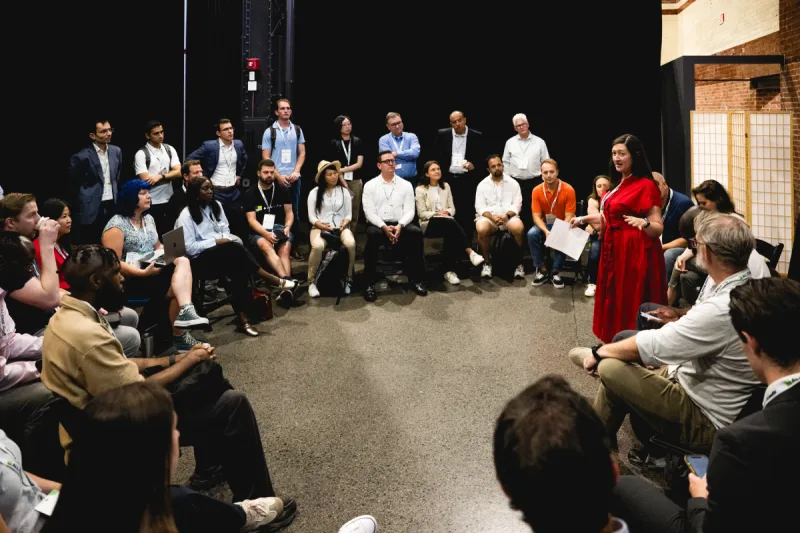
Fathom Founder Summit 2026: Six Roundtables Tackling the Real Problems Builders Face
On November 4, Fathom brings founders, investors, and operators to Boston for a day of focused conversations. Six expert-led roundtables dig into the challenges that matter most right now: enterprise sales, vertical strategy, AI reliability, and building categories that don't exist yet.
Intero Biosystems wins TechCrunch Disrupt 2026 Battlefield competition; 200 startups showcase innovations
TechCrunch Disrupt 2026 selected 200 promising startups from thousands of applications to pitch and compete over three days, with Intero Biosystems claiming the $100,000 equity-free prize and Disrupt Cup.
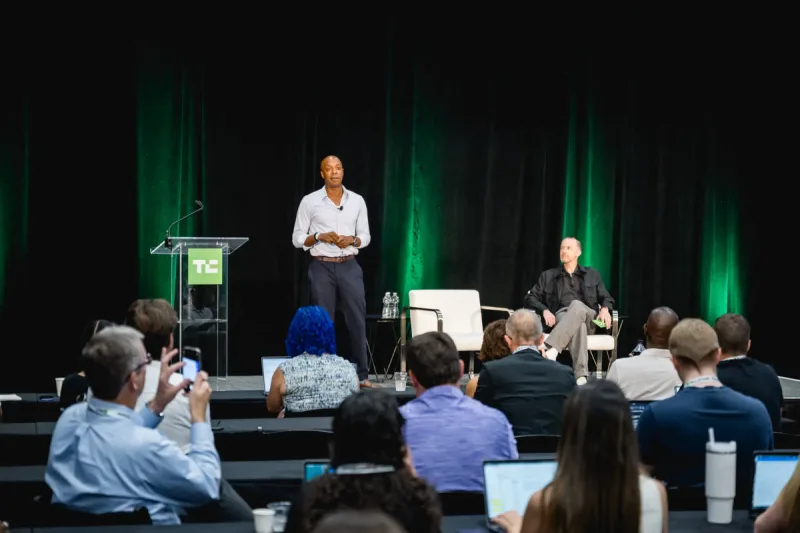
TechCrunch Founder Summit Returns to Boston in November With Focus on Fundraising and AI
The full-day founder event takes place November 4 at SoWa Power Station, bringing together early-stage and established founders with venture investors and experienced operators for sessions on scaling, hiring, and building AI-native companies.