Texas A&M's sovereign AI platform aims to scale research while keeping costs and security in check
Universities are building their own AI infrastructure to avoid the high costs of commercial cloud providers while maintaining control over sensitive research data and federal compliance requirements.
Sovereignty in artificial intelligence is becoming a priority for university research operations, where decisions about data ownership, computing infrastructure and model governance increasingly determine which projects can move forward. Academic institutions occupy a distinctive position in today's technology landscape, balancing commitments to open-access education with obligations tied to restricted government-sponsored research. Both endeavors depend fundamentally on learning systems, positioning AI as essential infrastructure for advancing both research capabilities and educational reach, according to Vince Kellen, chief information officer of the Texas A&M University System.
AI is a platform for thought. It's a platform for discovery. AI kind of undergirds all of what we're going to be doing in the future — certainly what we're doing in the present now.
Vince Kellen, chief information officer of the Texas A&M University System
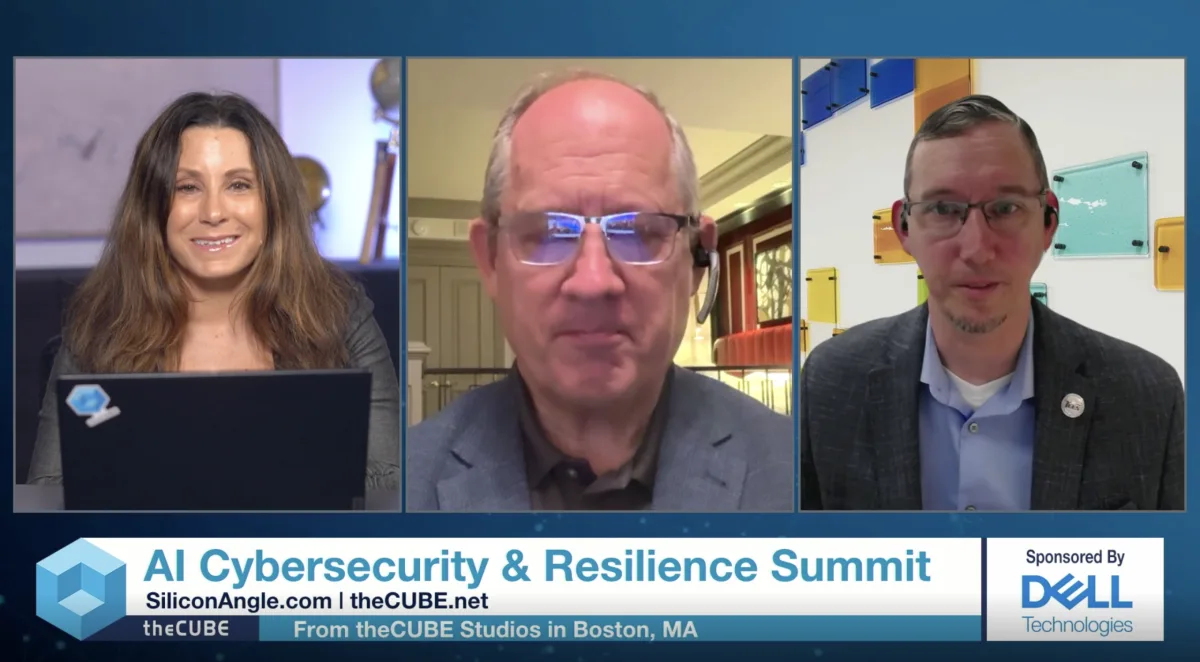
Kellen and Casey Bryan, chief information officer of the Texas A&M Engineering Experiment Station, discussed the institution's strategy for establishing a secure, controlled environment for AI-powered research during coverage of the AI Cybersecurity & Resilience Summit.
Building a sovereign AI foundation for research at scale
The centerpiece of Texas A&M's infrastructure initiative is IGNITE, which stands for Innovative Growth in Next Generation AI Technology Ecosystem. The state-funded platform combines artificial intelligence capabilities with high-performance computing resources and is overseen by TEES, the Texas A&M Engineering Experiment Station. Dell Technologies Inc. is constructing the system using graphics processing units from Advanced Micro Devices Inc., housed within an Equinix Inc. data center located in Dallas. This deployment addresses a significant gap in computational resources available to research teams, Bryan explained.
Part of our current challenge is that existing resources, while they are performing some of that work, are severely underpowered. Research is getting done but could be helped by capacity and scale, which I think IGNITE's going to bring to the table.
Casey Bryan, chief information officer of the Texas A&M Engineering Experiment Station
Financial considerations prove equally important as raw computational power. While public discourse frequently emphasizes neoclouds and major cloud service providers, on-premises data center deployments are expanding rapidly, driven by both security requirements and economic efficiency, according to Kellen. The premium pricing charged by commercial AI computing services is now constraining research institutions' capacity to execute scientific work at the scale and scope they require.
There's no way we could take the science to your classic neocloud provider today and conduct the same thing. It's 5 to 10x the cost.
Vince Kellen
Maintaining ownership of computing assets delivers dual benefits: substantially lower operational expenses and enhanced security posture. Sovereignty encompasses four distinct dimensions—data, infrastructure, capability and model, and governance—with Equinix providing physical security for the computational assets themselves, Bryan noted. Operating as a state agency, TEES adheres to compliance frameworks established by the National Institute of Standards and Technology, specifically standards 800-53 and 800-171, alongside Texas Administrative Code 202. The organization intends for IGNITE to achieve Cybersecurity Maturity Model Certification Level 2.
There's a lot of controls we have to inherit, but our researchers shouldn't have to think about all those. It should be absolutely seamless when they go to use the capabilities.
Casey Bryan
This principle of transparent security guided the entire IGNITE development process. When TEES convened with Dell's implementation team to plan technical workshops, security considerations took precedence, and the project's architecture review board subsequently validated this priority-first approach, according to Bryan. For other institutions embarking on comparable sovereign AI initiatives, this sequencing offers a critical lesson.
https://www.youtube.com/embed/5mNfaiP1bLE?feature=oembed
The idea was to build that security foundation with which all of the other operational components could be built and referenced back to. At its core, start with security early — get it embedded in the process earlier on — and it's much easier to keep it baked in at the beginning than have to worry about adding that at the end.
Casey Bryan
Read more

Rising Security Budgets Fail to Contain Shadow AI Risks, DNSFilter Report Finds
Organizations are increasing cybersecurity spending but leaving critical gaps in AI governance, with nearly half of IT workers unaware of unauthorized AI tools already connected to their networks.

Forrester: AI agents will drive financial services transformation, but only 5% of banks will execute successfully
A new Forrester Research report predicts that 2027 will mark a shift from digital banking to AI-driven finance, with AI assistants reshaping customer acquisition and advisory services—though most banks will struggle to scale beyond rebranded legacy systems.

Oracle Hardens Database Security Against AI-Discovered Vulnerabilities and Autonomous Agents
Advanced AI models are uncovering hundreds of software flaws and bypassing traditional application-level security controls. Oracle is responding with accelerated patching cycles, real application testing, and a shift of security enforcement down to the database layer.