Regal Voice Launches Dual-Model Agents to Streamline Enterprise Call Handling
The enterprise voice AI company has introduced Goal Oriented Agents, a system that deploys two specialized models on each call to manage conversation flow and track business objectives more efficiently.
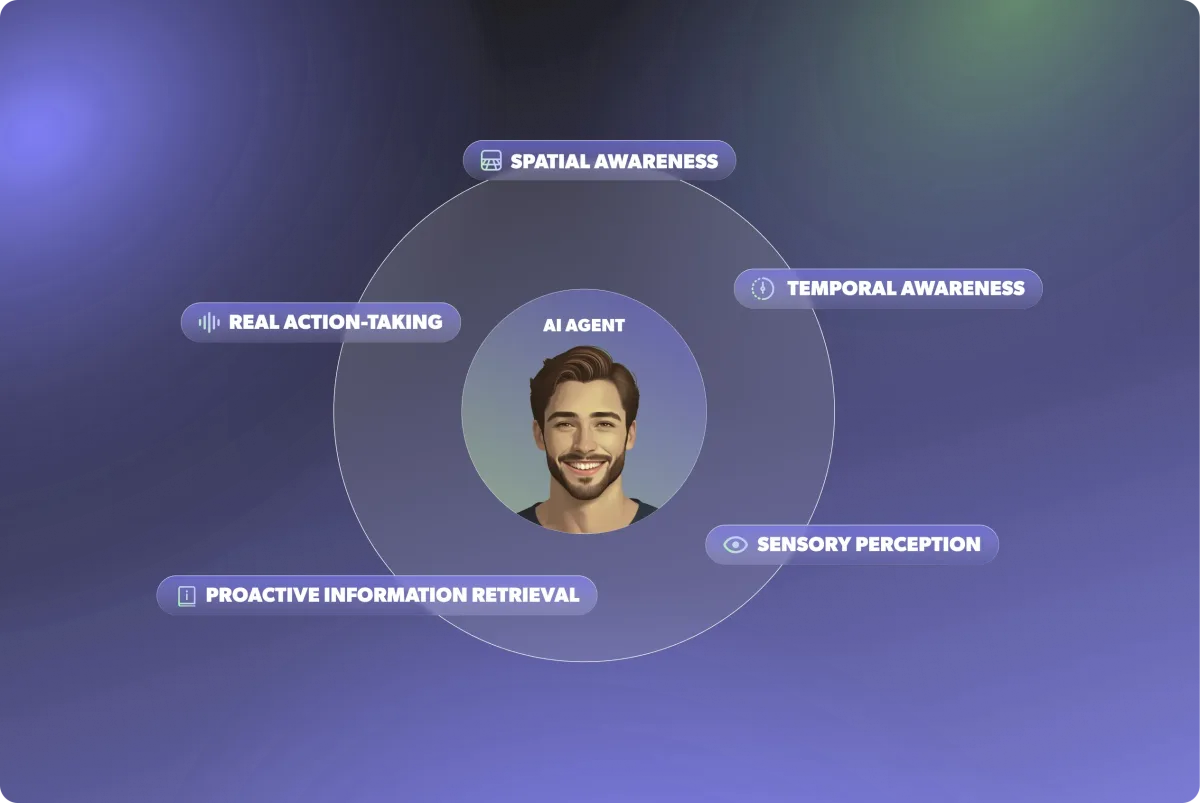
Regal Voice Inc., an enterprise voice artificial intelligence provider, has rolled out Goal Oriented Agents on its platform today. The feature lets organizations specify what needs to happen during a call and assigns two distinct AI models to work in tandem toward those outcomes.
The system addresses a recurring challenge Regal has identified in high-stakes interactions like auto insurance claims processing. In these scenarios, callers typically convey multiple pieces of information—what happened, where it occurred, and who was involved—all at once. Traditional agents built on conditional logic frequently ask for information the caller has already provided, requiring each data field to be populated separately. Single-prompt agent designs maintain conversational flow but often result in loosely structured business processes.
Goal Oriented Agents deploy two models working in parallel during each call. Regal refers to these as an actor and a director. Both activate immediately after the caller finishes speaking. The actor, a lightweight model optimized for natural dialogue, generates an immediate response. Simultaneously, the director model operates in the background, evaluating whether the call's current stage objectives have been satisfied and determining whether to advance to the next stage with updated instructions for the actor.
Organizations construct these agents using goal nodes, which specify the objectives that must be accomplished within each node and any prerequisites required beforehand. Scheduling a callback qualifies as a potential goal. Prerequisites represent information the agent must establish before proceeding—such as the caller's date of birth—and can be expressed as plain-language conditions, for instance "the caller mentioned a death in the family."
The director evaluates progress following each exchange, meaning a single response from the caller can satisfy multiple requirements simultaneously. In Regal's sample auto insurance claim scenario, a caller named Dan provides vehicle damage details, photographic evidence and injury information in his opening message. The system marks all three as obtained and moves directly to collecting his name. Once acquired, the director identifies that location and policy number remain outstanding, prompting the actor's subsequent question about his current location.
Regal has identified complex intake and qualification calls as particularly strong applications for this agent design. The company highlighted Medicare enrollment, roadside assistance and mortgage qualification as use cases the architecture enables. Medical intake workflows meeting Health Insurance Portability and Accountability Act requirements represent another application area.
Google LLC, AAA and Toyota Motor Corp. rank among the more than 200 enterprises Regal currently serves. Through an integration completed in August, customers of Five9 Inc.'s contact center platform gained access to Regal's voice agents.
Regal operates as a venture-backed startup with $83 million in total funding. A $40 million funding round closed in October 2024.
Read more
Cloudera Positions Portability as the Key to Enterprise AI, Not Agent Features Alone
As enterprises demand greater control over AI workloads amid regulatory concerns and vendor lock-in fears, Cloudera is betting that the ability to run models anywhere—across clouds and on-premises—will matter more than general-purpose AI agents.

Enterprise leadership fractures over tech's role in strategy, Gartner finds
A Gartner survey of 251 executives at billion-dollar companies reveals sharp disagreement about whether technology drives business strategy or merely informs it, with CIOs caught in the middle of conflicting expectations.

SAP Strengthens Joule AI Agents With Governance Framework and Tabular Models
At its TechEd developer conference, SAP unveiled enhancements to its Joule assistant and Business AI Platform, introducing governance controls for autonomous agents and new foundation models designed for structured data.