Nvidia Invests in Simplismart, Indian Startup Optimizing AI Model Efficiency
Nvidia has led a $14 million Series B investment in Simplismart, an Indian software company that helps enterprises run AI models with fewer GPUs and lower costs. The funding values the four-year-old startup at approximately $100 million.
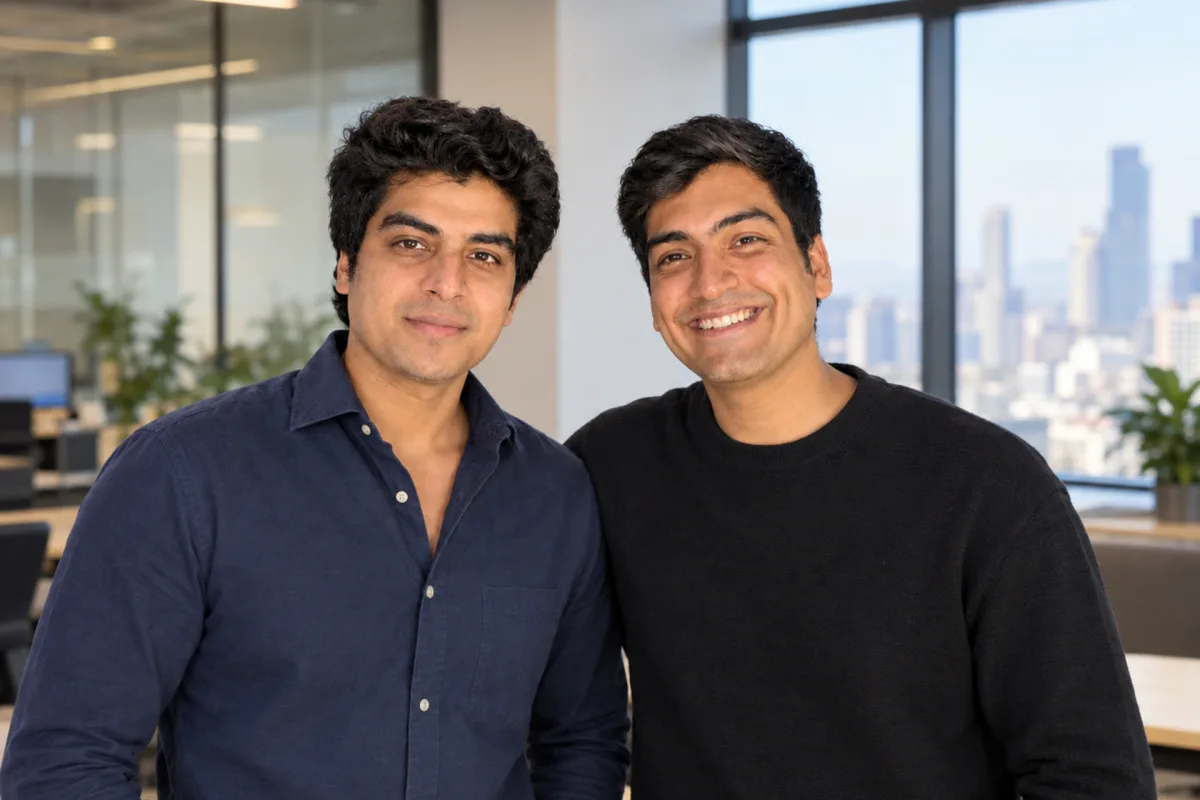
Demand for GPU computing power continues to strain resources as artificial intelligence applications proliferate across industries. Nvidia has now backed Simplismart, a Bengaluru-based startup, in a $14 million Series B funding round focused on software that enables organizations to execute AI models with greater efficiency and, in certain scenarios, reduced GPU requirements.
The all-primary Series B round included participation from Accel, Shastra VC, and Micromax alongside Nvidia, with Dallas Venture Capital serving as the lead investor. The investment values Simplismart, founded four years ago, at roughly $100 million including the new capital.
Organizations are currently investing substantial resources in GPU infrastructure to support AI workloads, yet achieving reliable and cost-effective model deployment at scale presents ongoing obstacles. Each use case involves distinct trade-offs among latency, expense, and capability. Simplismart's platform automates the optimization process by adjusting how models operate on current infrastructure, eliminating the need for customers to manually configure these settings.
Nobody actually needs the fastest or the cheapest inference
Amritanshu Jain, co-founder and CEO of Simplismart
Jain elaborated that organizations instead require the ability to run AI models at performance levels and price points aligned with their particular use cases.
How Simplismart Works
Simplismart's software operates as an intermediary between AI models and the underlying computing infrastructure, modifying deployment and management approaches to satisfy customer objectives. The platform optimizes variables including response time, request throughput, and resource consumption, enabling organizations to maximize returns from their current GPU investments.
The startup provides deployment and execution capabilities through its own interface or within customers' existing cloud and on-premises environments. Additional capabilities include model fine-tuning, dynamic resource scaling in response to fluctuating demand, and performance tracking. Cloud providers can also leverage Simplismart's technology to construct and manage their own AI inference offerings on GPU systems.
Customer Traction and Revenue Growth
Simplismart demonstrated measurable results with InVideo, an AI video generation platform, reducing its GPU serving expenses by 56% through the software. The startup maintains relationships with video AI companies HeyGen and Higgsfield, enterprise AI provider Ema, and Indian cloud infrastructure company Yotta, which uses Simplismart technology to operate the serverless AI inference component of its Shakti Studio offering.
The startup's annualized revenue run rate expanded 14 times over the preceding six months to reach an eight-figure total, according to Jain. This metric reflects recent customer consumption rather than contracted recurring revenue and excludes amounts transferred to infrastructure providers. The exact figure remained undisclosed.
Despite maintaining a larger customer base within India, more than half of Simplismart's revenue originates from the United States, Jain indicated.
Nvidia Partnership and Market Position
Beyond the investment itself, Nvidia has engaged with Simplismart on technical collaboration, particularly regarding its Dynamo inference software, Jain disclosed. The partnership includes joint work between Simplismart engineers and Nvidia solutions architects, with Nvidia also facilitating introductions to prospective customers and business partners.
The investment appears paradoxical given that Nvidia, the leading supplier of AI processors, is backing software designed to reduce GPU consumption for certain workloads. Jain countered this observation by arguing that enhancing inference efficiency could ultimately strengthen Nvidia's position by increasing hardware appeal to customers and driving broader adoption of AI technologies.
Simplismart competes in an increasingly saturated market for AI inference software, facing competition from Nvidia's own offerings as well as major cloud platforms including Amazon Web Services, Google Cloud, and Microsoft Azure. Numerous emerging companies are developing solutions to accelerate and reduce the expense of running AI models, capitalizing on surging demand driven by AI application expansion and the imperative to optimize expensive GPU spending.
Where we tend to win is where people have to be more stringent on their SLAs [service-level agreements] and TCO [total cost of ownership]
Amritanshu Jain
Jain explained that Simplismart succeeds in scenarios involving demanding performance requirements and tight cost constraints. In contrast to competitors offering predetermined configurations for faster or cheaper inference, Simplismart seeks to identify a customized balance suited to each customer's distinct requirements.
Company Background and Future Plans
Simplismart was established in 2022 by Jain, a former Oracle engineer, and Devansh Ghatak, previously an engineer at Google. The two founders met during their time at BITS Pilani and built the company based on their experience constructing and deploying machine-learning infrastructure. The organization currently has 58 employees.
Simplismart intends to deploy the new capital toward expanding operations in the United States, scaling its workforce, and advancing its inference software capabilities. Jain emphasized that the U.S. represents a critical market for the startup as it builds upon its existing customer relationships there.
The funding round follows reporting by The Economic Times indicating that Simplismart was exploring a fundraise of $40 million to $50 million at a valuation between $300 million and $400 million. When asked about this report, Jain declined to provide specifics, stating that the company was not in active fundraising mode. He confirmed that the Series B had concluded and would not be reopened.
Read more

Robotics Startups Attract Record Venture Funding as China and US Race for Physical AI Dominance
Global venture funding to robotics startups surged to $9.9 billion in Q3 2026, more than doubling the prior year as China and the US lead investment in physical AI technology.
Microsoft extends voluntary exit offers to 60,000 staff as AI infrastructure spending accelerates
The software giant is offering buyouts to roughly a quarter of its workforce across multiple countries, with departures expected by year-end as the company prioritizes data center expansion and custom chip development.

How Databricks Won Enterprise Deals: A Co-Founder's Playbook for Startups
Arsalan Tavakoli-Shiraji, co-founder of Databricks, reveals that technology alone doesn't close enterprise contracts—strategy, partnerships, and understanding customer concerns do.