Humanitarian groups deploy AI agents to accelerate crisis research in conflict zones
Organizations working in war-torn regions are using multi-agent AI systems to compress research timelines from weeks to days, though the technology serves to jumpstart analyst work rather than replace human judgment.

Crisis response organizations operating across conflict-affected regions are discovering that agentic AI can substantially reduce the time needed to move from emergency to informed action. Cloudera Inc. has centered its AI approach on flexible deployment options, and a nonprofit partner is now validating this strategy in real-world humanitarian settings. The focus, however, remains on providing researchers with a faster foundation for their work, not on eliminating human analysis, according to Aaron Eubank, director of data science at Prosper Global, formerly Mercy Corps.
It's not the final report that's going to be pushed out to the humanitarian community and teams, but rather a starting point that analysts can use to continue to iterate on their own research. We want to keep the agency in the hands of the researchers themselves.
Aaron Eubank, director of data science at Prosper Global
Eubank shared his insights during an exclusive broadcast at EVOLVE26, where he spoke with theCUBE's Rebecca Knight and Paul Gillin about how multi-agent AI is reshaping humanitarian research workflows, early outcomes from VERA in active conflict zones, and the critical importance of maintaining researcher autonomy.
Agentic AI meets the humanitarian fog of war
Prosper Global operates across roughly 30 nations where populations contend with armed conflict, environmental crises and financial instability. When crisis analysts needed weeks or even days to complete research, the organization partnered with Cloudera to develop VERA, a multi-agent research platform built on Cloudera AI Studios, deployed through Amazon Web Services Inc. and leveraging models from Anthropic PBC. The system coordinates multiple agents that draw data from sources including ReliefWeb, the conflict database ACLED and regional news outlets, with a final agent synthesizing all findings into a coherent output, Eubank explained.
Agents allow us to really kind of tailor the process for how this research is done. Then it will allow us to then add further resources in the future and really have a curated research process that we wouldn't have had with some of the earlier iterations of generative AI.
Aaron Eubank
The results demonstrate measurable impact. In Sudan, VERA reduced the desk research phase for an agricultural analysis from five or six days down to two days, representing approximately $1,500 in savings. In Colombia, a staffer without prior security expertise completed an election security assessment in just a few hours using the system. Since its June launch, VERA has also been deployed in the Democratic Republic of Congo and Ukraine.
https://www.youtube.com/embed/4D4jOWn_GWk?feature=oembed
The risks and the contexts are different in each place that we work. It's important to really take a measured and slow approach as we go through that.
Aaron Eubank
Read more
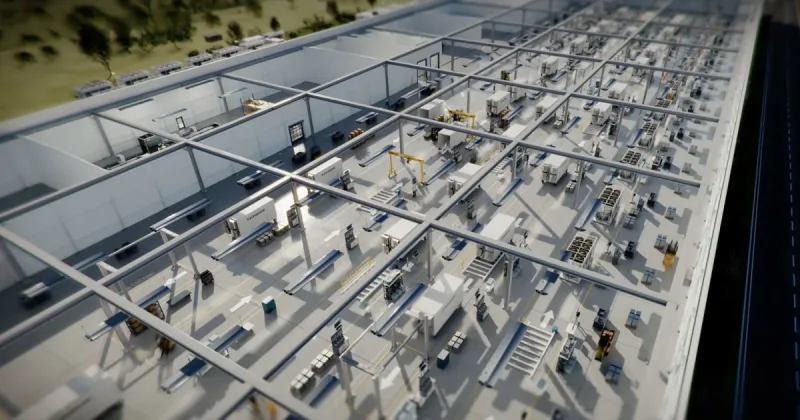
Runware Pursues Factory-Scale Production of AI Data Center Pods
The infrastructure startup is building a manufacturing operation in Romania designed to churn out modular data centers at automotive-industry speeds, targeting 1 gigawatt of capacity monthly by 2028.

Cloudera positions itself as the flexibility play in enterprise AI deployment
As organizations balance new AI models against legacy infrastructure, Cloudera is betting that enterprises want control over where and how they run workloads. The company's strategy centers on letting customers modernize gradually rather than forcing wholesale system replacements.

AMD and Cloudera stress tailoring infrastructure to business outcomes, not specs alone
As enterprises deploy AI systems, matching hardware choices to actual performance requirements—rather than chasing raw benchmarks—is becoming essential to controlling costs and delivering real business value.