Restate Raises $20M to Scale Durable Infrastructure for AI Agent Workflows
The Berlin-based startup, founded to build resilient workflow execution engines, has closed a Series A round led by Singular as demand surges from companies deploying AI agents that require fault tolerance and reproducibility.
Stephen Ewen launched Restate in 2022 with the goal of creating durable workflow infrastructure, but the timing has proved fortuitous as enterprises grapple with the operational challenges of AI agents. The Berlin startup engineered an execution platform designed to shield multi-step workflows from crashes and network failures—a capability that has become unexpectedly critical in the age of agentic AI systems.
Agent-based processes demand durability more than traditional software because they operate for longer periods and follow unpredictable execution paths. "It never was built for agents in the beginning, but it just happened to be a perfect match for all these problems that agents surface," Ewen told TechCrunch. Tracking every action to ensure reproducibility and consistent outcomes is essential, he added: "You need to make sure you track exactly what you do to make it reproducible and have a consistent outcome."
The surge in AI agent adoption has accelerated Restate's commercial traction considerably. The startup has signed multiple six- and seven-figure contracts in recent months, propelling it to close a $20 million Series A funding round. Singular led the investment, with participation from Redpoint Ventures and Capital One Ventures.
Restate now faces competition from Temporal, the established player in durable infrastructure. Temporal, founded in 2019, recently announced a $550 million Series E at a $12.55 billion valuation. Despite its smaller scale, Restate has already secured notable customers, including the coding platform Replit.
Architecture and Differentiation
Rather than layering its execution engine on top of an external database, Restate built proprietary storage, replication, and redundancy systems. This approach yields a platform that is both faster and more lightweight than alternatives, according to Ewen. The company is positioning itself as a more efficient and cost-effective option compared to traditional durability engines, which are often deployed only for heavyweight workflows.
Customer Base and Use Cases
Beyond serving AI-focused companies, Restate is working with Fortune 500 enterprises, particularly in financial services. Across all customer segments, the core requirement remains the same: a system that automatically recovers and restores itself when failures occur mid-process.
Founder Background
Ewen co-created Apache Flink, a widely-used open-source stream-processing framework, before becoming CTO of Data Artisans, which commercialized the project. Alibaba acquired Data Artisans in 2019 and renamed it Ververica, where Ewen served as CTO for three years. Two of Restate's three co-founders—Igal Shilman and Till Rohrmann—are former colleagues from his time at Data Artisans and Ververica.
Growth Plans
The new funding will support hiring in go-to-market functions, expanding the engineering team, and growing Restate's presence in the San Francisco Bay Area to be nearer to its customer base.
Ewen believes Restate's technology will eventually become as fundamental as databases for most organizations. "If we fast-forward a couple of years, it's one of those tools, like a database, that I think pretty much any company will have a use case for, no matter their shape and size," he said.
Read more

Spotify Founder's Health Screening Startup Neko Brings Preventative Medicine to the U.S.
The body-scanning company co-founded by David Ek has arrived in New York with a 300,000-person waitlist and backing from nearly $1 billion in funding.
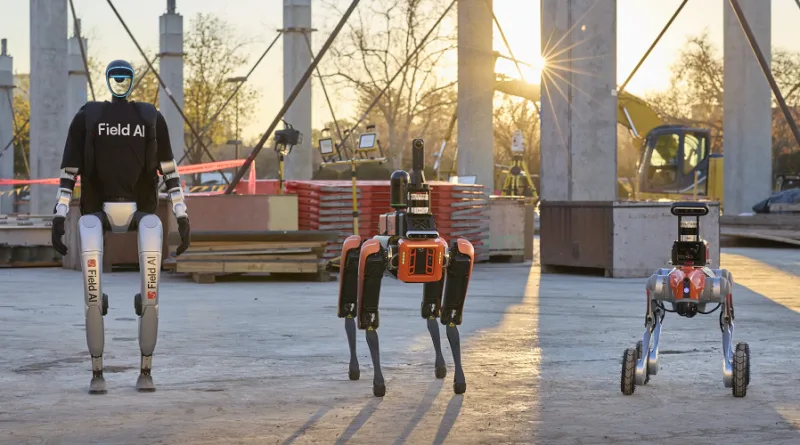
FieldAI Seeks $700M at $10B Valuation as Robot AI Demand Accelerates
The robotics AI startup is in advanced fundraising talks that would quintuple its valuation from last year, according to sources familiar with the matter.

Tech hiring slows even as employers post record open positions
A surge in IT job listings to three-year highs masks a contraction in actual hiring, with technology sector roles declining and unemployment ticking upward.