Quartermaster Lands $140M Series B to Scale Maritime Sensor Network
The Arlington-based startup, which deploys weather-resistant hardware on ships to track ocean activity, has nearly tripled its Series A funding as demand from governments and shipping companies accelerates.
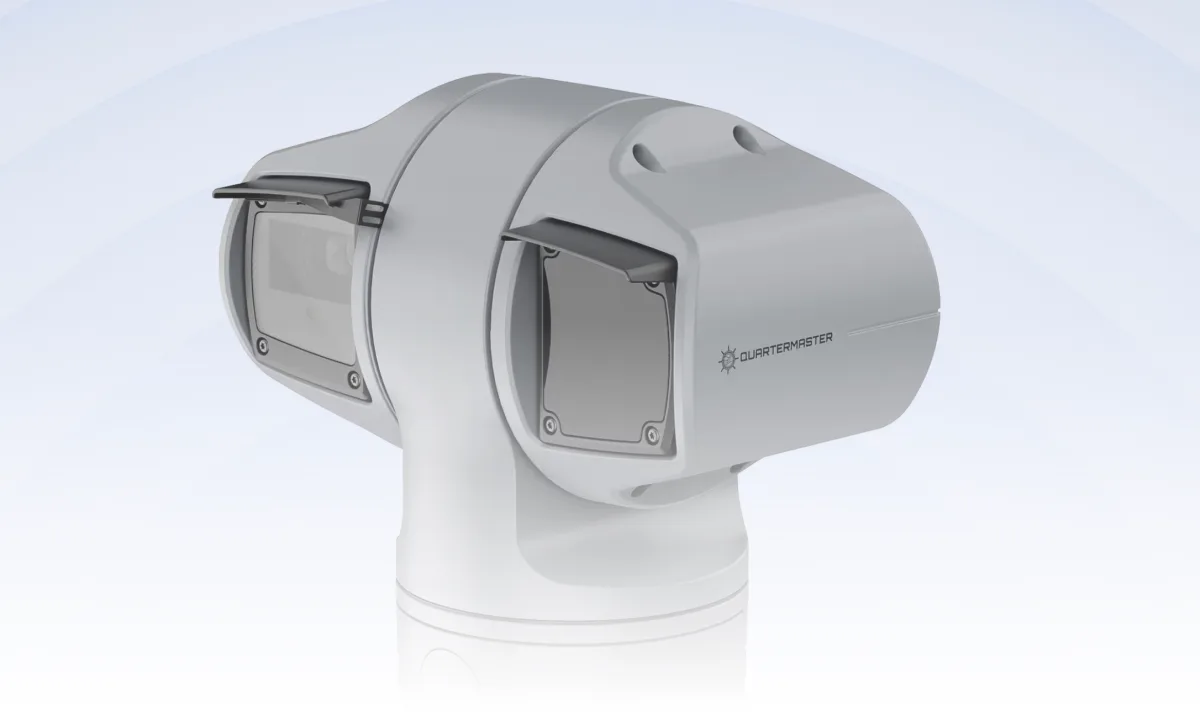
Quartermaster, an Arlington, Virginia startup, has secured $140 million in Series B funding, a significant jump from its $43 million Series A closed in May. The company's core offering centers on deploying rugged sensors aboard vessels to monitor maritime operations and deliver real-time intelligence about ocean activity.
Insight Partners led the round alongside new backer Overmatch Ventures and returning investors including First Round Capital, together accounting for roughly $100 million. Investment bank Stifel provided an additional $40 million through a debt facility. Founder and CEO Neil Sobin attributed momentum to global events, stating: "I think we we've gained huge amounts of conviction in the core thesis. A big part of the story for us this year was, events in the world drive that clarity and drive that conviction and urgency, and when you see that, you gotta seize the opportunity."
Nick Sinai, managing director at Insight Partners, commented on the investment: "Quartermaster is building a distributed network for the ocean, where reliable, real-time data has been difficult to come by. The team's execution and the strong demand for maritime data and awareness made this an investment we wanted to lead, and we're proud to back Neil and the team as they scale to meet the opportunity with commercial fleets."
How SmartMast Works
Quartermaster's hardware platform, branded SmartMast, integrates cameras and radio equipment into a single unit mounted on a ship's mast. The system captures and transmits maritime data in real time, offering substantially more detail than the automatic identification system (AIS), which primarily transmits location coordinates. Each SmartMast unit generates tens of gigabytes of data daily.
The technology addresses what Sobin calls "the largest blind spot on Earth," enabling applications ranging from collision avoidance to shipping lane optimization to maritime rescue operations. Sobin noted the nascent state of maritime artificial intelligence: "There isn't a lot of prior art in maritime AI, and so it's been exciting to, one, have our own source of data. But two, there's just so much low hanging fruit that we've been knocking down this summer in what you can start to build and then deliver value for our customers on."
Deployment and Scaling
Quartermaster has deployed SmartMast units to more than 650 vessels across 25 countries, with over 800 units shipped to customers overall. The gap between deployed and shipped units reflects the company's transition toward equipping entire commercial fleets rather than individual vessels. Sobin emphasized the urgency of scaling: "We know we can do this, and we are seeing a lot of proof that tells us we're really onto something massive and important in the world. So, what do you do when you have that position? You run faster and you move faster and double down on that strategy."
To meet surging demand, Quartermaster has doubled its manufacturing capacity and continues refining SmartMast design to accelerate production timelines. Sobin highlighted the receptiveness of maritime professionals to the technology, saying: "This is an ignored field. Mariners around the world have been ignored by technology for a really long time, and so when they meet us, they're so excited, because they're like: 'Oh, I have so many ideas, let's work on them'."
Read more

Spotify Founder's Health Screening Startup Neko Brings Preventative Medicine to the U.S.
The body-scanning company co-founded by David Ek has arrived in New York with a 300,000-person waitlist and backing from nearly $1 billion in funding.

FieldAI Seeks $700M at $10B Valuation as Robot AI Demand Accelerates
The robotics AI startup is in advanced fundraising talks that would quintuple its valuation from last year, according to sources familiar with the matter.

Tech hiring slows even as employers post record open positions
A surge in IT job listings to three-year highs masks a contraction in actual hiring, with technology sector roles declining and unemployment ticking upward.