PitPro's Tire-Swapping Robot Begins Operations at Canadian Shop
The San Francisco startup has deployed its first automated tire-changing system at a Kal Tire location in Calgary, marking the transition from prototype to commercial operation.
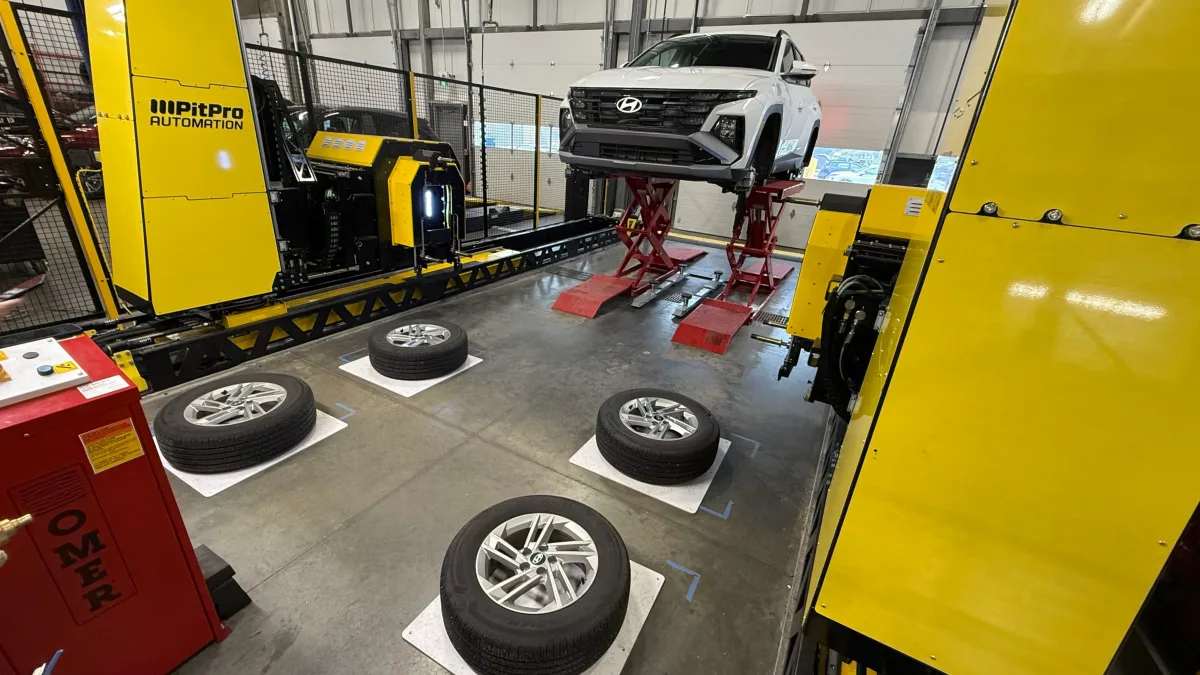
Canadian drivers seeking winter tire installation this season may find themselves working with a machine rather than a technician. PitPro Automation, a San Francisco-based company, announced this week that it has brought its first robotic tire-changing installation online at a Kal Tire outlet in Calgary, Alberta. The system, unveiled to the public last year, can complete a full four-tire replacement in approximately 15 minutes.
PitPro represents one of several emerging companies aiming to reshape various aspects of vehicle ownership and maintenance. Founder and Chief Executive Jeremy Conrad indicated to TechCrunch that while his longer-term vision encompasses broader automated maintenance capabilities, the tire service sector presents a compelling near-term business opportunity.
The tire-changing profession presents significant challenges for the industry. Conrad described the work as "backbreaking" and pointed to severe staffing difficulties plaguing tire service facilities. Workers frequently depart from these positions within months or a year of employment. "One shop manager was telling me they had to get special permission to pay more because a Panda Express opened across the street and it took about half their employees," Conrad said.
How the System Works
PitPro's technology integrates seamlessly into existing service bays without requiring facility modifications. The installation comprises two compact robotic units, each approximately oven-sized, equipped with sensors and a mechanical arm. These components work together to identify and release lug nuts, store them safely, remove wheels, and install replacement or rotated tires.
Strategic Focus and Market Opportunity
The startup has previously emphasized potential deployments within commercial fleet operations and maintains that concentration as a core business direction. Ted Cannis, a former Ford Pro executive, serves as an adviser to the company. Conrad noted that Cannis brings valuable connections: "He's got relationships with basically kind of every major fleet in the United States, and he's you know been very helpful in making introductions for us on that."
Conrad also sees substantial potential in the tire chain sector, driven not only by labor scarcity but also by the predictable demand cycle for tire services. Canada's climate creates particularly favorable conditions, as most vehicle owners rotate between winter and summer tires annually.
The company prioritizes partnerships with established chains rather than independent shops, citing operational advantages. Larger chains typically maintain standardized bay configurations, facilitating broader rollout possibilities. Additionally, since mechanics can continue using the bay for other service work when the robotic system is not in use, shop owners face lower barriers to adoption.
Real-World Complications
Transitioning from development to actual field deployment has introduced unexpected obstacles. Tire service facilities commonly operate with open bay doors, exposing PitPro's equipment to dust, debris, and environmental conditions. The company needed to engineer solutions ensuring both system durability and sensor accuracy when detecting tire positions.
Some challenges proved less problematic than anticipated. During his conversation with TechCrunch, Conrad shared an image from the Calgary installation depicting the robots nearly buried under an unanticipated coating: dandelion seeds. "We looked into it, and it's not going to be a problem for us," Conrad laughed. "But it's just like… I had never thought about that we might need to deal with a dust cloud of dandelions."
Read more

Spotify Founder's Health Screening Startup Neko Brings Preventative Medicine to the U.S.
The body-scanning company co-founded by David Ek has arrived in New York with a 300,000-person waitlist and backing from nearly $1 billion in funding.
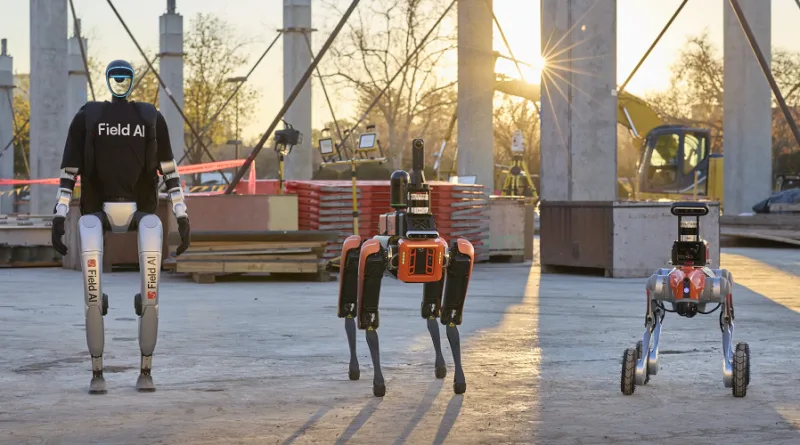
FieldAI Seeks $700M at $10B Valuation as Robot AI Demand Accelerates
The robotics AI startup is in advanced fundraising talks that would quintuple its valuation from last year, according to sources familiar with the matter.

Tech hiring slows even as employers post record open positions
A surge in IT job listings to three-year highs masks a contraction in actual hiring, with technology sector roles declining and unemployment ticking upward.