Palmer Luckey Says He's Staying in California Despite Wealth Tax Concerns
The Anduril founder and Oculus VR seller opposes California's proposed billionaire wealth tax but says he won't leave the state, even as other wealthy entrepreneurs pressure him to do so.
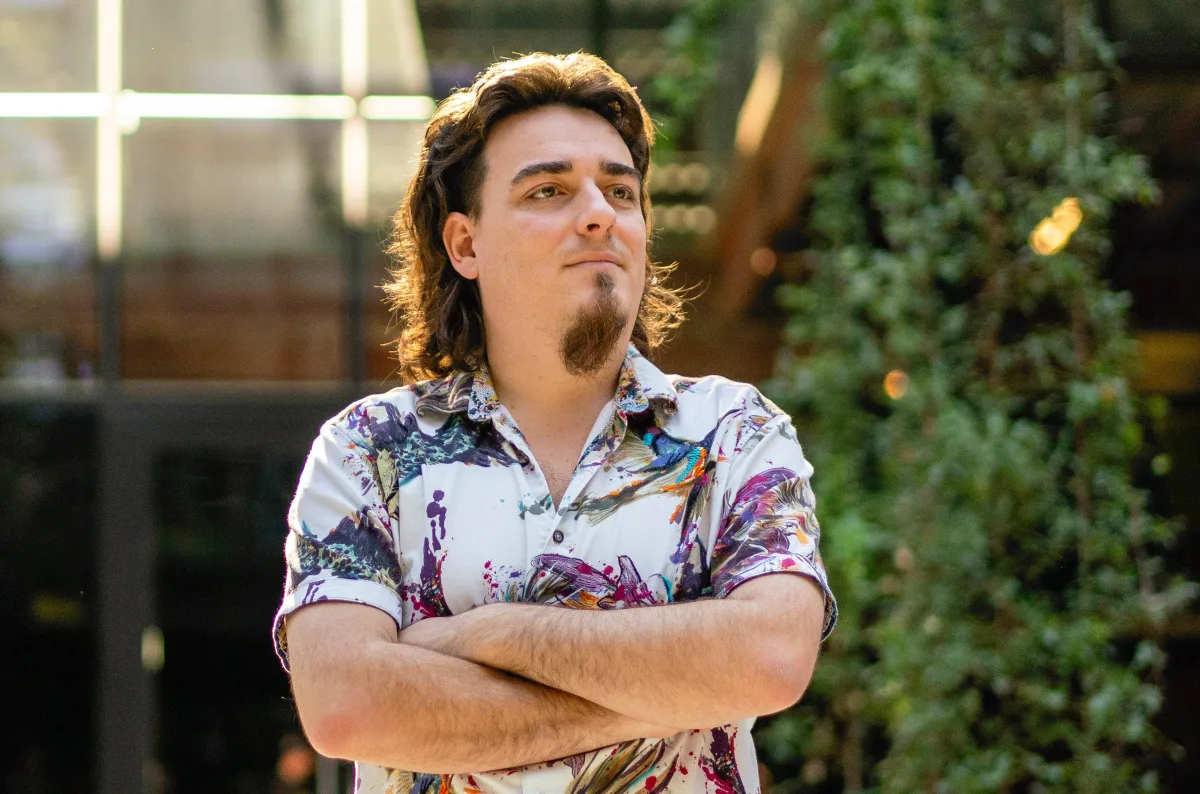
Palmer Luckey became a billionaire at 21 when he sold Oculus VR, his virtual reality headset company, to Facebook for $2 billion in 2014. Today, his defense technology firm Anduril operates from Costa Mesa, California, near his hometown of Long Beach, and carries a valuation of $61 billion. Despite his strong objections to California's proposed wealth tax on billionaires, Luckey has decided to remain in the state rather than relocate.
Speaking at an invite-only press conference on Monday, Luckey acknowledged his opposition to the ballot measure while explaining his decision to stay. "I think that this tax act, if you can call it a tax, is going to cause a lot of problems. It's causing a lot of people to run who I don't want to be running. It's going to cause companies that I work with to leave the state, which is a problem for me. As of right now, though, I'm not running. I am staying. I think California is something special. I want to fight for California," he said.
Luckey revealed that other billionaires have pressured him to leave California in solidarity with their own departures. "This has been a point of friction between me and some of my other billionaire friends," he explained. "They've said things like 'Palmer, you have to have solidarity for us. You can't enable these really bad policies. If you stay and if you don't leave, it's going to show them that there's no consequences.' I empathize with that argument, but it's not one that I'm going to participate in right now because I still believe that we can fix things."
The Tax Structure and Its Problems
Luckey's objections extend beyond the concept of taxation itself. He pointed out that the measure is sponsored by a unit of the United Healthcare Workers union, which he said intends to direct the revenue toward its own priorities. The measure's backers counter that funds would support "health care, education, and food assistance" programs, specifically naming Medi-Cal, California's low-income health coverage program.
A central concern for Luckey involves how the tax calculates liability. The proposal would tax unrealized assets that have never been sold, as well as illiquid holdings difficult to convert to cash. Penalties can reach as high as 40%. "It's almost like a seizure of future wealth in that way. That's not even the real problem. The biggest problem is the tax on control of your own company," Luckey said.
Voting Control and Founder Equity
According to the Tax Foundation, a tax policy research organization, the proposal would treat someone with voting control as owning at least an equivalent share of the company. This structure would particularly affect founders holding super-voting shares—shares that grant extra votes per share—who may own only a minority stake. A founder holding 40% of votes but just 10% of ownership could face taxation as if owning at least 40%, and liquidating all shares might not generate sufficient funds to cover the bill. The measure's drafters dispute this interpretation, contending that super-voting shares are publicly traded assets valued differently.
Luckey described his own equity situation at Anduril. "I'm a founder who's raised a bunch of money, I've diluted myself a lot. I've given equity to my employees," he said. "My employees have more equity in Anduril than me. I've given a lot of equity out to people, but what I have done is I've preserved the voting rights so that as those employees sell their shares to pay off their home loans or whatever, that the voting control doesn't go to other people outside the company."
Luckey noted that his voting rights depend on remaining a U.S. citizen living in America and running Anduril—a restriction that makes sense given Anduril's primary role as a defense contractor supplying equipment to the U.S. military. "I lose all those voting rights. My voting rights only stick as long as I'm an American citizen living in America, running Anduril," he said.
Based on Anduril's $61 billion valuation, Luckey estimates he could owe approximately 5% of that figure—roughly $3 billion—on that asset alone. For context, Larry Page, Google's co-founder who departed California, retains 27% voting control of Alphabet, Google's parent company, valued at just under $4 trillion.
A Commitment to Fight
Despite the financial implications, Luckey remains committed to California. "But I'm planning on staying in California. I'm going to keep fighting it," he said. "I'm hoping that this doesn't pass. I'm hoping if it does pass, that there are legal challenges to say, 'Hey, you can't post facto seize people's past and future wealth, nor can you tax their voting interests in their own company. That's truly unprecedented. That is not a tax on ownership. It is a tax on control.'"
Read more

Robotics Startups Attract Record Venture Funding as China and US Race for Physical AI Dominance
Global venture funding to robotics startups surged to $9.9 billion in Q3 2026, more than doubling the prior year as China and the US lead investment in physical AI technology.
Nvidia Invests in Simplismart, Indian Startup Optimizing AI Model Efficiency
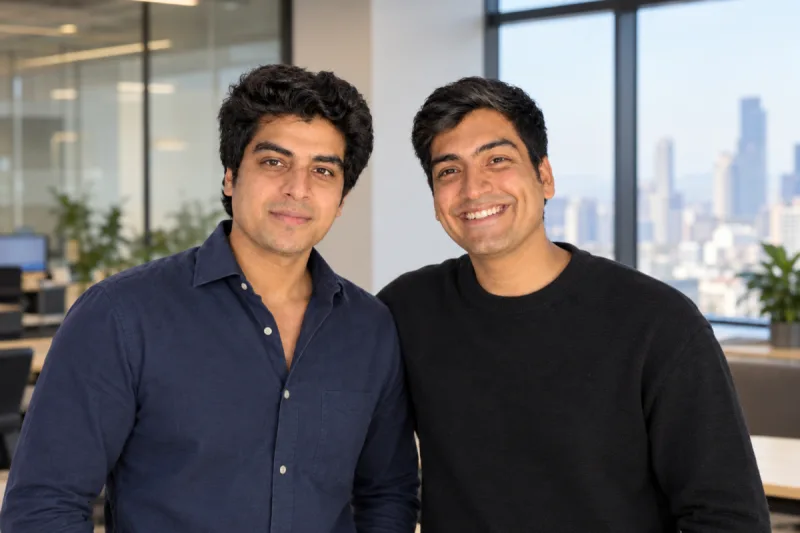
Nvidia has led a $14 million Series B investment in Simplismart, an Indian software company that helps enterprises run AI models with fewer GPUs and lower costs. The funding values the four-year-old startup at approximately $100 million.
Microsoft extends voluntary exit offers to 60,000 staff as AI infrastructure spending accelerates
The software giant is offering buyouts to roughly a quarter of its workforce across multiple countries, with departures expected by year-end as the company prioritizes data center expansion and custom chip development.