OpenAI Acquires Glass Imaging for Over $300M as Hardware Push Accelerates
OpenAI has reportedly purchased Glass Imaging, a startup behind neural image processing software for smartphone cameras, in a deal valued at more than $300 million. The acquisition marks another step in the company's expanding consumer hardware strategy.

According to reporting from The Wall Street Journal, OpenAI Group PBC has acquired Glass Imaging Inc., a developer of camera software for mobile devices, in a transaction exceeding $300 million. The two organizations have not yet made any public announcement regarding the transaction. This purchase comes as OpenAI intensifies its efforts in the consumer hardware sector, having previously invested $6.5 billion in stock to acquire Jony Ive's io Products Inc. in May 2025 and subsequently recruited dozens of former Apple staff members. Among the devices said to be under development is a speaker without a screen, priced around $300.
What Glass Imaging Does
Glass Imaging produces GlassAI, a neural image signal processor that processes unprocessed camera sensor data through machine learning models calibrated for a particular camera module. Traditional camera processing handles tasks like demosaicing, color reconstruction, noise reduction, sharpening and frame fusion as distinct operations. GlassAI combines these functions into a unified operation while accounting for the optical characteristics of the specific lens.
According to the company, this approach preserves detail that the sensor actually captured rather than generating artificial detail through the model. While smartphones represent the primary market opportunity, Glass Imaging has also targeted drones, wearables and other compact cameras where optical constraints limit image quality.
Each camera module receives its own customized network. Glass Imaging analyzes the point spread function, sensor characteristics and noise patterns of a specific lens-and-sensor combination, then develops a network tailored to that particular pairing's characteristics. This means the software's performance is optimized for each individual phone model.
Performance Gains at Smaller Pixels
Glass Imaging identifies small pixels as its strongest area of advantage. According to Shivansh Rao from the Glass Imaging machine learning team, who spoke with PetaPixel, submicron pixels encode fine detail in ways that standard processing methods cannot extract, and testing showed the neural method improved a standard resolution metric by more than 50% when pixel dimensions decreased from 0.75 to 0.35 microns.
Current Deployments
The software has begun appearing in consumer phones this year. Chinese phone manufacturer Honor Device Co. Ltd. has integrated it into the 600 series lineup, which features a 200-megapixel primary camera for zoom functionality, and a raw video iteration has been tested on Qualcomm Inc. processors. Founder Ziv Attar stated to PetaPixel in June that "Glass Imaging was proud to see the software shipping in a phone on sale."
Company Background and Funding
Attar and Tom Bishop established Glass Imaging in 2019, serving as chief executive and chief technology officer respectively. Both previously worked at Apple Inc., where they contributed to the computational photography technology underlying Portrait Mode. Attar joined Apple in 2015 when the company acquired his Israeli camera startup LinX Imaging for approximately $20 million, according to Globes.
Before the acquisition, Glass Imaging had raised roughly $29 million in funding. Insight Venture Management led a $20 million Series A round in May 2025, which followed a $9.3 million extended seed round in 2024.
Part of Broader Acquisition Strategy
This acquisition represents another transaction in OpenAI's recent buying spree as the company prepares for an initial public offering that has been reported to occur in 2027. The company also purchased TBPN, a technology industry podcast company, in April.
Read more

Spotify Founder's Health Screening Startup Neko Brings Preventative Medicine to the U.S.
The body-scanning company co-founded by David Ek has arrived in New York with a 300,000-person waitlist and backing from nearly $1 billion in funding.
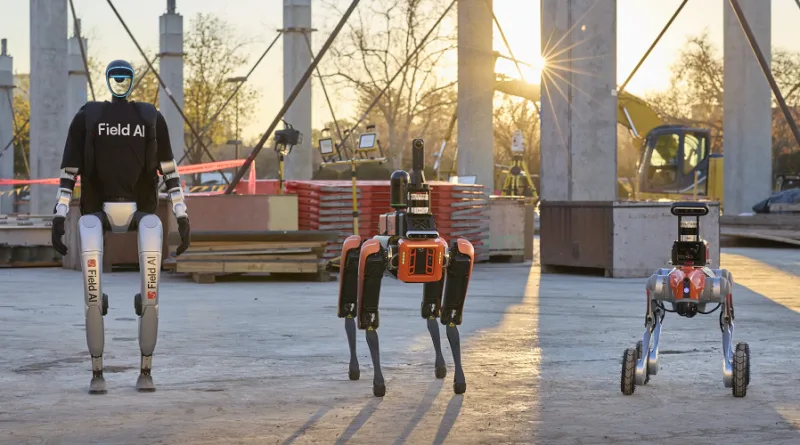
FieldAI Seeks $700M at $10B Valuation as Robot AI Demand Accelerates
The robotics AI startup is in advanced fundraising talks that would quintuple its valuation from last year, according to sources familiar with the matter.

Tech hiring slows even as employers post record open positions
A surge in IT job listings to three-year highs masks a contraction in actual hiring, with technology sector roles declining and unemployment ticking upward.