Nvidia's $65.5B startup portfolio faces uncertain future as Huang steps back
Nvidia revealed its private company stakes have tripled to $65.5 billion since January, but leadership changes and a new focus on shareholder returns may slow the chipmaker's aggressive venture investing.

Nvidia disclosed on Tuesday that its holdings in private companies have swelled to $65.5 billion, a dramatic jump from the $22 billion figure it reported in January. The expansion reflects both fresh capital deployed into new ventures and substantial appreciation across its existing investments.
The scale of Nvidia's recent deployment is striking. During the most recent quarter alone, the company poured $16 billion into equity positions. Over the past nine months of its fiscal year, that figure reached $58 billion—a stark contrast to the $5 billion the chipmaker spent on equity purchases during the first nine months of its prior fiscal year, as reported in November 2025.
Yet momentum may be slowing. The transition to interim leadership raises questions about whether Nvidia will maintain its current investment velocity going forward.
Building the AI ecosystem
Nvidia articulated its investment thesis in late 2023: backing startups positioned as "game changers and market makers" to strengthen the broader AI ecosystem. Under that mandate, the chipmaker has deployed capital across nearly 350 startups over the past three years, according to PitchBook data. Its portfolio spans a wide range of categories, from foundational model companies like Anthropic and OpenAI to infrastructure specialists and emerging categories.
The companies receiving Nvidia backing include neolabs such as Thinking Machines and Reflection; neoclouds including Lambda, Nscale, and Crusoe; plus robotics startups and firms building AI infrastructure and applications.
Beyond direct equity stakes, Nvidia has emerged as a major financier of data center expansion. The company reported $118 billion in guarantees, with $105 billion of that serving as the backstop for OpenAI's $500 billion data center project in Ohio.
A shift in strategy ahead
Nvidia has funded this aggressive investment program by channeling substantial portions of its excess cash generation into these commitments. On Tuesday's earnings call, interim CEO Colette Kress signaled a recalibration. She stated that Nvidia would continue offering financing support to strong customers, but added that "as the market matures and additional sources of capital become available," the company would be "rigorously evaluating future investments, commitments, and guarantees."
The real uncertainty centers on whether Nvidia will sustain its current dealmaking pace without Jensen Huang directing strategy. Huang's prolific investment activity has reportedly troubled Kress, according to conversations investors have had with TechCrunch. Those same sources expect Kress to adopt a more cautious posture, becoming pickier about which new startups receive funding and reducing the size of checks written to existing portfolio companies.
On the earnings call, Kress declared: "We intend to return all excess free cash flow net of strategic uses to shareholders during this last quarter and going forward." The extent to which startup investments qualify as strategic under her tenure—and under whatever permanent CEO eventually takes the role—remains an open question. For now, venture capitalists are preparing for a substantial reduction in Nvidia's capital commitments.
Read more

Silicon Valley faces rising threat from intelligence operatives using romance and friendship as cover
As alleged honey-trap schemes targeting tech executives gain attention, security experts warn that founders and employees across the industry remain dangerously unprepared for social engineering attacks designed to extract valuable corporate secrets.

Science's $400M Neurotech Round Tops Week of Major Funding Announcements
A brain-computer interface startup led this week's funding activity, with eight other U.S. companies securing nine-figure rounds as market momentum persists despite recent tech stock volatility.
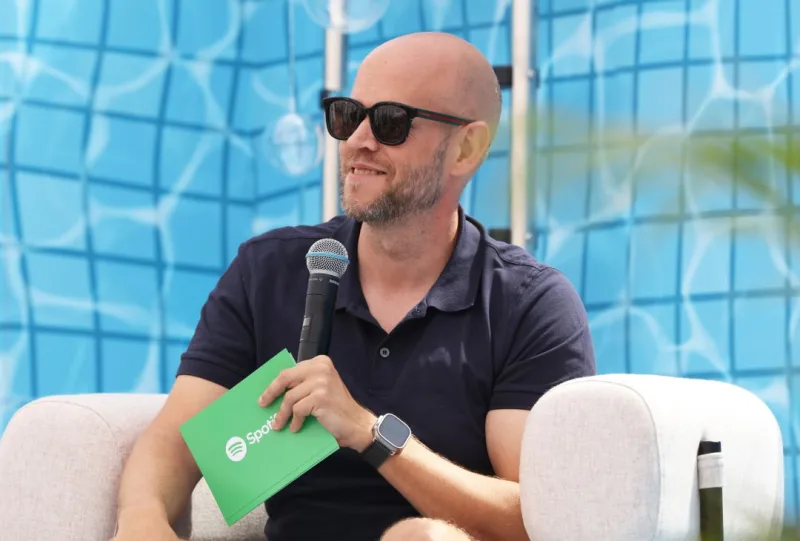
Spotify's Daniel Ek Invests in Europa Fusion, an AI Researcher's Bet on Simulation-First Power
Nantas Nardelli, a machine learning veteran from Google DeepMind and Microsoft Research, has launched a fusion startup backed by Spotify founder Daniel Ek. His approach diverges from hardware-heavy competitors by prioritizing simulation and data.