Noeri Launches With $110M to Deploy Self-Improving AI Systems Across Enterprise Workflows
Stanford researchers Yejin Choi and Carlos Guestrin are building AI systems that continuously refine themselves by learning from organizational data, backed by Menlo Ventures and a consortium of prominent venture firms.
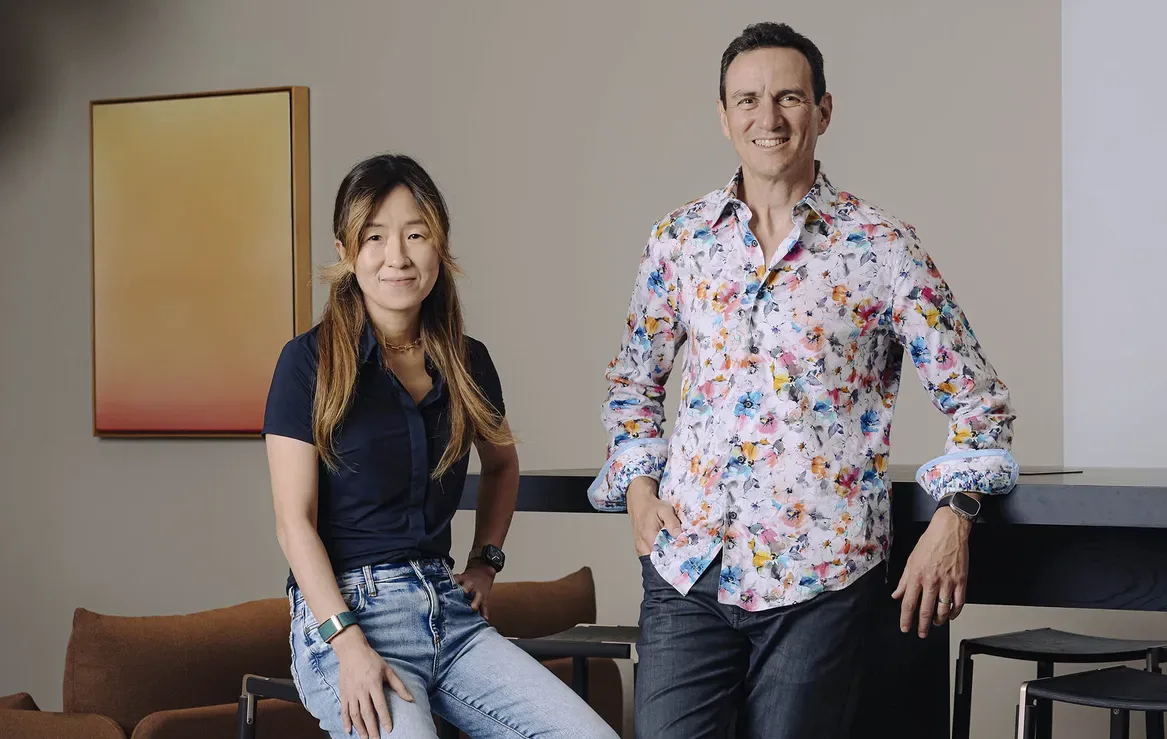
Noeri Inc. has emerged from stealth with $110 million in funding to commercialize artificial intelligence systems designed to enhance their own performance as they absorb information from a company's operations and datasets. The financing round was anchored by Menlo Ventures, with backing from Madrona Ventures, Kindred Ventures, Wing Venture Capital, NEA, Snowflake and Cisco Ventures.
The venture was founded by Yejin Choi and Carlos Guestrin, both accomplished AI researchers from Stanford University who previously spent years at the University of Washington refining self-improving systems. Their platform examines organizational data, operational workflows and business procedures, then recommends targeted modifications to boost efficiency as it gains understanding of those processes.
Noeri's founders characterize their creation as a "living" AI system—one that grows more capable at its assigned tasks as time passes. The system might propose revised instructions, recommend alternative tools or substitute different models at various workflow stages. All recommendations include reasoning and route to human approval before deployment, mirroring how AI-assisted code modifications are typically handled.
The platform functions with both open-weight and proprietary AI models while guaranteeing that organizations maintain complete control over their workflows and the AI systems they construct. Choi explained to Bloomberg that Noeri addresses a widespread dilemma: enterprises forced to decide between unaffordable fees for cutting-edge AI capabilities or settling for inferior results from cheaper alternatives.
Origins and Research Foundation
The company's concept originated when Choi and Guestrin sought to enable a Stanford microbiology and immunology research group to leverage OpenAI Group PBC's models more economically. They constructed a smaller AI model trained to efficiently use OpenAI's earlier iterations, and surprisingly discovered it could be refined to outperform the more sophisticated GPT-5 on the research team's specific assignments.
The startup's nomenclature carries deliberate significance. Noeri translates to "intelligence, in the plural," embodying Choi's and Guestrin's conviction that AI's trajectory will not be determined by a single dominant model or a narrow set of supremely capable systems.
Guestrin has consistently advocated for competitive diversity within the AI sector. During a presentation at Madrona Ventures' IA40 Summit in September, he contended that the intelligence landscape cannot remain under the control of merely one or two companies holding proprietary models.
Few companies would build their core operations on a single consultant who also advises every competitor, can change its terms at will and can never be brought in-house. A single, centralized AI offers exactly that arrangement.
Choi and Guestrin, in a blog post outlining Noeri's mission
Noeri joins a growing movement toward multimodel AI futures. Mira Murati's Thinking Machines Labs Inc. introduced Tinker last year, a cloud platform enabling anyone to fine-tune AI models and boost their capabilities. Applied Compute Inc. similarly deploys engineers alongside customers to optimize their AI systems.
Founders' Track Record
Guestrin's earlier contributions to machine learning include XGBoost, a widely adopted tool researchers employ to enhance AI model performance. He also established GraphLab Inc., later rebranded as Turi Inc., which Apple Inc. purchased in 2016. Following the acquisition, Guestrin joined Apple and directed the company's machine learning and AI research division.
Choi previously directed the Allen Institute for AI's common-sense reasoning research group before moving to Nvidia Corp. in 2024 as a distinguished scientist. She departed roughly one year later to rejoin Stanford in early 2025, where she collaborated with Guestrin to establish Noeri in May.
Technical Approach
Noeri synthesizes two distinct research initiatives. Guestrin created a novel self-distillation methodology enabling AI models to serve as their own instructors, converting errors into learning opportunities that drive continuous improvement in their outputs. Choi's research into agentic orchestration demonstrated that smaller models coordinating teams of AI agents and tools can surpass substantially larger frontier models while reducing expenses.
These research streams form the backbone of Noeri's technology. The startup is currently collaborating with partners spanning diverse sectors, including several of its investors, which were deliberately selected to expose the systems to varied operational contexts.
Most new AI labs ask the market to wait years for a breakthrough. Carlos and Yejin are doing world-class research and putting it to work inside companies at the same time. That combination is rare, and it's why we moved quickly to lead this round.
Venky Ganesan, Menlo Ventures Partner
Read more

Silicon Valley faces rising threat from intelligence operatives using romance and friendship as cover
As alleged honey-trap schemes targeting tech executives gain attention, security experts warn that founders and employees across the industry remain dangerously unprepared for social engineering attacks designed to extract valuable corporate secrets.

Science's $400M Neurotech Round Tops Week of Major Funding Announcements
A brain-computer interface startup led this week's funding activity, with eight other U.S. companies securing nine-figure rounds as market momentum persists despite recent tech stock volatility.

Spotify's Daniel Ek Invests in Europa Fusion, an AI Researcher's Bet on Simulation-First Power
Nantas Nardelli, a machine learning veteran from Google DeepMind and Microsoft Research, has launched a fusion startup backed by Spotify founder Daniel Ek. His approach diverges from hardware-heavy competitors by prioritizing simulation and data.