Gravis Robotics Secures $23M to Expand AI-Powered Autonomy Systems for Heavy Equipment
The startup behind the Gravis Rack autonomy kit has completed a funding round led by IQ Capital and Zacua Ventures, with backing from several other investors including equipment manufacturer Holcim.
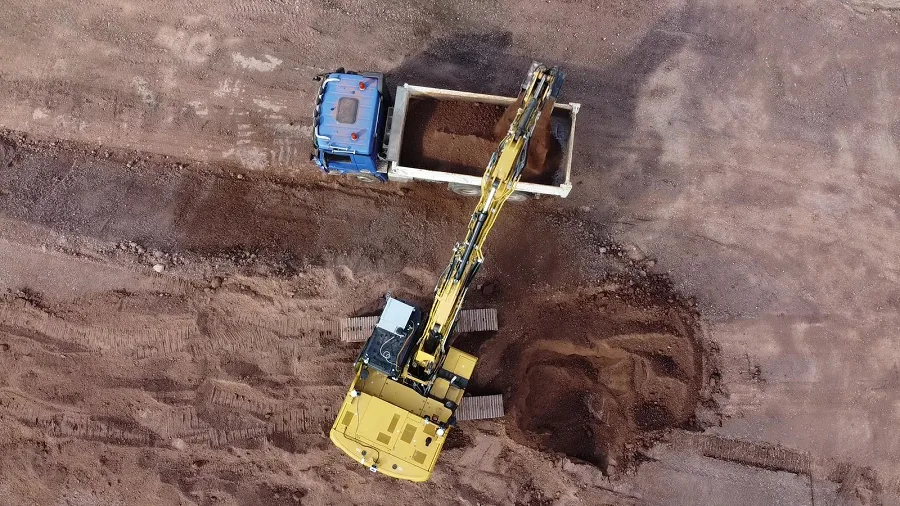
Gravis Robotics AG, which builds autonomy kits designed for earthmoving machinery, announced the close of a $23 million funding round today. The financing was led by IQ Capital and Zacua Ventures, with additional participation from Pear VC, Imad, Sunna Ventures, Armada Investment and Holcim.
The company's core offering is the Gravis Rack, a hardware system that mounts onto earthmoving equipment like excavators to enable partial autonomous operation. Operators direct the vehicles through a tablet interface developed by Gravis called Slate.
The Gravis Rack itself comprises a flat, rectangular computing unit mounted on the excavator's roof. This unit houses the artificial intelligence processor, along with cameras and a lidar sensor. The system is further equipped with additional camera and lidar modules positioned on a pair of rear masts included in the package.
Beyond sensors, the rear masts incorporate a GPS module and a Wi-Fi transmitter. The GPS component feeds location information, though satellite signals can sometimes lack precision. Gravis employs a technology called GNSS RTS to enhance accuracy by collecting GPS measurements alongside technical details about the radio signals transmitting them. The system identifies and corrects errors in location data, sometimes achieving accuracy within an inch.
The Wi-Fi transmitter synchronizes data between the Gravis Rack and the Slate tablet, which enables remote operation of the earthmoving vehicles. The tablet displays live video feeds from the vehicle's sensors with overlaid visual indicators marking hazards like water pipes and other infrastructure to avoid. Geographic information including elevation data also appears on the display.
Operators can control the system via the Slate's touchscreen or through a traditional joystick and pedals setup. According to Gravis, routine tasks like loading soil into a dump truck require only a few taps, while the AI software handles more complex operations such as locating the nearest dump truck.
By giving operators real-time 3D intelligence and the ability to shift seamlessly between autonomy and augmented control, we cover more of the work, accelerate adoption, and create the data pipeline needed to learn new capabilities from the industry's hardest jobs
Chief Executive Officer Ryan Luke Johns
Gravis reports that its technology has been deployed by customers on four continents, including HD Hyundai Co., the world's largest shipbuilder. The company plans to deploy the new capital toward expanding its global footprint and forging additional partnerships with construction equipment manufacturers.
Read more
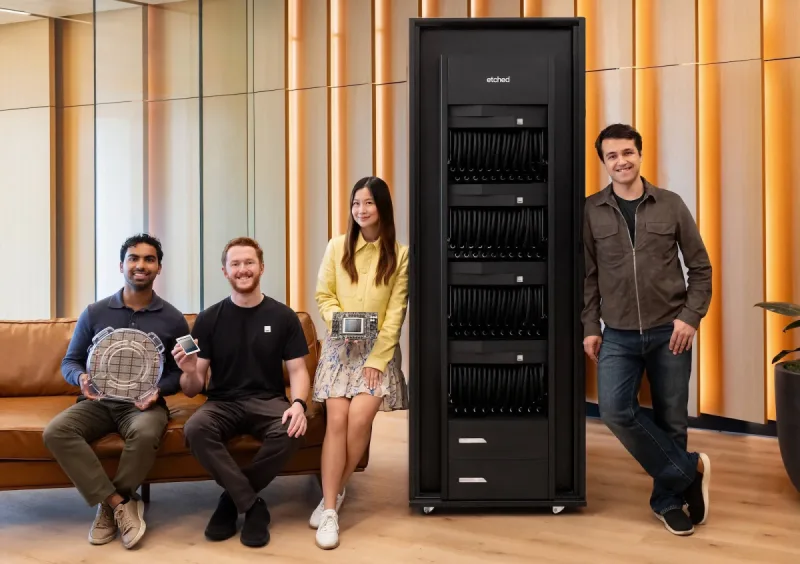
Etched's Valuation Doubles in Months as VCs Bid $40B–$50B for AI Chip Maker
The startup that raised $700 million at a $21 billion valuation just weeks ago is now fielding investment offers valuing it at double or more, as investors race to back its challenge to Nvidia's dominance in AI hardware.

Menlo's Factory bet signals confidence amid founder clash with Khosla
Menlo Ventures has invested in AI coding startup Factory as part of its latest funding round at a $5 billion valuation, a move that carries weight beyond typical round extensions given the company's recent public dispute with prominent investor Vinod Khosla.

Venture funding hits $679 billion in first nine months of 2026 as AI startups dominate
Global venture investment reached $159 billion in Q3 2026, with a record 27 companies closing billion-dollar rounds as artificial intelligence companies continue to attract the vast majority of capital.