Genesis AI Closes $500M Series A to Scale Robot Production for Factories and Warehouses
The robotics startup, which teaches machines to perform physical tasks by mimicking human movements, has reached a $3.5 billion valuation and plans to expand manufacturing capacity and hiring.

Genesis AI announced on Tuesday that it has secured $500 million in Series A funding, valuing the company at $3.5 billion. The round was co-led by Premji Invest, Khosla Ventures and Eclipse, bringing total disclosed funding to $605 million since the company's founding in 2024. An earlier funding round in July 2025 had brought in $105 million.
The startup builds both robotic hardware and the artificial intelligence software that powers it. Its technology combines recordings of human hand movements with training conducted in simulated environments, allowing robots to practice and refine skills before deployment in real-world settings. Genesis is initially focusing on manufacturing, logistics and laboratory applications with its robot model, Eno.
Co-founder and Chief Executive Zhou Xian explained the company's philosophy in an interview: "We just want to bring something more elegant, more timeless. In the end, this is a very full-stack company. … We have to build all different pieces across the entire stack to make sure we can tightly integrate our technology stack together, and hopefully build the most well-polished and reliable product."
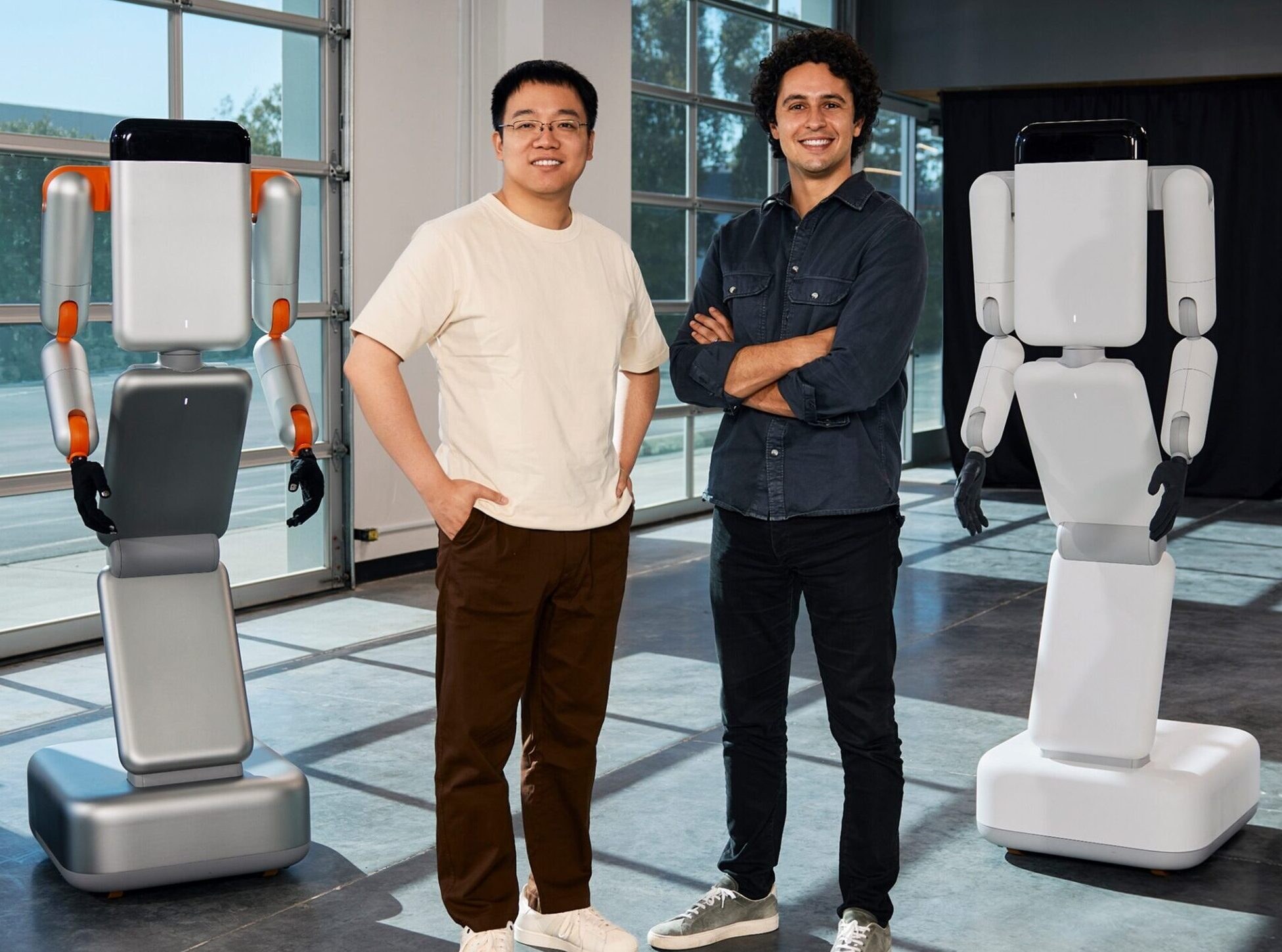
The funding round included participation from T. Rowe Price Associates, Durable Capital Partners, Bpifrance, HSG, Nvidia, AMD Ventures, Zoom, Samsung Next and Ericsson. Individual investors backing the company include Eric Schmidt, Eric Yuan, Jerry Yang, Xavier Niel and Zach Kirkhorn.
Genesis plans to deploy the capital toward expanding computing infrastructure, scaling robot manufacturing and expanding its workforce. The company currently employs nearly 100 people and operates from headquarters in Paris with additional offices in San Carlos, California.
Robotics startups have experienced significant venture funding growth in 2026, with investment concentrated in companies based in China and the United States. Global venture funding to robotics startups reached $9.9 billion in the third quarter, more than double the $4.3 billion deployed in the same period of 2025, according to Crunchbase data. The adjacent field of physical AI has similarly witnessed increased venture investment this year.
Learning from human movements
Genesis's methodology emerged from a challenge Xian faced during his robotics research: obtaining sufficient training examples for robots. While language models benefit from enormous quantities of text data, robots require different types of information to learn movement and manipulation skills, as well as to develop understanding of physical interactions.
The company captures hand and finger movements using cameras and specialized gloves, recording both motion and tactile information as people perform work. Genesis designed its robotic hand to closely resemble the human hand and the recording glove, facilitating the transfer of learned movements. Traditionally, companies have gathered this training data by employing people to remotely operate robots; Genesis instead collects it from individuals performing their normal work activities.
These recordings feed into the company's AI model, called GENE. Genesis also leverages its simulation platform, Genesis World, to train and validate robot capabilities in virtual settings. According to the company, this approach accelerates development compared to relying solely on physical robot testing.
From research project to robotics startup
Genesis originated as a research initiative that Xian launched in 2022 while pursuing a robotics doctorate at Carnegie Mellon University. The project assembled researchers from over a dozen institutions to create robotics simulation tools. Upon completing his degree at the end of 2024, Xian partnered with Theophile Gervet to establish a commercial company. Genesis incorporated formally in March 2025 and expanded its scope to encompass AI software and robot hardware alongside simulation.
Xian emphasized that developing these components together enables Genesis to ensure they function as a cohesive system. "That requires the intelligence, hardware and everything that goes into training and testing the robots to work as one system," he stated.
Renting robots to businesses
Genesis is piloting a rental arrangement where customers would pay for access to the robot and its software as an integrated service offering. The company has announced a partnership with LG CNS and maintains a pipeline of prospective Fortune 500 customers, according to Xian. He declined to share revenue figures or the number of paying customers currently using the service.
Vedant Agrawal, a partner at Premji Invest, highlighted what attracted the firm to the investment: "Completing full tasks in real time, not just short clips, is what turns a robot into something a business can rely on."
Genesis is ramping up production of Eno for industrial deployment. The company intends to expand sequentially into hospitality and healthcare sectors, followed by consumer and outdoor applications.
Read more

Silicon Valley faces rising threat from intelligence operatives using romance and friendship as cover
As alleged honey-trap schemes targeting tech executives gain attention, security experts warn that founders and employees across the industry remain dangerously unprepared for social engineering attacks designed to extract valuable corporate secrets.

Science's $400M Neurotech Round Tops Week of Major Funding Announcements
A brain-computer interface startup led this week's funding activity, with eight other U.S. companies securing nine-figure rounds as market momentum persists despite recent tech stock volatility.

Spotify's Daniel Ek Invests in Europa Fusion, an AI Researcher's Bet on Simulation-First Power
Nantas Nardelli, a machine learning veteran from Google DeepMind and Microsoft Research, has launched a fusion startup backed by Spotify founder Daniel Ek. His approach diverges from hardware-heavy competitors by prioritizing simulation and data.